
The Soothing Vagus Nerve Reset: Your 7-Day Challenge for Stress Relief


Why Your Body Won’t Calm Down (And How to Fix It in 7 Days)
Sarah sat in her car in the grocery store parking lot, gripping the steering wheel as her heart pounded and her breath came in shallow gasps. She’d just experienced another panic attack over something completely ordinary—deciding what to make for dinner while managing her demanding job, aging parents, and the relentless fatigue that seemed to define her life these days. At 48, she found herself constantly on edge, unable to relax even when she had the opportunity, and wondering why her body refused to calm down no matter how many deep breaths she took or how many “just relax” suggestions well-meaning friends offered. What Sarah didn’t know was that her struggle wasn’t a personal failing or a sign that something was fundamentally wrong with her—it was a sign that her vagus nerve, the master regulator of her body’s stress response system, desperately needed a reset. You might recognize yourself in Sarah’s story, experiencing the same frustrating cycle of chronic stress, anxiety that won’t quit, sleep that never feels restorative, and the exhausting feeling that your nervous system is stuck in overdrive with no off switch in sight.
The modern stress epidemic has hit women over 40 particularly hard, with research showing that perimenopausal and menopausal women experience stress-related symptoms at rates significantly higher than other demographic groups, compounded by hormonal changes that amplify the body’s stress response and reduce natural resilience. You’re juggling more responsibilities than ever—career demands, family caregiving, relationship maintenance, health concerns, financial pressures, and often the complex emotional terrain of life transitions that come with middle age—all while your body is undergoing hormonal shifts that make stress management even more challenging than it was in your younger years. The constant activation of your stress response creates a cascade of health issues including disrupted sleep, digestive problems, chronic inflammation, weight gain that won’t budge regardless of diet and exercise efforts, brain fog that affects your work and relationships, and the persistent sense that you’re just one more stressor away from complete burnout. What’s truly frustrating is that traditional stress management advice often falls short: meditation apps feel impossible when your mind won’t stop racing, exercise recommendations ignore your exhaustion and time constraints, and “self-care” suggestions seem laughably out of reach when you can barely keep up with basic daily demands.
What if the anxiety, the racing heart, the sleepless nights, and the constant feeling of being overwhelmed aren’t actually “all in your head” as you’ve been told, but rather the result of a specific physiological system that’s become dysregulated and desperately needs targeted support? Your vagus nerve—the longest cranial nerve in your body, extending from your brainstem through your neck and chest to your abdomen—is your body’s primary calming mechanism, the biological brake pedal that should help you shift from stress mode to rest mode, and when it’s not functioning optimally, your entire system suffers the consequences. This remarkable nerve controls your heart rate, digestion, immune response, and inflammation levels while playing a crucial role in regulating emotions, social connection, and your ability to feel safe and calm in your body and the world around you. When your vagal tone (the health and function of your vagus nerve) is low, your stress response system becomes hyperactive and your relaxation response becomes sluggish, creating the exact pattern Sarah experienced where stress feels overwhelming and calm feels impossible to achieve regardless of your best efforts and good intentions.
The transformative news is that you can reset your vagus nerve function through simple, accessible exercises that take just minutes daily and produce noticeable results within days rather than months or years of traditional therapy or medication interventions. This 7-day vagus nerve reset challenge provides a structured, progressive program designed specifically for busy women who need practical solutions that fit into real life, not idealized versions of life with unlimited time, energy, and resources for self-care. Over the next seven days, you’ll learn evidence-based techniques including specific breathing patterns, cold water therapy, vocalization exercises, gentle movement practices, nutrition strategies, and connection activities—all scientifically proven to activate and strengthen your vagus nerve, shifting your nervous system from chronic stress mode to sustainable calm and resilience. Each day builds on the previous one, introducing new practices while reinforcing what you’ve already learned, creating a comprehensive reset that addresses your nervous system from multiple angles and gives you a toolkit of techniques you can use for the rest of your life.
For women seeking comprehensive, ongoing support beyond this 7-day introduction, Vagus Nerve Activation for Stress, Anxiety & Sleep offers an in-depth program with guided practices, video demonstrations, personalized protocols, community support, and expert coaching to help you achieve lasting nervous system regulation and the deep, sustainable calm your body has been craving. This challenge is your first step toward reclaiming your calm, improving your sleep, reducing your anxiety, and finally feeling like your body is working with you rather than against you in your daily life and wellness journey. You deserve to feel peaceful in your body, to sleep deeply, to face daily challenges with resilience rather than overwhelm, and to experience the vibrant health and emotional wellbeing that become possible when your nervous system is functioning as nature intended—and this seven-day journey is where that transformation begins.

What is the Vagus Nerve and Why Does It Matter?
The “Wandering Nerve”: Your Body’s Calming Superhighway
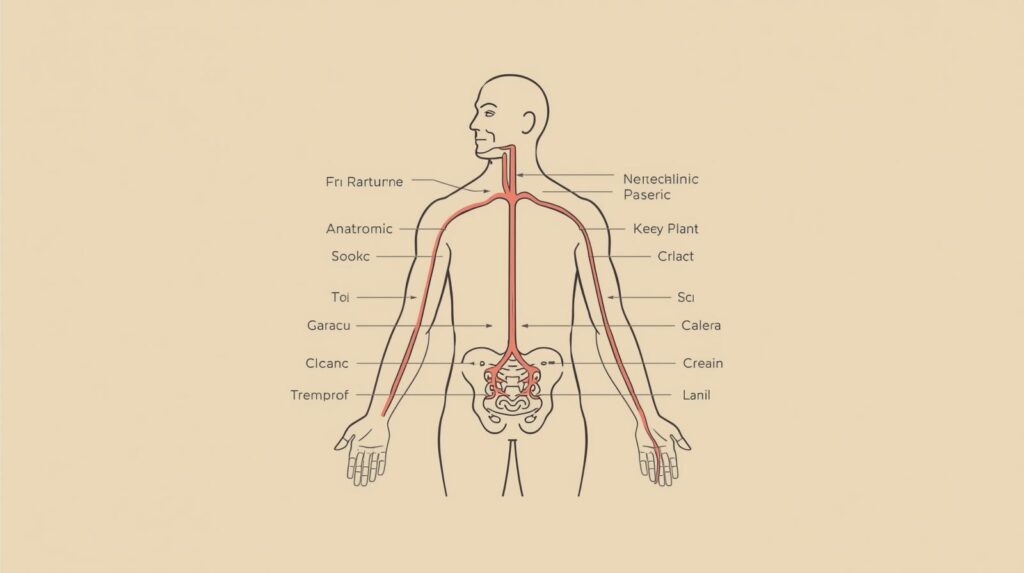
The vagus nerve earned its name from the Latin word “vagus,” meaning “wandering,” because this remarkable nerve takes a winding journey through your body, originating in your brainstem and extending downward through your neck, chest, and abdomen, touching nearly every major organ along the way. This isn’t just another nerve in your body—it’s the longest and most complex of the twelve cranial nerves, containing approximately 75% of your parasympathetic nervous system’s nerve fibers, which means it’s your body’s primary mechanism for shifting from “fight or flight” stress mode into “rest and digest” recovery mode. The vagus nerve connects your brain to your heart, lungs, digestive system, liver, spleen, kidneys, and reproductive organs, creating a vast communication network that allows your brain to monitor and regulate critical bodily functions continuously without your conscious awareness or effort. Think of it as your body’s information superhighway, constantly sending signals both upward from your organs to your brain (about 80% of vagal fibers are sensory, delivering information) and downward from your brain to your organs (about 20% are motor fibers, delivering commands), creating a continuous feedback loop that keeps you alive and functioning optimally every moment of every day.
What makes the vagus nerve particularly fascinating and relevant to your stress, anxiety, and sleep challenges is that it serves as the primary biological mechanism for calming your entire system when threats have passed and it’s safe to relax, recover, and restore. When your vagus nerve is activated and functioning well, it slows your heart rate from the rapid pounding of stress to the steady, calm rhythm of safety; it deepens your breathing from the shallow, chest-based breathing of anxiety to the slow, full diaphragmatic breathing of relaxation; it stimulates your digestive system to function properly rather than shutting down digestion as happens during stress; and it releases neurotransmitters and hormones that create feelings of calm, safety, and social connection rather than fear, vigilance, and isolation. The vagus nerve is literally your body’s brake pedal, designed to counterbalance the accelerator of your sympathetic nervous system (your stress response), and when this brake pedal isn’t working properly, you’re left with a system that’s all gas and no brakes—constantly revving, never resting, perpetually exhausted yet unable to truly relax even when you desperately want and need to do so.
How the Vagus Nerve Controls Your Stress Response
Your body’s stress response system operates through two complementary branches of your autonomic nervous system, which controls all the automatic functions you don’t consciously think about like heartbeat, breathing, digestion, and temperature regulation. The sympathetic nervous system acts as your accelerator, activating when you face challenges, threats, or demands, releasing stress hormones like cortisol and adrenaline that increase heart rate, sharpen focus, divert blood to muscles, and prepare you to fight or flee from danger—a life-saving response when you actually face genuine threats but exhausting and damaging when activated chronically in response to modern stressors like work deadlines, family conflicts, financial worries, and the relentless demands of daily life. The parasympathetic nervous system, primarily governed by the vagus nerve, acts as your brake pedal, activating when threats pass and it’s safe to rest, releasing calming neurotransmitters like acetylcholine that slow heart rate, deepen breathing, activate digestion, support immune function, reduce inflammation, and create the physiological state necessary for healing, restoration, and genuine relaxation.
In a healthy, balanced nervous system, these two branches work together in harmony—the sympathetic system activates when you face challenges, helping you meet demands effectively, and then the vagus nerve activates to return you to baseline calm once the challenge passes, creating a natural rhythm of activation and recovery that supports both productivity and wellbeing throughout your day. However, chronic stress, trauma, lifestyle factors, and the accumulated wear and tear of decades of pushing through difficulties without adequate recovery can suppress vagal function, leaving you stuck in sympathetic dominance where your stress response is constantly activated and your calming response is weakly developed or completely offline. This is why you might notice that you startle easily, feel constantly on edge even when nothing threatening is happening, struggle to fall asleep despite exhaustion, experience digestive issues that doctors can’t quite explain, or find that your heart races and your mind spins even during activities that should be relaxing like watching television or spending time with loved ones—your vagus nerve isn’t adequately activating to shift you out of stress mode and into the rest and recovery your body desperately needs.
Vagal Tone: The Key to Resilience
The health and function of your vagus nerve is measured through a concept called “vagal tone,” which essentially reflects how well your vagus nerve performs its job of regulating your stress response and maintaining balance in your autonomic nervous system. High vagal tone means your vagus nerve is strong, responsive, and effective at calming your system quickly when stress passes, allowing you to face challenges with resilience, recover quickly from difficult experiences, maintain emotional balance even during trying circumstances, and generally feel safe and calm in your body most of the time. Low vagal tone, conversely, means your vagus nerve is weak or poorly functioning, leaving you vulnerable to prolonged stress responses, slow recovery from challenges, emotional volatility and mood disorders like anxiety and depression, difficulty sleeping despite exhaustion, digestive problems, chronic inflammation, and the general sense that your nervous system is fragile and easily overwhelmed by demands that others seem to handle with relative ease.
The exciting discovery that’s transformed our understanding of nervous system health is that vagal tone isn’t fixed—unlike many aspects of your biology that you can’t change, you can actually strengthen your vagal tone through specific exercises and practices, essentially training your nervous system to become more resilient and better able to maintain balance despite life’s inevitable stresses and challenges. Just as you can strengthen a muscle through regular exercise, you can strengthen your vagus nerve through consistent practice of vagal activation techniques, creating measurable improvements in heart rate variability (the gold standard measure of vagal tone), stress resilience, emotional regulation, sleep quality, digestive function, and overall wellbeing. This is precisely what the 7-day vagus nerve reset challenge addresses, providing you with a progressive program of evidence-based practices that activate and strengthen your vagus nerve, shifting your baseline nervous system function from stressed and overwhelmed to calm and resilient in ways you can feel within days and measure objectively through improvements in sleep, mood, energy, and physical symptoms.
The Vagus Nerve Connection to Anxiety, Sleep, and Digestion
The vagus nerve’s extensive connections throughout your body explain why vagal dysfunction creates such wide-ranging symptoms and why improving vagal tone can transform so many aspects of your health simultaneously rather than addressing symptoms one at a time through separate interventions. Your vagus nerve affects:
- Anxiety and Emotional Regulation: The vagus nerve connects your gut (where you produce 90% of your serotonin, your primary mood-regulating neurotransmitter) to your brain, influences the release of calming neurotransmitters, regulates the amygdala (your brain’s fear center), and creates the physiological foundation for feeling safe and calm versus anxious and threatened
- Sleep Quality: Vagal activation shifts you into parasympathetic dominance necessary for falling asleep, staying asleep, and achieving the deep restorative sleep stages essential for physical and mental health, while low vagal tone keeps you in sympathetic activation that makes quality sleep nearly impossible regardless of sleep hygiene efforts
- Digestive Function: The vagus nerve controls the entire digestive process from saliva production through elimination, and low vagal tone commonly manifests as IBS, chronic constipation, acid reflux, bloating, and the general digestive dysfunction that doctors struggle to diagnose or treat effectively
- Heart Rate and Cardiovascular Health: Your vagus nerve regulates heart rate variability, blood pressure, and cardiovascular stress response, with high vagal tone associated with better heart health and lower disease risk
- Immune Function and Inflammation: The vagus nerve is your body’s primary anti-inflammatory pathway, controlling the release of inflammatory cytokines, and low vagal tone is associated with chronic inflammation underlying most modern diseases
- Social Connection: The “social engagement system” controlled partly by the vagus nerve affects your ability to read social cues, feel safe with others, and experience the calming effects of positive social interaction
For comprehensive guidance on addressing all these interconnected systems through targeted vagus nerve activation, Vagus Nerve Activation for Stress, Anxiety & Sleep provides detailed protocols, video demonstrations, and expert support to help you achieve lasting nervous system balance and the relief from anxiety, sleep problems, and stress-related symptoms you’ve been seeking. Understanding how central the vagus nerve is to nearly every aspect of your physical and mental health helps explain why the simple practices you’ll learn in this 7-day challenge can create such profound and wide-ranging improvements in how you feel—you’re not just treating isolated symptoms, you’re addressing the underlying nervous system dysfunction that creates multiple symptoms simultaneously, allowing your entire system to shift toward balance, resilience, and optimal functioning.
The Science Behind the Vagus Nerve Reset
Polyvagal Theory Explained Simply
The groundbreaking work of Dr. Stephen Porges and his Polyvagal Theory has revolutionized our understanding of how the nervous system works and why some people seem naturally resilient to stress while others become overwhelmed by even minor challenges, providing the scientific foundation for why vagus nerve reset practices are so effective for anxiety, stress, and sleep problems. Traditional understanding of the autonomic nervous system described just two states—”fight or flight” (sympathetic activation) and “rest and digest” (parasympathetic activation)—but Polyvagal Theory revealed that we actually have three distinct neural pathways that create different physiological and emotional states, each associated with different levels of safety and threat. The newest evolutionary development is the ventral vagal pathway, which creates states of safety, social engagement, calm connection, optimal digestion, restorative sleep, and the capacity for growth and healing when you feel genuinely safe in your body and environment. The middle pathway is the sympathetic nervous system, which mobilizes you to fight or flee when faced with challenges, increasing heart rate, sharpening focus, and preparing your body for action—useful for actual threats but exhausting when chronically activated by modern life stressors. The oldest evolutionary pathway is the dorsal vagal pathway, which creates shutdown, freeze, dissociation, and collapse when threats feel inescapable and fighting or fleeing seems impossible—the state you might recognize as depression, numbness, or the complete exhaustion that no amount of rest seems to relieve.
Understanding these three pathways helps explain why you can’t simply “think” your way out of anxiety or force yourself to relax through willpower alone—these are automatic physiological responses happening below the level of conscious control, governed by your nervous system’s assessment of safety and threat based on subtle cues from your environment and internal state. Your nervous system is constantly scanning for danger through a process called “neuroception,” detecting threats and safety signals without your conscious awareness, and when your vagal tone is low, your system becomes biased toward detecting threat even in safe situations, keeping you stuck in sympathetic activation or dorsal shutdown rather than allowing the ventral vagal state of calm, connection, and wellbeing. The beautiful insight from Polyvagal Theory that makes vagus nerve reset work so powerfully is that you can influence your autonomic state “from the bottom up” through physical practices that signal safety to your nervous system, shifting you from threat states (sympathetic or dorsal) into the ventral vagal state of safety and calm even before your conscious mind believes you’re safe. This is why simple practices like deep breathing, cold water on your face, humming, and gentle movement can create profound shifts in your emotional and physical state—they’re not just relaxation techniques, they’re direct signals to your vagus nerve that it’s safe to shift out of defense mode and into the state of calm connection where healing, restoration, and wellbeing naturally emerge.

Why 7 Days Creates Lasting Change
The 7-day timeframe for this vagus nerve reset challenge isn’t arbitrary—it’s based on neuroscience research showing that consistent practice over approximately one week creates measurable changes in nervous system patterns, begins to establish new neural pathways, and allows you to experience enough benefit to motivate continued practice beyond the initial challenge period. Your nervous system learns through repetition and experience, with each vagal activation exercise creating small changes in your neural patterns, and when you practice consistently for seven consecutive days, these small changes accumulate into noticeable shifts in your baseline stress response, emotional regulation, sleep quality, and overall nervous system resilience. One-time practices can certainly provide temporary relief—a few deep breaths will calm your immediate stress response—but lasting change in vagal tone requires regular practice that teaches your nervous system a new default state, much like building strength through consistent exercise rather than expecting one workout to create permanent fitness gains.
Research on habit formation and neuroplasticity (your brain’s ability to create new neural connections) suggests that seven days of consistent practice is enough to experience tangible benefits that motivate continued engagement while being short enough to feel achievable even for busy women with limited time and energy. Studies on heart rate variability (the most reliable measure of vagal tone) show that participants practicing vagal activation exercises daily experience measurable improvements within 5-7 days, with continued improvement over weeks and months of sustained practice, supporting the approach of starting with an intensive 7-day reset followed by ongoing maintenance practices. The progressive structure of this challenge—introducing new practices each day while maintaining those you’ve already learned—ensures you’re building skills cumulatively rather than overwhelming yourself with too much at once, creating sustainable change rather than the all-or-nothing approach that leads to abandonment when life gets busy or motivation wanes. By day seven, you’ll have experienced each major category of vagal activation (breathing, cold exposure, vocalization, movement, nutrition, and social connection), noticed which practices work best for your unique body and circumstances, and created enough improvement in your symptoms to convince your skeptical mind that this approach is worth continuing beyond the initial week.
The Stress-Vagus Nerve Connection
Chronic stress and vagal dysfunction create a vicious cycle where stress suppresses vagal tone, and low vagal tone makes you more vulnerable to stress, creating a downward spiral that becomes progressively harder to escape without targeted intervention to break the pattern. When you experience stress—whether from major life events or the accumulated weight of daily hassles—your body releases stress hormones including cortisol and adrenaline that activate the sympathetic nervous system while simultaneously suppressing vagal activity, shifting you into the physiological state optimized for handling threats but terrible for rest, recovery, and long-term health. Short-term stress followed by adequate recovery doesn’t cause lasting harm and may even strengthen resilience, but modern life creates chronic, unrelenting stress where the demands never truly cease, recovery time is minimal, and your stress response system remains activated day after day, week after week, year after year. This chronic sympathetic activation suppresses your vagus nerve function over time, essentially weakening your nervous system’s brake pedal through disuse while your accelerator becomes increasingly sensitive and reactive from constant activation, leaving you with a stress response that activates easily and a calming response that barely functions when you need it most.
The particularly insidious aspect of this stress-vagal tone cycle is that low vagal tone makes ordinary life stressors feel more threatening and overwhelming than they would with healthy vagal function, creating a situation where your baseline stress response becomes increasingly hair-trigger and difficult to calm. You might notice this pattern where challenges that you once handled with relative ease now feel overwhelming, where minor irritations trigger major stress responses, where you can’t seem to recover from difficulties as quickly as you once did, or where the cumulative weight of “normal” daily life feels unsustainable and exhausting in ways it didn’t when you were younger and your nervous system was more resilient. This isn’t weakness, aging, or personal failing—it’s the predictable result of years of chronic stress without adequate nervous system support, creating vagal dysfunction that requires targeted intervention to reverse rather than more general stress management approaches that don’t address the underlying nervous system patterns.
What Happens in Your Body During a Vagus Nerve Reset
When you practice vagus nerve activation exercises consistently over seven days, you initiate a cascade of physiological changes that extend far beyond the immediate calming effect you feel during the practices themselves, creating lasting improvements in how your nervous system functions and responds to stress. During each vagal activation practice—whether breathing exercises, cold water exposure, humming, or gentle movement—you’re sending safety signals through your vagus nerve from your body to your brain, activating the parasympathetic nervous system and creating the physiological state associated with rest, recovery, and restoration. This vagal activation immediately slows your heart rate, deepens your breathing, activates your digestive system, reduces inflammatory signaling, and releases calming neurotransmitters including acetylcholine, serotonin, and GABA that create feelings of calm, safety, and wellbeing in your mind and body. These immediate effects are pleasant and valuable, but the real transformation happens through the accumulated effects of consistent practice over the full seven days as your nervous system begins to establish new baseline patterns and your vagal tone strengthens measurably.
Over the course of the week, consistent vagal activation creates several important changes: your heart rate variability (HRV) increases, indicating improved vagal tone and nervous system flexibility; your baseline stress hormone levels decrease as your system spends more time in parasympathetic mode; your inflammatory markers drop as the vagus nerve’s anti-inflammatory pathways activate more consistently; your sleep quality improves as you more easily shift into the parasympathetic state necessary for falling and staying asleep; your digestion normalizes as your gut receives consistent vagal signals to function properly; and your emotional regulation strengthens as your ventral vagal pathway becomes more accessible and less suppressed by chronic sympathetic activation. By the end of seven days, most people notice tangible improvements in anxiety levels, sleep quality, digestive function, energy, mood stability, and the general sense that their nervous system is calmer and more resilient even when facing the same life stressors that previously felt overwhelming. For women seeking comprehensive support in creating these lasting changes, Vagus Nerve Activation for Stress, Anxiety & Sleep provides detailed protocols, expert guidance, and ongoing support to help you build on the foundation created during this 7-day challenge and achieve sustained nervous system balance.
Comparison Table: High Vagal Tone vs. Low Vagal Tone
| Aspect | Low Vagal Tone | High Vagal Tone |
|---|---|---|
| Stress Response | Overreactive to minor stressors, prolonged stress activation, difficulty calming down, hair-trigger reactions | Proportionate responses to genuine threats, quick recovery, returns to baseline calm efficiently, resilient to daily stressors |
| Heart Rate & HRV | Irregular heartbeat, consistently elevated heart rate, low heart rate variability indicating poor nervous system flexibility | Steady resting heart rate, high heart rate variability indicating good autonomic balance and adaptability |
| Sleep Quality | Difficulty falling asleep despite exhaustion, frequent night wakings, light/unrefreshing sleep, morning fatigue | Falls asleep easily, stays asleep through night, experiences deep restorative sleep stages, wakes refreshed |
| Digestion | IBS symptoms, chronic constipation or diarrhea, bloating, acid reflux, poor nutrient absorption | Regular bowel movements, comfortable digestion, efficient nutrient absorption, minimal digestive distress |
| Mood & Emotional State | Anxiety, depression, emotional volatility, difficulty regulating emotions, feels unsafe in body | Stable mood, emotional resilience, appropriate emotional responses, general sense of wellbeing and safety |
| Inflammation Levels | Chronic low-grade inflammation, frequent illness, slow healing, inflammatory conditions | Controlled inflammation response, strong immune function, efficient healing, lower disease risk |
| Social Connection | Social anxiety, difficulty reading social cues, isolation feels safer than connection, defensive in relationships | Comfortable in social situations, accurate social perception, connection feels nourishing, open communication |
| Energy & Fatigue | Chronic exhaustion despite rest, wired-and-tired state, energy crashes, reliance on stimulants | Stable energy throughout day, refreshed by rest, appropriate fatigue only after genuine exertion |
The scientific research supporting vagus nerve activation practices is extensive and growing, with peer-reviewed studies demonstrating measurable improvements in conditions including anxiety disorders, depression, PTSD, inflammatory diseases, digestive disorders, and sleep disturbances through consistent vagal tone training (you can explore more at Stephen Porges’ research on Polyvagal Theory for in-depth scientific foundation). Understanding the science behind why these simple practices work so powerfully helps combat the skepticism you might feel—”can something as simple as humming or cold water really change my anxiety?”—and provides motivation to commit to the full seven days even when immediate results aren’t dramatic, trusting that the accumulated effects of consistent practice create the transformation you’re seeking in your nervous system function and overall wellbeing.
Signs You Need a Vagus Nerve Reset
Physical Signs of Low Vagal Tone
Your body provides clear signals when your vagus nerve isn’t functioning optimally, though you may have been attributing these symptoms to aging, stress, or separate health conditions rather than recognizing them as interconnected signs of vagal dysfunction. Physical symptoms of low vagal tone often appear gradually over months or years as chronic stress accumulates and your nervous system’s ability to regulate itself diminishes, creating a constellation of seemingly unrelated problems that doctors struggle to explain or treat effectively because they’re addressing symptoms individually rather than the underlying nervous system dysfunction. You might notice that your resting heart rate has crept higher over the years, that your heart seems to race or pound during situations that shouldn’t be particularly stressful, or that you experience palpitations, chest tightness, or irregular heartbeat that cardiac testing shows isn’t dangerous but that doctors can’t quite explain or resolve. Chronic muscle tension particularly in your neck, shoulders, and jaw often indicates persistent sympathetic nervous system activation without adequate vagal activation to release the tension, creating pain and stiffness that massage and stretching provide only temporary relief for because the underlying nervous system pattern remains unchanged.
Frequent headaches or migraines, chronic fatigue despite adequate sleep, dizziness or lightheadedness especially when standing, cold hands and feet indicating poor circulation, frequent illness or slow recovery from infections, and chronic pain conditions that conventional treatment doesn’t adequately address all commonly arise from low vagal tone affecting multiple body systems simultaneously. You may experience a general sense that your body is “stuck” in high alert mode, that you startle easily at sudden noises or movements, that you feel shaky or jittery inside even when outwardly calm, or that physical symptoms worsen during periods of stress in ways that feel disproportionate to the actual stressor. These physical manifestations of vagal dysfunction aren’t separate problems requiring separate treatments—they’re your body’s way of signaling that your nervous system needs support, and addressing the underlying vagal tone through targeted reset practices often improves multiple symptoms simultaneously as your nervous system regains its natural balance and regulatory capacity.
Emotional and Mental Symptoms
The emotional and psychological symptoms of low vagal tone can be even more distressing than physical symptoms, affecting your quality of life, relationships, work performance, and fundamental sense of wellbeing in ways that feel overwhelming and uncontrollable. Chronic anxiety is perhaps the most common emotional manifestation of vagal dysfunction, appearing as persistent worry that you can’t turn off, generalized nervousness without specific cause, anticipatory anxiety about upcoming events both major and minor, social anxiety that makes interactions exhausting rather than nourishing, and the constant feeling of impending doom or that something bad is about to happen. This anxiety isn’t a character flaw or sign of weakness—it’s your nervous system stuck in threat-detection mode without adequate vagal activation to signal safety and allow you to relax even when circumstances are objectively safe and manageable. Depression, particularly the type characterized by emotional numbness, exhaustion, loss of interest in previously enjoyable activities, and the sense of being disconnected from yourself and others, often indicates dorsal vagal shutdown where your nervous system has moved beyond fight-or-flight activation into a state of collapse and conservation when stress feels inescapable.
Emotional volatility where minor frustrations trigger disproportionate reactions, difficulty regulating emotions once they’re activated, feeling emotionally fragile or like you’re barely holding it together, irritability that strains your relationships, and the sense that your emotions control you rather than you having agency over your emotional experience all reflect poor vagal regulation of the brain’s emotional centers. You might notice difficulty concentrating or focusing, brain fog that affects your work performance and decision-making, memory problems that worry you, racing thoughts that won’t slow down even when you’re exhausted, or the inability to be present in the moment because your mind is constantly scanning for threats or replaying past difficulties. The connection between vagal tone and emotional wellbeing is so strong that improving vagal function through the practices in this 7-day vagus nerve reset often creates noticeable improvements in mood, anxiety, emotional regulation, and mental clarity within days, as your nervous system regains the flexibility to move between states rather than being stuck in chronic stress activation or shutdown.
Digestive and Sleep Disturbances
Your digestive system and sleep patterns are exquisitely sensitive to vagal tone, making digestive issues and sleep problems among the most reliable indicators that you need a vagus nerve reset to restore proper nervous system function. The vagus nerve controls the entire digestive process from saliva production through stomach acid secretion, intestinal motility, and elimination, which is why low vagal tone commonly manifests as irritable bowel syndrome (IBS), chronic constipation or diarrhea, bloating and gas, acid reflux or GERD, nausea without clear cause, food sensitivities that seem to multiply over time, and the general sense that your digestion is unpredictable and problematic. Many women spend years seeking answers for digestive complaints, undergoing extensive testing that reveals nothing structurally wrong, trying elimination diets and various supplements with minimal improvement, and eventually being told their symptoms are stress-related without receiving effective tools to actually address the stress-digestion connection through nervous system regulation. The truth is that your digestive system simply cannot function properly when you’re stuck in sympathetic nervous system activation—digestion is a parasympathetic process that requires vagal activation, and when your vagus nerve isn’t functioning well, your gut won’t either regardless of what you eat or what supplements you take.
Sleep disturbances are equally common with low vagal tone because falling asleep and staying asleep require shifting from sympathetic to parasympathetic nervous system dominance, a transition that becomes difficult or impossible when vagal function is suppressed. You might recognize this pattern in difficulty falling asleep despite exhaustion because your mind won’t stop racing and your body won’t relax, waking frequently throughout the night for no apparent reason, waking feeling unrefreshed even after what should be adequate sleep hours, relying on sleep medications that don’t address the underlying nervous system dysfunction, or experiencing the frustrating “tired but wired” state where you’re physically exhausted but mentally activated in ways that prevent the deep rest your body desperately needs. Sleep problems and digestive issues often occur together in people with low vagal tone because both systems require parasympathetic activation that isn’t adequately available when the vagus nerve is dysfunctional, creating a perfect storm of nighttime digestive discomfort that further disrupts sleep while poor sleep further suppresses vagal tone in a cycle that becomes progressively harder to break without targeted intervention.

Self-Assessment: Do You Need a Vagus Nerve Reset?
Review the following symptoms and check each one that applies to your current experience (not occasional experiences, but patterns that occur frequently or persistently):
Physical Symptoms Checklist:
- Elevated resting heart rate or heart palpitations
- Chronic muscle tension, especially neck and shoulders
- Frequent headaches or migraines
- Digestive problems (IBS, constipation, bloating, reflux)
- Chronic fatigue despite adequate sleep
- Frequent illness or slow recovery from infections
- Dizziness or lightheadedness
- Cold hands and feet
- Chronic pain conditions
- Difficulty taking deep breaths
Emotional & Mental Symptoms:
- Chronic anxiety or persistent worry
- Depression or emotional numbness
- Difficulty concentrating or brain fog
- Racing thoughts that won’t slow down
- Emotional volatility or irritability
- Feeling constantly on edge or hypervigilant
- Social anxiety or difficulty connecting with others
- Feeling disconnected from your body
- Panic attacks or intense fear responses
- Low stress tolerance
Sleep & Energy Symptoms:
- Difficulty falling asleep despite exhaustion
- Waking frequently during the night
- Unrefreshing sleep or morning fatigue
- “Tired but wired” feeling
- Energy crashes during the day
- Reliance on caffeine or stimulants
Scoring Your Assessment:
0-5 symptoms: Your vagal tone may be functioning reasonably well, but you could still benefit from practices that enhance resilience and prevent future dysfunction
6-12 symptoms: Moderate vagal dysfunction is likely present; a vagus nerve reset would significantly benefit your nervous system health and overall wellbeing
13-20 symptoms: Significant vagal dysfunction is indicated; you would greatly benefit from this 7-day vagus nerve reset and potentially ongoing support through comprehensive programs
20+ symptoms: Severe vagal dysfunction suggests you need both this vagus nerve reset and professional support; consider working with practitioners who understand nervous system regulation
If you scored in the moderate to significant range, you’re an ideal candidate for this 7-day vagus nerve reset challenge, and you’ll likely notice meaningful improvements in multiple symptoms as your vagal tone strengthens over the week ahead. For women experiencing severe symptoms or seeking comprehensive, ongoing support beyond this introductory challenge, Vagus Nerve Activation for Stress, Anxiety & Sleep provides in-depth protocols, personalized guidance, video demonstrations, and expert coaching to help you achieve lasting nervous system balance and relief from the chronic symptoms that have been affecting your quality of life. Recognizing these signs as vagal dysfunction rather than separate, unsolvable problems is the first step toward addressing the root cause and finally experiencing the calm, energy, and wellbeing your body is designed to provide when your nervous system is functioning as nature intended.
How This 7-Day Challenge Works
What to Expect Each Day
This 7-day vagus nerve reset challenge is designed with a progressive, cumulative structure that introduces new practices daily while building on what you’ve already learned, creating a comprehensive nervous system reset without overwhelming you with too many techniques at once or expecting you to completely transform your routine overnight. Each day focuses on a specific category of vagus nerve activation—breathing, cold exposure, vocalization, movement, nutrition, social connection, and integration—giving you the opportunity to experience different approaches and discover which practices resonate most powerfully with your unique body and circumstances. The genius of this progressive approach is that you’re not abandoning previous practices when you learn new ones; instead, you’re accumulating a toolkit of techniques that work synergistically, with breathing exercises from Day 1 enhancing the cold water practices on Day 2, vocalization on Day 3 deepening the effects of movement on Day 4, and so on throughout the week. By Day 7, you’ll have experienced every major category of vagal activation and created enough improvement in your symptoms to know viscerally—not just intellectually—that these simple practices genuinely change how your nervous system functions and how you feel in your daily life.
Each daily practice is designed to take 10-30 minutes depending on the specific exercises and how much time you have available, with clear guidance on minimum effective doses for women with extremely limited time and optional extensions for those who want to practice more extensively. You’ll receive specific instructions for morning and evening practices, guidance on when during the day each technique works best based on your schedule and the practice’s effects, and modifications for different circumstances including limited mobility, privacy concerns, or other constraints that might make certain practices challenging. The practices themselves are remarkably simple—nothing requires special equipment, gym membership, previous experience, or abilities beyond what most people naturally possess—making this challenge accessible regardless of your current fitness level, age, health status, or lifestyle constraints. What matters isn’t doing the practices perfectly or spending extensive time on them, but rather showing up consistently for seven days and genuinely engaging with each practice, giving your nervous system the repeated signals of safety and activation it needs to shift from chronic stress patterns into the balanced, resilient functioning you’re seeking.
The Progressive Structure Explained
The specific sequence of practices throughout the week follows evidence-based principles of nervous system regulation, starting with the most fundamental vagal activation tool (breathing) and progressively adding complementary techniques that target different aspects of vagal function and different entry points for nervous system change. Day 1 establishes the foundation with breathing practices because breath is the most direct, accessible, and powerful tool for immediate vagal activation—it’s something you’re doing constantly anyway, and learning to breathe in ways that activate your vagus nerve gives you a tool you can use anywhere, anytime, without anyone even knowing you’re doing a practice. Mastering conscious breathing on Day 1 creates the baseline skill that enhances every subsequent practice throughout the week and provides the emergency tool you can access when anxiety spikes, sleep won’t come, or stress feels overwhelming at any point during the challenge or beyond.
Days 2 and 3 introduce activation techniques through cold water exposure, humming, gargling, and singing—practices that create strong vagal stimulation through physical mechanisms, essentially “waking up” a vagus nerve that may have been sluggish from years of underuse and giving you tangible experiences of how quickly your nervous system can shift when you provide the right stimulus. Day 4 brings movement into your reset because gentle, mindful movement activates the vagus nerve through different pathways than the previous practices while also addressing the physical tension and stuck energy that accumulate in chronically stressed bodies. Day 5 focuses on nutrition because the gut-vagus nerve connection is so powerful that what you eat directly affects vagal tone, and learning which foods support versus suppress your vagus nerve gives you long-term tools for maintaining the improvements you’ve created through the challenge. Day 6 addresses social connection and compassion practices because the vagus nerve is intimately involved in social engagement, and activating it through connection and loving-kindness creates emotional and relational benefits that complement the physical and mental improvements from earlier practices. Day 7 integrates everything you’ve learned into a sustainable routine you can maintain beyond the challenge, ensuring that this week creates lasting change rather than just temporary relief that disappears when the structured seven days end.
Materials You’ll Need (Spoiler: Almost Nothing!)
One of the beautiful aspects of vagus nerve activation is that the most effective practices require virtually no equipment, special purchases, or expensive memberships—your body already contains everything you need to reset your nervous system, and the external materials that enhance certain practices are items most people already have at home or can access for free. For the breathing practices on Day 1, you need literally nothing except your lungs and a quiet place to sit or lie down for 10-15 minutes without interruption. Cold water therapy on Day 2 requires only access to cold water from your tap—no ice baths, fancy equipment, or extreme measures necessary for effective vagal activation. Humming, gargling, and singing on Days 2 and 3 need just water for gargling and your voice, which you already possess regardless of singing ability or musical training. The gentle yoga and stretching on Day 4 requires comfortable clothing and enough floor space to lie down and stretch your arms out—no yoga mat necessary though it’s nice if you have one, and absolutely no previous yoga experience required.
Complete Materials List:
- Access to cold water (your bathroom or kitchen tap works perfectly)
- A glass of water for gargling practice
- Comfortable clothes for movement practices
- Quiet space for 10-30 minutes daily (bedroom, bathroom, car, anywhere you can have brief privacy)
- Journal or notebook (optional but helpful for tracking your progress and experiences)
- Timer or phone to time certain practices without watching the clock
- Washcloth or small towel (optional for cold water application)
Helpful but Not Required:
- Yoga mat or soft surface for floor exercises
- Comfortable cushion for seated breathing practices
- Calming music if it helps you focus
- Heart rate variability tracker (like Oura Ring, Apple Watch, or HRV apps) if you enjoy data and want to measure your vagal tone improvements objectively
The minimal materials requirement removes the common barriers that prevent people from starting new wellness practices—you don’t need to shop, spend money, wait for purchases to arrive, or figure out complicated equipment before you can begin improving your nervous system function. This accessibility is intentional because the women who most need vagus nerve reset are often those feeling most overwhelmed and least able to add complex new routines or expenses to their already stretched lives. You can literally start Day 1 right now, today, with nothing but the body you’re already in and the breath you’re already breathing, making this challenge achievable regardless of your current circumstances, resources, or energy levels.
Setting Yourself Up for Success
Success with this 7-day vagus nerve reset challenge depends less on perfect execution and more on consistent engagement, realistic expectations, and self-compassion when practices don’t go perfectly—which they won’t, because you’re human and life is unpredictable and that’s completely acceptable and normal. Setting realistic expectations from the start prevents the disappointment and abandonment that often happen when wellness challenges promise transformation that doesn’t materialize as dramatically or quickly as anticipated. You may notice significant improvements in sleep, anxiety, or stress resilience within the first few days as some people do, or you may experience subtler changes that become more apparent as the week progresses and you develop better awareness of your nervous system states. Neither experience is better or worse—they simply reflect your unique starting point, current stress load, years of accumulated vagal dysfunction, and individual nervous system responsiveness.
Five Preparation Steps for Challenge Success:
- Choose your start date strategically: Pick a week that’s relatively typical rather than unusually stressful or unusually calm—you want to experience how these practices affect your real, normal life rather than learning them during vacation (which doesn’t reflect daily reality) or during crisis (which makes consistent practice nearly impossible)
- Schedule your practice times: Decide now when you’ll do each day’s practices rather than hoping to “fit them in” when time appears—it won’t appear without intentional scheduling, and morning practices before your day begins tend to be most consistent for busy women
- Inform your household: Let family members or housemates know you’re doing this challenge and need 10-30 minutes of uninterrupted time daily, preventing the frustration of being interrupted during practices and enlisting their support rather than battling resistance
- Lower the perfection bar: Commit to doing something from each day’s practices even if you can’t do everything perfectly or for the full suggested time—five minutes of imperfect practice beats zero minutes of perfect practice every single time
- Prepare your tracking method: Whether you use the journal template provided in Section 12, a simple notebook, or notes on your phone, have your tracking method ready so you can record experiences, insights, and changes you notice throughout the week
The most important preparation is internal: making the commitment to yourself that you deserve seven days of nervous system support, that your wellbeing matters enough to prioritize these practices, and that you’re willing to show up for yourself even when it feels inconvenient or when skepticism whispers that something so simple couldn’t possibly help with problems that feel so overwhelming. For women seeking structured support, accountability, and comprehensive guidance that extends beyond these seven days, Vagus Nerve Activation for Stress, Anxiety & Sleep provides everything you need to make vagus nerve activation a sustainable, long-term practice that continues delivering benefits for months and years beyond this initial reset challenge.
7-Day Challenge Overview Table
| Day | Theme | Primary Focus | Practices | Time Needed | What You’ll Learn |
|---|---|---|---|---|---|
| 1 | Foundation | Breathing & Awareness | 4-7-8 Breath, Diaphragmatic Breathing | 10-15 min | Master your most powerful vagal tool; create calm on demand |
| 2 | Activation | Cold Water & Sound | Cold Face/Hand Exposure, Humming, Om Chanting | 15-20 min | Stimulate vagus nerve through physical pathways; experience rapid state shifts |
| 3 | Connection | Vocalization | Gargling Protocol, Singing, Vocal Exercises | 10-15 min | Activate vagus through throat stimulation; release tension through sound |
| 4 | Movement | Gentle Yoga & Stretching | 5 Vagus Nerve Yoga Poses, Neck Release Sequence | 20-25 min | Release stored stress; connect breath, movement, and nervous system |
| 5 | Nourishment | Gut-Brain Support | Anti-Inflammatory Foods, Probiotic-Rich Meals | 15-20 min prep | Feed your vagus nerve; heal gut-brain connection through nutrition |
| 6 | Social | Connection & Compassion | Loving-Kindness Meditation, Meaningful Connection | 15-20 min | Activate social engagement system; experience vagal benefits of connection |
| 7 | Integration | Routine Building | Personalized Practice Design, Progress Review | 20-30 min | Create sustainable routine; commit to ongoing vagal tone maintenance |
This progressive, manageable structure transforms a potentially overwhelming amount of information into bite-sized daily practices that build cumulatively toward genuine nervous system transformation, making vagus nerve reset achievable for real women with real lives rather than requiring the time, resources, or circumstances that only exist in idealized wellness fantasies. You’re ready to begin, you have everything you need, and your nervous system is ready to receive the support it’s been needing for so long—let’s begin Day 1 tomorrow morning and start your journey toward the calm, resilience, and wellbeing that emerge naturally when your vagus nerve is functioning optimally.
Day 1 – Foundation: Deep Belly Breathing & Awareness
Why Breathing is Your Most Powerful Vagus Nerve Tool
Breath is the single most direct, accessible, and powerful tool for activating your vagus nerve and shifting your nervous system from stress to calm in real-time, which is why it forms the essential foundation for your entire 7-day vagus nerve reset challenge. Unlike many bodily functions controlled by your autonomic nervous system that operate completely outside conscious awareness—you can’t voluntarily control your digestion, heart rate variability, or inflammatory response directly—breathing exists at the unique intersection of automatic and voluntary control, allowing you to consciously influence your autonomic nervous system through intentional breathing patterns. When you breathe slowly, deeply, and rhythmically using your diaphragm rather than shallow chest breathing, you send powerful signals through your vagus nerve from your lungs and diaphragm directly to your brainstem, activating the parasympathetic nervous system and triggering the relaxation response within seconds or minutes rather than hours or days. This isn’t metaphorical or spiritual—it’s measurable physiology where specific breathing patterns create immediate, detectable changes in heart rate, blood pressure, stress hormone levels, brain wave patterns, and vagal tone that you can both feel subjectively and measure objectively if you have heart rate variability tracking tools.
The beauty of breathing as your primary vagal activation tool is that you’re breathing constantly anyway—roughly 20,000 breaths per day whether you’re paying attention or not—which means you already have thousands of opportunities daily to influence your nervous system state if you learn to breathe in ways that activate rather than suppress vagal function. Most people in chronic stress have developed unconscious patterns of shallow, rapid, chest-based breathing that actually reinforces sympathetic nervous system activation and keeps you stuck in stress mode, creating a feedback loop where stress causes shallow breathing which signals danger to your nervous system which creates more stress in an exhausting cycle. Learning to breathe consciously using your diaphragm, extending your exhales, and creating smooth, rhythmic breathing patterns breaks this cycle by sending safety signals to your brainstem through vagal pathways, literally telling your nervous system at the most fundamental level that you’re safe and can relax. Once you master conscious breathing on Day 1, you’ll have a tool you can use anywhere—in meetings, while driving, lying in bed unable to sleep, during conflicts, when anxiety spikes—without anyone knowing you’re doing a practice, making this the most versatile and immediately applicable skill you’ll learn throughout this entire challenge.
The 4-7-8 Breath Technique
The 4-7-8 breathing technique, developed by Dr. Andrew Weil and based on ancient yogic breathing practices, is specifically designed to activate the vagus nerve and shift your nervous system into parasympathetic dominance through the combination of breath retention and extended exhale that creates powerful vagal stimulation. This practice is particularly effective for falling asleep, calming acute anxiety, lowering blood pressure, and creating immediate relaxation when you’re feeling stressed or overwhelmed, making it your go-to tool for situations requiring quick nervous system regulation. The numbers 4-7-8 refer to the count for inhaling (4 counts), holding the breath (7 counts), and exhaling (8 counts), creating a specific rhythm that maximizes vagal activation through mechanisms including increased carbon dioxide during the hold (which triggers relaxation), vagal stimulation from the extended exhale (exhales always activate the vagus nerve more than inhales), and the focused counting that occupies your mind and prevents anxious thoughts from spinning during the practice.
Step-by-Step 4-7-8 Breathing Instructions:
- Find a comfortable seated or lying position where your spine is relatively straight and you can breathe freely without restriction from tight clothing or cramped posture—this practice works anywhere, but start in a quiet, comfortable space while learning
- Place the tip of your tongue against the ridge of tissue just behind your upper front teeth and keep it there throughout the entire practice (this tongue position is traditional in yogic breathing and helps create a sealed breathing circuit)
- Exhale completely through your mouth making a whoosh sound to empty your lungs completely—this full exhale before you begin ensures you start from a consistent baseline
- Close your mouth and inhale quietly through your nose to a mental count of FOUR (1-2-3-4), filling your lungs comfortably but not to bursting capacity
- Hold your breath for a count of SEVEN (1-2-3-4-5-6-7), staying relaxed rather than creating tension in your body or face during the hold
- Exhale completely through your mouth to a count of EIGHT (1-2-3-4-5-6-7-8), making a whoosh sound and emptying your lungs fully, allowing your belly to naturally draw inward as you exhale
- This completes one breath cycle—immediately begin the next cycle by inhaling through your nose for four counts, continuing the pattern for a total of four complete breath cycles (which takes approximately two minutes)
- After four cycles, return to normal breathing and sit quietly for a moment, noticing how you feel physically, mentally, and emotionally compared to before you started the practice
Important Notes on 4-7-8 Breathing: The specific numbers matter less than the ratio—if holding for 7 counts feels impossible or uncomfortable initially, use smaller numbers like 2-3.5-4 or 3-5.25-6 that maintain the approximate 4:7:8 ratio while being achievable for your current lung capacity. What matters is the extended exhale being approximately twice as long as the inhale, not perfect adherence to specific counts that create struggle and tension. Start with four breath cycles (about 2 minutes) and gradually increase to eight cycles (4 minutes) as the practice becomes comfortable and familiar, but never exceed eight cycles in a single practice session especially when beginning as too much can create lightheadedness. Practice this technique twice daily—once upon waking to start your day from a calm baseline, and once before bed to activate parasympathetic mode for quality sleep—and use it as needed throughout the day when stress, anxiety, or overwhelm arise and you need quick nervous system regulation.
Diaphragmatic Breathing Exercise
Diaphragmatic breathing, also called belly breathing or deep breathing, is the natural breathing pattern you were born with before years of stress, poor posture, and chest breathing patterns overrode your innate wisdom about how to breathe for optimal nervous system function. Unlike shallow chest breathing that keeps you in sympathetic activation, diaphragmatic breathing fully engages your diaphragm—the large muscle below your lungs that should do most of the work of breathing—creating the deep, full breaths that maximally activate your vagus nerve and signal safety to your nervous system. When you breathe with your diaphragm, your belly expands on the inhale as your diaphragm contracts and moves downward, creating space for your lungs to fill completely from bottom to top, and your belly naturally draws inward on the exhale as your diaphragm relaxes upward, pressing air out of your lungs. This belly movement confuses some people who’ve been taught to “suck in” their stomachs, but understanding that a belly that moves with breath is healthy and necessary for proper breathing helps you relax into this natural pattern rather than fighting against it.
Step-by-Step Diaphragmatic Breathing Instructions:
- Lie on your back with knees bent and feet flat on the floor, or sit comfortably in a chair with your back supported and feet flat on the ground—lying down makes it easier to feel the breath movement when first learning this practice
- Place one hand on your upper chest and the other hand on your belly just below your rib cage, creating tactile feedback that helps you distinguish chest from belly breathing
- Breathe in slowly through your nose for a count of 4-5, focusing on allowing your belly to rise and push your lower hand outward while keeping your upper chest relatively still—your bottom hand should move significantly while your top hand barely moves
- Pause briefly at the top of the inhale without creating tension, simply allowing a natural moment before the exhale begins
- Breathe out slowly through your mouth for a count of 6-7 (slightly longer than the inhale), feeling your belly naturally fall inward as air releases from your lungs and your diaphragm relaxes upward
- Continue this pattern for 5-10 minutes, maintaining smooth, even breaths without forcing or straining, allowing the rhythm to become natural and effortless as you practice
- Notice the quality of your breath becoming slower, deeper, and more relaxed as you continue, and pay attention to physical sensations of calmness, heaviness, warmth, or relaxation that often accompany diaphragmatic breathing
Morning Practice Routine (10-15 minutes): Begin Day 1 with diaphragmatic breathing immediately upon waking before checking your phone or getting out of bed—this sets a calm nervous system baseline for your entire day. Practice 5-10 minutes of diaphragmatic breathing lying in bed, noticing how different your body feels breathing this way compared to your usual unconscious breathing pattern. Follow with 2-4 cycles of 4-7-8 breathing to deepen the vagal activation, then move into your day noticing whether you feel calmer, more centered, or more grounded than usual after prioritizing conscious breathing first thing in the morning.
Evening Practice Routine (10-15 minutes): Repeat both practices before bed, starting with 5-10 minutes of diaphragmatic breathing to release the day’s accumulated tension and stress, followed by 4 cycles of 4-7-8 breathing to activate the parasympathetic nervous system necessary for quality sleep. You can do this practice in bed as you’re preparing to sleep, using the breathing to consciously transition from the day’s activities into rest mode rather than expecting your nervous system to make that shift automatically when it’s been in stress mode all day. For comprehensive guided audio practices that walk you through these techniques and additional breathing variations, Vagus Nerve Activation for Stress, Anxiety & Sleep provides professional recordings you can follow until the practices become automatic and you no longer need external guidance.
What You Might Feel Today
Everyone experiences breathing practices differently based on current stress levels, nervous system sensitivity, breathing pattern history, and individual physiology, so approach Day 1 with curiosity about your unique experience rather than expectations about what “should” happen. Many people notice immediate effects including: physical relaxation and softening of muscle tension particularly in the shoulders, neck, and jaw; slowing of heart rate that you can feel in your chest or by taking your pulse; deepening of breath naturally without effort as your body remembers how it’s designed to breathe; mental clarity or quieting of racing thoughts as the focused breathing occupies your attention; emotional release including unexpected tears, yawning, or sighing as stored tension releases; or simply a general sense of calm, groundedness, or presence that feels noticeably different from your usual state. Some people feel almost nothing on Day 1 beyond maybe slight lightheadedness or frustration at how difficult it is to slow down and breathe consciously—this doesn’t mean it’s not working, it often means your nervous system is so accustomed to stress activation that calm feels unfamiliar or even uncomfortable at first, and benefits become more apparent with continued practice over the coming days.
Common Challenges and Solutions: If you feel lightheaded or dizzy, you’re breathing too deeply or quickly—slow down, breathe more gently, and reduce the depth of breath until comfortable. If you can’t hold breath for 7 counts in 4-7-8 breathing, use smaller numbers maintaining the ratio or skip the hold entirely until lung capacity improves. If your mind wanders constantly during practice, this is completely normal and not a problem—simply notice you’ve wandered and gently return attention to the breath sensations without judgment or frustration. If breathing feels uncomfortable or triggers anxiety rather than relieving it, shorten practice duration, breathe more gently, and consider that you may need professional support if breathing consistently creates distress rather than relief (rare but possible with certain trauma histories). The most important message for Day 1 is that any conscious breathing is beneficial even if it doesn’t feel perfect, profound, or particularly pleasant—you’re beginning to retrain your nervous system, and that training takes time, patience, and consistent practice rather than immediate mastery or dramatic transformation.
Day 2 – Activation: Cold Water Therapy & Humming
The Cold Exposure-Vagus Nerve Connection
Cold water exposure creates one of the strongest and most immediate vagal nerve activations possible through simple, accessible practices, triggering what’s called the “dive reflex”—an ancient mammalian response where cold water on your face signals your nervous system to shift into parasympathetic mode to conserve oxygen and energy. When cold water touches your face, particularly around your eyes, cheeks, and forehead, specialized receptors send signals through the trigeminal nerve to your brainstem, which then activates your vagus nerve and triggers a cascade of calming physiological responses including immediate heart rate reduction, blood pressure lowering, and parasympathetic nervous system activation. This response happens within seconds of cold water contact, making it one of the fastest-acting vagal stimulation techniques available and particularly valuable for acute anxiety, panic attacks, or moments when you need rapid nervous system regulation and breathing exercises alone aren’t providing sufficient relief. The beauty of the dive reflex is that it’s a hardwired biological response that works regardless of your stress level, trauma history, or current emotional state—your nervous system responds to cold water automatically and reliably, providing a physiological “reset button” you can access whenever you need it.
Beyond the immediate dive reflex activation, regular cold water exposure creates lasting improvements in vagal tone through a process called hormetic stress—a beneficial type of stress that strengthens your nervous system’s resilience and adaptability rather than depleting it like chronic psychological stress does. When you expose yourself to brief, controlled cold stress regularly, your nervous system learns to respond more efficiently to stressors in general, developing greater flexibility and resilience that carries over to all areas of life including improved emotional regulation, better stress response, enhanced immune function, and increased capacity to handle challenges without becoming overwhelmed. Research shows that people who regularly practice cold water exposure develop measurably higher vagal tone, improved heart rate variability, reduced inflammation, stronger immune systems, better mood regulation, and enhanced resilience to psychological stress compared to those who avoid cold exposure—demonstrating that this ancient practice creates genuine, lasting nervous system benefits that extend far beyond the brief discomfort of the cold itself.
Safe Cold Water Techniques for Beginners
Cold water therapy for vagus nerve activation doesn’t require ice baths, extreme endurance, or the aggressive approaches popularized by figures like Wim Hof—simple, gentle cold water application to your face and hands provides powerful vagal stimulation without the risks, discomfort, or time commitment of full-body cold immersion. Start with the mildest form and progress gradually as comfort and confidence build, honoring your body’s signals rather than forcing yourself through experiences that feel overwhelming or triggering, especially if you have a history of trauma that makes sudden intense sensations difficult to tolerate. The goal is activating your vagus nerve through safe, sustainable practices you’ll actually continue using after this 7-day challenge, not proving your toughness through extreme discomfort that you’ll never want to repeat.
Progressive Cold Water Protocol (Choose Your Level):
Level 1 – Cold Water Face Splash (Gentlest Option):
- Fill a sink or bowl with cold tap water (doesn’t need to be ice cold—simply cool to cold is sufficient)
- Take 2-3 slow, deep diaphragmatic breaths to prepare your nervous system
- Splash cold water on your face 3-5 times, focusing on your forehead, cheeks, eyes, and the sides of your nose where vagal nerve receptors are most concentrated
- Hold a cold, wet washcloth against your face for 15-30 seconds if splashing isn’t providing enough stimulation
- Breathe slowly and consciously throughout, noticing your heart rate slowing and your body’s immediate calming response
- Practice 2-3 times daily, especially when feeling stressed, anxious, or activated
Level 2 – Cold Water Hand Immersion:
- Fill a bowl or sink with cold water (can add ice cubes for increased intensity once comfortable with plain cold water)
- Take 3-4 slow, deep breaths, exhaling fully to activate vagal tone before the cold exposure
- Immerse both hands completely in cold water for 30-60 seconds while maintaining slow, conscious breathing
- Notice the intense cold sensation without resisting it—this acceptance itself activates vagal regulation
- Remove hands when the cold becomes uncomfortable (30-60 seconds typically), and notice the warm tingling as circulation returns
- Practice 1-2 times daily, particularly mid-day when stress tends to accumulate
Level 3 – Cold Shower Finish (Advanced):
- Take your normal warm shower, completing your regular routine
- In the final 30-90 seconds, gradually turn water temperature to cool then cold (not freezing—simply as cold as comfortable)
- Let cold water run over your face and neck first where vagal stimulation is strongest
- Maintain slow, controlled breathing throughout rather than gasping or holding breath
- Start with 30 seconds and gradually work up to 2-3 minutes over multiple sessions
- Practice daily at the end of your morning shower to activate your nervous system for the day ahead
Critical Safety Guidelines:
- Never practice cold water immersion if you have heart conditions, high blood pressure, or cardiovascular disease without physician approval—the dive reflex lowers heart rate significantly and can be dangerous for certain conditions
- Avoid cold exposure during pregnancy without medical clearance
- Start gentle and brief (15-30 seconds) rather than pushing for duration or intensity immediately
- Stop if you experience chest pain, extreme discomfort, numbness, or any concerning symptoms
- Warm up gradually after cold exposure rather than jumping into hot water which creates additional stress
- Practice on an empty or light stomach rather than immediately after large meals
- Skip cold exposure if you’re already feeling depleted or unwell—this is activating stress that benefits healthy systems but may overwhelm compromised ones
The Healing Power of Humming and Om Chanting
Humming and vocal toning create powerful vagus nerve activation through vibrations that directly stimulate the vagal nerve fibers running through your throat, larynx, and vocal cords, while also creating sound waves that resonate through your chest cavity and activate your heart’s vagal innervation. The vibrations created during humming are literally massaging your vagus nerve from the inside, stimulating the nerve fibers in ways that activate parasympathetic response, reduce heart rate, lower blood pressure, decrease stress hormones, and create the deep sense of calm that many people notice immediately when humming or chanting. This practice is completely free, requires no equipment or special skills, works anywhere you have privacy, and produces measurable benefits within minutes—research shows that just five minutes of humming or Om chanting creates significant increases in heart rate variability (the gold standard measure of vagal tone) and reductions in stress markers.
Humming Technique:
- Sit or stand comfortably with good posture allowing your breath to flow freely
- Take a deep diaphragmatic breath in through your nose
- As you exhale, make a humming sound (like a bee buzzing) with lips gently closed and teeth slightly apart
- Focus on feeling the vibration in your face, throat, and chest rather than the sound quality or volume
- Continue humming for the length of your exhale (typically 8-12 seconds), then inhale and repeat
- Practice for 5-10 minutes, allowing the vibrations to create a meditative, calming state
- Experiment with different pitches noticing that lower, deeper hums create stronger chest vibrations and often feel more calming
Om Chanting Technique:
- Begin with several slow, deep breaths to center yourself
- Inhale deeply through your nose filling your lungs completely
- As you exhale, chant “Ommmmm” as a single continuous sound, dividing it roughly into thirds: “Ahhh” (beginning, felt in chest), “Ohhh” (middle, felt in throat), “Mmmm” (end, felt in head and face)
- Extend the “Mmmmm” sound to maximize vibration in your sinuses, face, and throat where vagal stimulation is strongest
- Repeat for 5-10 repetitions, resting between chants with normal breathing
- Notice the progressively deepening calm and sometimes mild lightheadedness or altered consciousness that many people experience
Benefits of Vocal Vagal Stimulation: Humming and chanting activate multiple vagal pathways simultaneously, creating benefits that accumulate with regular practice including improved nitric oxide production (which relaxes blood vessels and improves circulation), increased melatonin production supporting better sleep, enhanced immune function, reduced inflammatory markers, improved mood through neurotransmitter release, and the sense of embodied presence that comes from focusing on physical vibrations rather than mental thoughts. Many people find humming particularly effective for insomnia—humming in bed when sleep won’t come activates the vagus nerve while giving your anxious mind something to focus on besides worry.
Combining Cold and Sound for Maximum Effect
The synergistic combination of cold water exposure followed immediately by humming or Om chanting creates even stronger vagal activation than either practice alone, compounding the benefits through complementary physiological mechanisms. Cold water triggers immediate parasympathetic activation through the dive reflex, while humming extends and deepens that activation through vibration-based vagal stimulation, creating a powerful one-two activation sequence that can shift even severely dysregulated nervous systems toward calm. This combination is particularly effective for panic attacks, severe anxiety, or times when you’re so activated that single techniques aren’t providing adequate relief—the cold water breaks the sympathetic spiral immediately, and the humming prevents the rebound activation that sometimes follows cold exposure.
Combined Practice Protocol:
- Practice cold water face splash or hand immersion for 30-60 seconds using conscious breathing throughout
- Immediately after cold exposure, while still feeling the effects, sit comfortably and begin humming practice
- Hum for 5-10 minutes, noticing how the calm from cold water deepens further through vocal vagal stimulation
- Rest in silence for 2-3 minutes after humming, observing the profound parasympathetic state you’ve created
- Use this combined practice morning and evening, or whenever acute stress/anxiety needs rapid regulation
For women seeking guided audio sessions that walk you through these practices with perfect timing and professional instruction, Vagus Nerve Activation for Stress, Anxiety & Sleep provides comprehensive recordings for cold-humming combinations, progressive cold exposure protocols, and advanced variations that build on these foundational practices.
Today’s Practice Schedule
Morning (15-20 minutes total):
- 5 minutes: Diaphragmatic breathing from Day 1 (maintain your foundation practice)
- 3 minutes: Cold water face splash OR hand immersion with conscious breathing
- 7-10 minutes: Humming practice immediately after cold exposure
- 2 minutes: 4-7-8 breathing to integrate and deepen the calm state
Midday (5-10 minutes as needed):
- Quick cold water hand immersion whenever stress spikes or energy lags
- 2-3 minutes of humming if you have privacy, or silent deep breathing if you don’t
- Use these tools preventively rather than waiting until you’re completely overwhelmed
Evening (15-20 minutes total):
- 5 minutes: Diaphragmatic breathing to release the day’s accumulated stress
- 3 minutes: Cold water face splash to reset your nervous system
- 7-10 minutes: Om chanting or humming for deep parasympathetic activation
- 4 cycles: 4-7-8 breathing in bed as you prepare for sleep
Benefit Comparison Table: Cold Therapy vs. Humming
| Benefit Category | Cold Water Exposure | Humming/Chanting |
|---|---|---|
| Activation Speed | Immediate (within seconds via dive reflex) | Quick (within 1-2 minutes of vibration) |
| Primary Mechanism | Dive reflex triggers brainstem vagal activation | Direct vagal nerve vibration stimulation in throat |
| Best Used For | Acute anxiety, panic attacks, rapid heart rate, immediate nervous system reset | Sleep preparation, sustained calm, meditation deepening, gentle ongoing regulation |
| Accessibility | Requires water source and brief privacy | Can practice almost anywhere with privacy; completely free |
| Physical Sensation | Intense, shocking, demands attention and presence | Soothing, meditative, internally focused and calming |
| Time Required | 30 seconds to 3 minutes for effective dose | 5-10 minutes for meaningful benefits |
| Contraindications | Heart conditions, high blood pressure, pregnancy (without medical clearance) | None for most people; may trigger throat sensitivity in some |
| Long-term Benefits | Improved stress resilience, immune function, inflammation reduction, HRV increases | Enhanced nitric oxide production, improved sleep, mood elevation, sustained parasympathetic tone |
| Emotional Effect | Jolting, energizing while calming, creates alertness within relaxation | Deeply peaceful, meditative, creates spaciousness and presence |
| Learning Curve | Minimal—cold water works immediately | Slightly longer to find comfortable pitch and duration |
By the end of Day 2, you’ll have added two powerful vagal activation tools to your breathing foundation from Day 1, creating a versatile toolkit that addresses different needs and circumstances throughout your day. Notice whether you feel calmer baseline, whether your stress response feels less intense, whether sleep comes more easily, or whether you simply have more access to calm states when you need them—all signs that your vagus nerve is responding to the activation you’re providing and beginning to strengthen its regulatory capacity.
Day 3 – Connection: Gargling & Singing Exercises
Why Gargling Activates the Vagus Nerve
Gargling creates powerful vagus nerve stimulation through the mechanical activation of muscles and nerve endings in the back of your throat, an area densely innervated by vagal nerve fibers that respond immediately to the vibrations, contractions, and sensations created during vigorous gargling. When you gargle, the muscles in your pharynx (throat) contract repeatedly and intensely, creating mechanical stimulation of the vagus nerve branches that run through this area and triggering parasympathetic activation that you can often feel immediately as a sense of calm, a slowing heart rate, or even a slight gag reflex that itself indicates vagal stimulation. This throat-based vagal activation is particularly effective because the vagus nerve has such extensive innervation in this area—the nerve fibers controlling your swallowing, speaking, and throat sensations are all vagal pathways that you can consciously activate through gargling in ways that would be impossible with organs like your heart or digestive system where vagal innervation exists but can’t be directly accessed through voluntary action.
The practice of gargling for vagus nerve activation has roots in traditional wellness practices from various cultures and is increasingly supported by modern research showing that regular gargling improves vagal tone, reduces anxiety and depression symptoms, strengthens immune function (partially through vagal anti-inflammatory pathways), and even helps prevent respiratory infections through both the mechanical cleaning action and the vagal immune system activation it creates. Some vagus nerve researchers and practitioners recommend gargling until your eyes water as the sign that you’ve achieved sufficient vagal stimulation—the tearing is a vagal response indicating that you’ve adequately activated the nerve, though this level of intensity isn’t necessary for everyone and you can achieve meaningful benefits with less aggressive gargling that doesn’t trigger tearing. The beauty of gargling as a vagus nerve reset tool is its simplicity and accessibility—you need only water and a private space like your bathroom, making it one of the easiest practices to incorporate into daily routines without special equipment, extensive time commitments, or abilities beyond what nearly everyone naturally possesses.
The Proper Gargling Technique
Effective gargling for vagus nerve activation requires more vigor and duration than the brief, gentle gargling you might do when fighting a sore throat—you’re trying to create strong mechanical stimulation of vagal nerve fibers, which requires sustained, forceful gargling that creates intense sensation and vibration in your throat. The key is finding the balance between gargling vigorously enough to activate vagal pathways and not so aggressively that you trigger choking, excessive gagging, or discomfort that makes you avoid the practice entirely because it feels unpleasant rather than beneficial. Most people find that they need to gargle more intensely than feels natural at first, pushing slightly past their initial comfort zone to achieve the level of stimulation that produces vagal activation, though this intensity should never cross into genuinely painful or distressing territory that makes the practice traumatic rather than therapeutic.
Step-by-Step Gargling Protocol:
- Fill a glass with room temperature or slightly warm water (cold water can work but may be more shocking to your throat; avoid very hot water that could burn)
- Take a comfortable sip of water—enough to fill your mouth partially but not so much that you can’t control it during vigorous gargling (roughly 2-3 tablespoons or about 1/4 of the water in a standard glass)
- Tilt your head back slightly looking up toward the ceiling, which allows the water to reach the back of your throat where you want the gargling action to occur
- Begin gargling by forcing air from your lungs up through the water in the back of your throat, creating a bubbling, vibrating sound and sensation that should be audible and should create strong vibrations you can feel throughout your throat and sometimes into your chest
- Continue gargling for 20-30 seconds per sip—this is longer than most people gargle naturally, and you’ll likely need to practice building up to this duration as throat muscles strengthen and you become comfortable with the sustained sensation
- Spit out the water when you need to breathe or when the 20-30 seconds is complete, take a few normal breaths, then repeat with another sip of water
- Complete 3-5 rounds of vigorous gargling for a total practice time of 2-3 minutes, which provides adequate vagal stimulation without becoming tedious or taking excessive time from your morning routine
- Notice signs of vagal activation including eyes beginning to water (the gold standard indicator), increased saliva production, slight nausea or gag reflex, sensation of throat opening or relaxing, slowing heart rate, or general sense of calm settling over you
Optimal Timing and Frequency: Practice gargling 2-3 times daily for maximum vagus nerve reset benefits—once in the morning as part of your oral hygiene routine (gargle after brushing your teeth when you’re already in the bathroom with water available), once midday if possible when stress tends to accumulate, and once in the evening before bed to activate parasympathetic mode for quality sleep. The morning gargle is particularly valuable because it activates vagal tone early in your day, setting a calm nervous system baseline that makes you less reactive to stressors you encounter throughout the day rather than starting from an already activated state that escalates easily. Many people find that gargling feels awkward or silly initially, but this self-consciousness diminishes with practice, and the measurable benefits in reduced anxiety, improved mood, and better stress resilience make the brief discomfort of pushing past initial awkwardness absolutely worthwhile.
Singing Your Way to Calm
Singing activates the vagus nerve through multiple mechanisms including controlled breathing (similar to the diaphragmatic breathing from Day 1), vocal cord vibration that stimulates vagal nerve fibers in your throat, the emotional expression and release that singing facilitates, and the sustained exhales required for singing phrases that create extended vagal activation through the breath-heart rate connection. The combination of these factors makes singing one of the most powerful and enjoyable vagal activation practices available, transforming nervous system regulation from a clinical exercise into a pleasurable activity that many people naturally want to continue long after this 7-day vagus nerve reset challenge ends. Research on singing and vagal tone shows that both solo singing and group singing (like in choirs) create measurable increases in heart rate variability, reductions in cortisol (stress hormone), increases in oxytocin (bonding and calm hormone), improved immune function, and significant mood improvements—benefits that accumulate with regular practice and that persist beyond the immediate singing session.
You absolutely do not need to be a “good” singer, have formal training, or feel comfortable performing for others to reap the vagal benefits of singing—this practice is about vibration, breath, and expression, not about vocal quality or musical performance. In fact, singing alone in your car, shower, or home where nobody can hear you may provide even stronger vagal activation than self-conscious singing where you’re monitoring how you sound and worrying about judgment, because uninhibited, full-voiced singing creates stronger vibrations and requires less mental energy diverted to self-criticism or performance anxiety. The songs you choose matter far less than your engagement with the singing—whether you’re singing hymns, show tunes, pop songs, folk ballads, or made-up nonsense songs, the vagal benefits come from the act of singing itself rather than from specific musical qualities or lyrical content.
Singing Practice for Vagus Nerve Activation:
- Choose songs you genuinely enjoy and know well enough to sing without constantly thinking about words or melody, allowing you to focus on the physical sensations of singing rather than cognitive effort
- Sing with full voice rather than timidly or half-heartedly—you want to create strong vibrations in your throat and chest, which requires committing to the sound you’re making
- Focus on sustained notes and long phrases that require extended exhales, maximizing the vagal activation that comes from prolonged exhalation
- Pay attention to the vibrations you feel in your throat, chest, and even your skull as you sing different pitches and volumes
- Practice for 10-15 minutes daily, either as a standalone practice or incorporated into activities you’re already doing (singing in the car during your commute, in the shower, while doing household chores)
- Include lower notes when possible as deeper, lower-pitched singing tends to create stronger chest vibrations and more powerful vagal stimulation than high, thin singing
- Don’t worry about breath support or proper technique unless you’re a trained singer—while good technique enhances the experience, any singing provides vagal benefits and overthinking technique can interfere with the relaxed, expressive quality that makes singing so effective for nervous system regulation
Vocal Exercises for Non-Singers
If singing feels too uncomfortable, exposing, or difficult even in private, simple vocal exercises and sounds provide similar vagal activation through throat vibration and controlled breathing without requiring you to carry a tune or remember lyrics. These exercises are particularly valuable for people with trauma histories that make expressive vulnerability feel unsafe, for those who genuinely feel they “can’t sing,” or for anyone seeking vagal activation options that feel less emotionally charged than singing songs with meaningful lyrics. The vocal exercises described below create strong mechanical vibration of the vagus nerve while giving you complete control over volume, pitch, duration, and the self-consciousness factor that makes some people avoid singing entirely.
Simple Vocal Vagal Exercises:
Exercise 1 – Vowel Toning:
- Take a deep breath and sustain a single vowel sound (Ahhhh, Eeeeee, Ohhhh, Uuuuu) for your entire exhale
- Experiment with different pitches, noticing which create the strongest vibrations in your throat and chest
- Practice each vowel for 5-10 repetitions, focusing on the physical sensations rather than how it sounds
- Lower pitches typically create stronger vagal activation through chest vibrations
Exercise 2 – Siren Sounds:
- Begin at a low pitch and gradually slide up to a high pitch then back down, like a siren or yodel
- Make this a smooth, continuous sound rather than discrete notes
- The changing pitch creates varying vibrations throughout your vocal apparatus, stimulating vagal nerve fibers comprehensively
- Repeat 5-10 times, playing with different speeds and pitch ranges
Exercise 3 – Lion’s Breath with Sound:
- Take a deep inhale through your nose
- Open your mouth wide, stick out your tongue, and exhale forcefully while making a loud “Haaaaaa” sound
- This combines breath work, throat activation, and the mild stress release of making a fierce sound
- Repeat 5-7 times, noticing release of tension and activation of calm
Exercise 4 – Hum-to-Tone Progression:
- Begin with gentle humming (continuing yesterday’s practice)
- Gradually open your mouth while maintaining the sound, transitioning from hum to tone
- Feel how the vibration shifts from your face and sinuses (during humming) to your throat and chest (during open-mouth toning)
- Practice this transition slowly and repeatedly, maximizing time spent in strong vibration
For comprehensive audio guides walking you through these exercises with perfect pacing and professional instruction, Vagus Nerve Activation for Stress, Anxiety & Sleep provides extensive vocal vagal activation practices including progressive difficulty levels, musical variations, and techniques specifically designed for people uncomfortable with traditional singing.
Making It Fun and Sustainable
The key to vocal vagal practices becoming lasting habits rather than exercises you abandon after this 7-day vagus nerve reset is finding ways to make them genuinely enjoyable, integrating them into existing routines rather than adding separate practice time, and releasing any self-consciousness or perfectionism that interferes with the uninhibited expression necessary for maximum vagal activation. Singing in the shower transforms a utilitarian daily activity into vagal activation time without requiring additional schedule space. Singing in the car during your commute turns stressful driving time into nervous system regulation while the privacy and sound insulation of your vehicle allows uninhibited volume and expression. Humming while doing household chores, cooking, or other routine activities integrates vagal activation seamlessly into tasks you’re doing anyway, making the practice nearly effortless rather than one more thing on your overwhelming to-do list.
Create playlists specifically for vagal activation singing that include songs you love singing, that have long sustained notes or phrases, and that feel emotionally resonant or uplifting rather than depressing or anxiety-inducing. Notice which songs naturally lead you to sing with full voice and strong breath support, and prioritize those over songs that keep you singing timidly or barely opening your mouth. Consider the emotional content as well—songs that allow emotional expression and release often provide psychological benefits beyond the purely physiological vagal activation, helping you process and release stored emotions while simultaneously regulating your nervous system. Many women discover that practices they initially approached clinically as “vagus nerve exercises” become cherished parts of their day that they genuinely look forward to, not just for the health benefits but for the simple pleasure of making sound, expressing emotion, and connecting with their bodies in joyful, uninhibited ways that adult life rarely makes space for otherwise.
Today’s Practice Schedule
Morning (15-20 minutes total):
- 5 minutes: Diaphragmatic breathing (maintaining foundation from Day 1)
- 2-3 minutes: Vigorous gargling (3-5 rounds) after brushing teeth
- 5-7 minutes: Singing in the shower or humming/vocal exercises
- 2 minutes: 4-7-8 breathing to integrate the practices
Midday (5 minutes as needed):
- Quick gargling session when stress spikes or during bathroom breaks
- Humming during routine activities (folding laundry, washing dishes, walking)
- Brief cold water hand immersion if available (continuing Day 2 practice)
Evening (15-20 minutes total):
- 3 minutes: Cold water face splash or hand immersion (Day 2 practice)
- 3 minutes: Gargling session before bed
- 7-10 minutes: Singing, humming, or vocal exercises as evening wind-down
- 4-8 cycles: 4-7-8 breathing in bed to activate sleep mode
By the end of Day 3, you’ve added throat-based vagal activation through gargling and singing to complement the breathing practices from Day 1 and cold/humming practices from Day 2, creating a comprehensive toolkit that addresses vagus nerve activation from multiple angles and gives you options for different circumstances, privacy levels, and personal preferences. Notice whether you’re experiencing cumulative benefits—perhaps better sleep quality than earlier in the week, reduced baseline anxiety, improved stress resilience, better digestion, or simply the sense that your nervous system feels less fragile and more capable of handling daily challenges without becoming completely overwhelmed.
Day 4 – Movement: Gentle Yoga & Neck Stretches
The Movement-Vagus Nerve Connection
Movement and vagus nerve function share a profound bidirectional relationship where gentle, mindful movement activates vagal pathways while simultaneously releasing the physical tension and stored stress that accumulate in chronically stressed bodies and that suppress vagal tone when left unaddressed. Unlike intense exercise that can actually suppress vagal function by activating your sympathetic nervous system (the stress response needed for vigorous physical exertion), gentle movement practices like restorative yoga, stretching, and flowing sequences activate your parasympathetic nervous system through multiple mechanisms including slow, deep breathing synchronized with movement, progressive muscle relaxation as you stretch and release tension, stimulation of mechanoreceptors in your muscles and joints that send calming signals to your brain, and the meditative quality of focused movement that quiets mental chatter and brings you into present-moment awareness. The key distinction is that vagal-activating movement feels soothing, grounding, and calming rather than demanding, challenging, or exhausting—you’re not trying to build strength, increase flexibility, or burn calories through these practices, but rather using movement as a vehicle for nervous system regulation and the release of tension that builds up when your body remains chronically braced against stress.
The neck and shoulder region holds particular significance for vagus nerve activation because the vagus nerve exits your skull at the base of your brain and travels down through your neck alongside major blood vessels before continuing through your chest and abdomen, making the neck area a direct access point for vagal stimulation through movement and manual techniques. Chronic tension in neck and shoulder muscles—the nearly universal response to ongoing stress where your shoulders creep up toward your ears and your neck muscles remain constantly contracted in a protective bracing pattern—can actually compress and irritate vagal nerve fibers, contributing to vagal dysfunction and the symptoms of low vagal tone including anxiety, poor sleep, and digestive issues. Releasing this tension through targeted stretches and gentle movement creates immediate vagal activation you can often feel as a sense of relief, softening, or the “good” discomfort of muscles finally letting go after holding tension for hours, days, or even years. Many women discover that they’ve been carrying tremendous tension in their neck and shoulders without fully realizing it until they begin consciously releasing this area through the practices introduced today, experiencing both physical relief and the emotional release that often accompanies the letting go of armor your body has maintained to protect you from perceived threats both real and imagined.
5 Essential Vagus Nerve Yoga Poses
The following five yoga poses are specifically selected for their vagus nerve activation properties, targeting areas where vagal stimulation is strongest, incorporating breath patterns that enhance parasympathetic activation, and creating the gentle physical challenge that helps release tension without triggering stress responses. These poses are accessible to most people regardless of yoga experience, can be modified extensively for different abilities and comfort levels, and provide measurable benefits even when held for just 1-2 minutes each, making them ideal for busy women who need maximum benefit from minimal time investment. Practice these poses in sequence, flowing from one to the next with conscious breathing throughout, or choose 2-3 favorites to practice when time is extremely limited and comprehensive sequences aren’t realistic.
Pose 1: Supported Child’s Pose (Balasana)
- Begin on hands and knees with knees wide apart (roughly mat-width or wider) and big toes touching behind you
- Sit your hips back toward your heels as you fold forward, extending arms straight in front of you or alongside your body with palms up (whichever feels more comfortable and restful)
- Rest your forehead on the floor, a folded blanket, or a yoga block—this forehead pressure creates additional vagal stimulation through stimulation of your trigeminal nerve which connects to vagal pathways
- Breathe deeply into your back body, feeling your ribs expand sideways with each inhale and release with each exhale
- Hold for 2-3 minutes, allowing your body to soften and release with each exhale, consciously relaxing jaw, shoulders, hips, and any areas of holding
- Vagal Benefit: This pose activates the dive reflex through gentle forehead pressure, encourages deep diaphragmatic breathing, and creates a safe, enclosed position that signals to your nervous system that you can rest
Modification: If sitting back to heels is uncomfortable, place a pillow or folded blankets between your hips and heels, or simply fold forward from a seated position in a chair if getting on the floor isn’t accessible
Pose 2: Supported Bridge Pose (Setu Bandhasana)
- Lie on your back with knees bent and feet flat on the floor hip-width apart, positioned close enough to your hips that you can touch your heels with your fingertips
- Press through your feet to lift your hips toward the ceiling, creating a gentle arch in your lower back while keeping your shoulders and head grounded
- Interlace your fingers under your back and press your arms into the floor, or simply rest your arms alongside your body with palms down
- Keep your chin slightly tucked toward your chest (this gentle compression of your throat stimulates vagal nerve fibers running through this area)
- Breathe deeply for 5-10 slow breaths, feeling your chest open and your throat gently compress with each inhale
- Lower slowly with control, rest for a few breaths, and repeat 2-3 times if comfortable
- Vagal Benefit: The gentle throat compression stimulates vagal nerve fibers in your neck, the chest opening encourages deep breathing, and the inversion (hips higher than heart) creates mild beneficial stress that strengthens vagal tone
Modification: Place a yoga block or firm pillow under your sacrum (the flat area at the base of your spine) for a completely supported version where you can relax entirely rather than actively holding the position
Pose 3: Legs-Up-the-Wall (Viparita Karani)
- Sit sideways next to a wall with your hip touching the wall and your legs extended along the wall
- In one smooth movement, swing your legs up the wall as you lower your torso to the floor, ending with your legs vertical against the wall and your back flat on the ground
- Scoot your hips as close to the wall as comfortable (they can touch or be several inches away depending on hamstring flexibility)
- Rest your arms in a comfortable position—out to sides in a “T” shape, hands on belly, or wherever feels natural and restful
- Close your eyes and focus on slow, deep breathing for 5-10 minutes (this is an excellent pose for extended holds)
- To come out, bend your knees and roll to one side, then press yourself up to sitting slowly to avoid dizziness
- Vagal Benefit: This gentle inversion shifts blood flow patterns in beneficial ways, activates the relaxation response through the mild stress of inversion, encourages deep breathing in the open chest position, and creates the deeply restful state necessary for vagal activation
Modification: If getting onto the floor is difficult, practice with legs elevated on a couch or ottoman while you recline in a chair, achieving similar benefits with modified positioning
Pose 4: Supine Spinal Twist (Supta Matsyendrasana)
- Lie on your back with knees bent and feet flat on the floor, arms extended out to sides in a “T” position with palms down or up (whichever feels better)
- Draw your knees toward your chest, then let both knees fall to one side (right side first) while keeping both shoulders grounded on the floor
- Turn your head to look in the opposite direction from your knees (if knees are right, look left), creating a gentle spiral through your entire spine
- Breathe deeply into any areas of tightness or resistance, allowing gravity to deepen the twist gradually rather than forcing the stretch
- Hold for 1-2 minutes, then slowly bring knees back to center, pause for a breath, and repeat on the second side for equal time
- Vagal Benefit: The gentle compression of your belly in the twist stimulates vagal nerve fibers innervating your digestive organs, the spinal rotation releases tension along the entire length of your spine including your neck, and the deep breathing encouraged by this position activates parasympathetic pathways
Modification: Place a pillow or folded blanket under your knees in the twisted position if they don’t reach the floor comfortably, supporting the stretch without strain
Pose 5: Corpse Pose with Conscious Breathing (Savasana)
- Lie flat on your back with legs extended and relaxed, feet falling open naturally, arms resting alongside your body with palms facing up
- Close your eyes and begin consciously releasing every part of your body starting from your toes and moving up through legs, hips, belly, chest, arms, shoulders, neck, face, and finally your scalp and mind
- Allow your breath to settle into its natural rhythm without controlling it, simply observing the gentle rise and fall of your belly and chest
- After several minutes of passive rest, begin slow diaphragmatic breathing (from Day 1), making the practice active rather than passive
- Rest in this position for 5-10 minutes total, allowing complete nervous system integration of all the practices you’ve done today
- To come out, begin moving fingers and toes gently, stretch your whole body, roll to one side in a fetal position, then press yourself up to sitting slowly
- Vagal Benefit: The complete physical relaxation combined with conscious breathing creates optimal conditions for parasympathetic activation, allowing your vagus nerve to shift your entire system into deep rest and recovery mode
Modification: Place a rolled blanket or pillow under your knees if flat legs create lower back discomfort, and use an eye pillow or folded cloth over your eyes to deepen relaxation
Neck and Shoulder Release Sequence
Targeted neck and shoulder stretches provide concentrated vagal activation through the direct stimulation of vagal nerve pathways running through your neck while simultaneously releasing the chronic tension that most stressed women carry in this area almost constantly. This sequence can be practiced separately from the yoga poses when time is limited, making it perfect for midday stress relief at your desk, in your car, or anywhere you can spend 5-10 minutes releasing accumulated tension before it builds to headache, pain, or complete overwhelm.
Neck Release Sequence (5-7 minutes):
- Seated Neck Rolls: Sit tall with shoulders relaxed, slowly roll your head in full circles 3-5 times in each direction, breathing deeply throughout and pausing in any positions that feel particularly tight or tender
- Side Neck Stretch: Drop your right ear toward right shoulder without lifting the shoulder, holding for 30-60 seconds while breathing into the stretch, then repeat on left side
- Forward Neck Stretch: Interlace fingers behind your head and gently draw your chin toward your chest, feeling the stretch along the back of your neck, holding for 30-60 seconds
- Resistance Neck Strengthening: Place your palm against your forehead and gently press your head forward against your hand’s resistance without allowing movement, holding for 5-10 seconds, then repeat with hand on each side of your head and on the back of your head
- Shoulder Rolls: Roll shoulders backward in large circles 5-10 times, then forward 5-10 times, exaggerating the movement to release tension
Shoulder Release Sequence (5-7 minutes):
- Shoulder Shrugs: Inhale while lifting shoulders toward ears, hold briefly, exhale while releasing shoulders down forcefully with a sigh, repeat 5-10 times
- Cross-Body Shoulder Stretch: Bring right arm across your body, use left hand to gently pull right arm closer to chest, hold 30 seconds, repeat other side
- Overhead Shoulder Stretch: Reach right arm overhead and bend elbow so right hand reaches down your upper back, use left hand to gently press right elbow deeper into stretch, hold 30 seconds, repeat other side
- Wall Angels: Stand with back against wall, raise arms to create “goal post” position, slowly slide arms overhead and back down while keeping elbows and hands touching wall, repeat 10-15 times
Modified Options for Limited Mobility
Every pose and stretch described can be modified for different abilities, comfort levels, pain limitations, or mobility restrictions, ensuring that vagus nerve activation through movement remains accessible regardless of your current physical condition or fitness level. If you have significant mobility limitations, chronic pain conditions, recent injuries, or any health concerns that make floor-based movement difficult or impossible, chair-based modifications allow you to access the same vagal benefits through adapted positions that honor your body’s current needs and limitations.
Chair-Based Modifications:
- Practice all breathing exercises seated in a supportive chair rather than on the floor
- Create forward fold by hinging from hips and folding forward over your thighs (chair-based child’s pose equivalent)
- Practice seated spinal twists by rotating your torso while keeping hips squared forward in the chair
- Extend legs onto another chair or ottoman for legs-up modification
- Complete all neck and shoulder releases while seated, which often works even better than floor-based versions
Important Safety Considerations: Skip or modify any position that creates pain beyond mild stretch sensation, consult with healthcare providers before beginning new movement practices if you have significant health conditions or recent injuries, move slowly and mindfully throughout rather than rushing or forcing positions, honor your body’s signals about what feels therapeutic versus harmful, and remember that less intense practice done consistently provides far more benefit than aggressive practice that causes injury or makes you avoid movement entirely. For comprehensive video demonstrations showing proper form, detailed modifications, and professional guidance through these sequences, Vagus Nerve Activation for Stress, Anxiety & Sleep provides extensive visual instruction that makes learning these practices easier and safer than attempting them from written descriptions alone.
Mindful Movement Principles
Approaching movement as vagus nerve activation practice rather than exercise requires a fundamental shift in intention, focus, and how you measure success during and after movement sessions. Traditional exercise often emphasizes achievement, progression, intensity, calorie burning, and pushing through discomfort to reach fitness goals, while mindful movement for vagal activation emphasizes internal awareness, gentle challenge without strain, breath-movement synchronization, and the quality of presence you bring to the experience rather than external measures of performance or achievement. Success in vagal movement practices isn’t measured by how deeply you stretch, how long you hold poses, or how many repetitions you complete, but rather by how present you remain throughout the practice, how effectively you synchronize breath with movement, how much tension you’re able to release, and how calm, grounded, and regulated your nervous system feels when you complete the session.
Core Mindful Movement Principles:
- Breath leads movement: Never sacrifice breath quality for movement depth—if breathing becomes strained, shallow, or held, you’ve gone too far into the position and should back off to a point where breathing remains slow, smooth, and deep
- Sensation without pain: You should feel sensation, stretch, or mild challenge in poses, but never sharp pain, joint stress, or the sense that you’re forcing your body into positions it doesn’t want to inhabit
- Internal focus over external appearance: What your poses look like matters far less than how they feel and whether they’re creating the nervous system effects you’re seeking
- Progressive relaxation: Each exhale should allow you to soften and release a little more rather than maintaining rigid holding throughout poses
- Self-compassion: Your practice will look different every day based on sleep, stress, energy, and countless other factors—honor where you are today rather than comparing to other days, other people, or idealized images of what yoga “should” look like
Today’s Practice Schedule
Morning (20-25 minutes total):
- 5 minutes: Diaphragmatic breathing and 4-7-8 technique (foundation from Day 1)
- 15 minutes: Complete 5-pose yoga sequence, holding each pose for 1-3 minutes
- 5 minutes: Final savasana with conscious breathing integration
Midday (5-10 minutes as available):
- Neck and shoulder release sequence at your desk or in a quiet space
- Quick gargling session (continuing Day 3 practice)
- Brief humming or vocal exercises if privacy allows
Evening (20-25 minutes total):
- 2-3 minutes: Cold water face splash (Day 2 practice)
- 10-12 minutes: Neck/shoulder sequence plus 2-3 favorite yoga poses
- 5-10 minutes: Legs-up-wall pose as evening wind-down
- 4-8 cycles: 4-7-8 breathing in bed
By the end of Day 4, you’ve integrated movement-based vagal activation with the breathing, cold water, and vocalization practices from previous days, creating a truly comprehensive toolkit that addresses nervous system regulation from physical, respiratory, and energetic angles simultaneously. Notice whether the accumulated practices are creating more significant changes—perhaps you’re sleeping more deeply, experiencing fewer anxiety spikes, handling stress with greater ease, or simply feeling more at home and comfortable in your body than you have in months or years.
Day 5 – Nourishment: Gut-Brain Axis & Anti-Inflammatory Foods
The Gut-Vagus Nerve Highway
The connection between your gut and your vagus nerve represents one of the most powerful and bidirectional relationships in your entire body, with approximately 80-90% of vagal nerve fibers carrying information from your gut to your brain rather than the reverse direction most people assume when they think about brain-body connections. This means your gut is constantly sending signals through your vagus nerve to your brain about nutrient status, inflammation levels, microbial balance, immune activity, and overall digestive health, which your brain then uses to regulate mood, stress response, immune function, and countless other processes essential for wellbeing. The gut-brain axis—the communication superhighway connecting your digestive system to your central nervous system primarily through vagal pathways—explains why gastrointestinal distress so often accompanies anxiety and depression, why chronic stress creates digestive problems, and why improving gut health through nutrition often creates unexpected improvements in mood, sleep, and stress resilience that seem unrelated to digestion until you understand the vagal connection underlying these seemingly separate symptoms.
Your gut produces approximately 95% of your body’s serotonin (the neurotransmitter most associated with mood, happiness, and emotional wellbeing) and significant amounts of GABA, dopamine, and other neurochemicals that profoundly influence brain function, mental health, and nervous system regulation. These gut-produced neurotransmitters don’t cross the blood-brain barrier directly, but they communicate with your brain through vagal nerve pathways, influencing brain neurochemistry indirectly through the signals your vagus nerve carries from gut to brain. Additionally, the trillions of bacteria comprising your gut microbiome—the diverse ecosystem of microorganisms living in your digestive tract—produce their own neurotransmitters, metabolites, and signaling molecules that communicate with your brain through vagal pathways, creating a situation where the health and diversity of your gut bacteria directly influences your mood, anxiety levels, stress resilience, and overall mental health through vagus nerve-mediated communication. This is why antibiotics that disrupt gut bacteria often trigger mood changes, why probiotics show promise for treating depression and anxiety, and why chronic stress that suppresses vagal tone simultaneously disrupts gut bacteria balance in ways that further worsen mood and stress response through the gut-brain-vagus feedback loop.
The practical implication of the gut-vagus nerve connection is that what you eat doesn’t just fuel your body or affect your weight—it directly influences your nervous system function, vagal tone, and mental health through mechanisms that modern nutrition research is only beginning to fully understand and appreciate. Foods that support gut health, reduce inflammation, provide necessary nutrients for neurotransmitter production, and feed beneficial gut bacteria create upstream effects throughout the vagal pathway, improving not just digestion but also mood, sleep, stress resilience, and all the other functions your vagus nerve regulates throughout your body. Conversely, foods that damage gut lining, promote inflammation, disrupt gut bacteria balance, or contain additives that irritate your digestive system suppress vagal function and create downstream effects including increased anxiety, disrupted sleep, worsened stress response, and the general sense that your nervous system is fragile and easily overwhelmed by challenges that should be manageable. Understanding this connection transforms nutrition from a matter of calories, macronutrients, and weight management into a powerful tool for nervous system regulation and the vagus nerve reset you’re creating through this 7-day challenge.
Probiotic Foods That Support Vagal Tone
Probiotic-rich foods containing live beneficial bacteria support vagal tone through multiple mechanisms including improving gut bacteria diversity, reducing gut inflammation, strengthening gut barrier function, enhancing neurotransmitter production, and providing the specific bacterial strains that communicate most effectively with your vagus nerve to promote parasympathetic activation and stress resilience. The gut bacteria that comprise your microbiome exist in a delicate balance, with beneficial species supporting health and potentially harmful species kept in check when the ecosystem is balanced, but chronic stress, antibiotic use, processed food consumption, inadequate fiber intake, and other modern lifestyle factors systematically deplete beneficial bacteria while allowing problematic species to proliferate. This dysbiosis—imbalance in gut bacteria—suppresses vagal tone through inflammatory signaling, disrupted neurotransmitter production, and direct communication between harmful bacteria and your brain through vagal pathways that create anxiety, mood disturbances, and the stress sensitivity characteristic of low vagal tone.
Fermented foods represent the most accessible and cost-effective way to introduce beneficial bacteria into your gut, providing live cultures of lactobacillus, bifidobacterium, and other probiotic strains that research shows improve vagal tone, reduce anxiety and depression, enhance stress resilience, and create measurable improvements in heart rate variability within weeks of regular consumption. Unlike probiotic supplements that provide specific strains in controlled doses, fermented foods contain diverse bacterial communities plus the beneficial compounds created during fermentation including organic acids, enzymes, and bioavailable nutrients that work synergistically to support gut and nervous system health. Traditional fermented foods from cultures around the world—yogurt, kefir, sauerkraut, kimchi, miso, tempeh, kombucha, and countless others—have supported human health for thousands of years, and modern research is validating what traditional wisdom always knew: these foods profoundly benefit both gut and mental health through mechanisms we now understand involve vagal nerve communication.
Daily Probiotic Food Recommendations: Include at least one serving of probiotic-rich food daily, ideally rotating between different fermented foods to maximize bacterial diversity rather than eating the same fermented food every day. Start with small amounts (1-2 tablespoons) if fermented foods are new to you, as introducing too many new bacteria too quickly can create temporary digestive upset as your gut ecosystem adjusts. Choose fermented foods you genuinely enjoy rather than forcing yourself to eat things you dislike—if you hate sauerkraut, try kimchi, yogurt, or kombucha instead, finding the fermented foods that appeal to your taste preferences while providing the bacterial benefits your gut and vagus nerve need. Look for unpasteurized, refrigerated fermented foods containing live cultures rather than shelf-stable versions that have been heat-treated, killing the beneficial bacteria you’re seeking.
Easy Ways to Include Probiotic Foods:
- Add a few forkfuls of sauerkraut or kimchi to eggs, salads, grain bowls, or sandwiches
- Start your day with plain yogurt topped with berries, nuts, and a drizzle of honey
- Drink 4-8 ounces of kefir as a breakfast smoothie base or afternoon snack
- Include miso in soups, salad dressings, or marinades (add miso after cooking to preserve beneficial bacteria)
- Use tempeh as a protein source in stir-fries, salads, or grain bowls
- Enjoy kombucha as an afternoon refreshment instead of coffee or soda
- Make your own fermented vegetables at home (surprisingly simple and dramatically less expensive than store-bought versions)
Anti-Inflammatory Meal Ideas
Chronic inflammation suppresses vagal tone through multiple pathways including direct inflammatory effects on nerve tissue, inflammatory signaling that activates stress response systems, and the systemic burden that chronic inflammation places on your entire body requiring resources for damage control rather than optimal function and resilience. The modern Western diet characterized by high sugar consumption, refined carbohydrates, industrial seed oils, processed foods, and insufficient whole plant foods creates a pro-inflammatory internal environment that contributes to virtually every chronic disease while simultaneously suppressing the vagus nerve function necessary for regulating inflammation—creating a vicious cycle where inflammation suppresses vagal tone and low vagal tone allows inflammation to escalate unchecked. Anti-inflammatory eating doesn’t require extreme restriction or elimination of entire food groups, but rather emphasizes whole, minimally processed foods rich in antioxidants, omega-3 fatty acids, fiber, and phytonutrients while reducing (not necessarily eliminating) the refined sugars, processed foods, and inflammatory fats that create the internal environment where inflammation thrives.
The Mediterranean diet and similar eating patterns emphasizing vegetables, fruits, whole grains, legumes, nuts, seeds, olive oil, and moderate amounts of fish and poultry while limiting red meat, processed foods, and added sugars consistently demonstrate both anti-inflammatory effects and improvements in vagal tone, mood, and stress resilience in research studies. These dietary patterns aren’t restrictive or requiring you to eliminate foods you love, but rather shifting the balance toward more whole, plant-based foods while allowing flexibility and enjoyment rather than rigid rules and perfectionism. The goal isn’t achieving perfect anti-inflammatory eating every single meal, but rather making choices that reduce your overall inflammatory burden over time, allowing your vagus nerve to function optimally without the constant suppression that chronic inflammation creates.
Sample Anti-Inflammatory Meals:
Breakfast Options:
- Overnight oats with berries, walnuts, cinnamon, and a dollop of yogurt
- Vegetable omelet with spinach, mushrooms, tomatoes cooked in olive oil
- Smoothie bowl with mixed berries, banana, leafy greens, ground flaxseed, topped with nuts and hemp hearts
- Avocado toast on whole grain bread with cherry tomatoes and everything bagel seasoning
- Greek yogurt parfait with mixed berries, sliced almonds, chia seeds, and a drizzle of honey
Lunch Ideas:
- Large mixed green salad with grilled salmon, avocado, chickpeas, vegetables, olive oil-lemon dressing
- Lentil soup with vegetables, whole grain bread, side salad
- Buddha bowl with quinoa, roasted vegetables, tahini dressing, fermented vegetables
- Chicken and vegetable stir-fry with brown rice or cauliflower rice
- White bean and kale soup with parmesan and crusty whole grain bread
Dinner Suggestions:
- Baked salmon with roasted Brussels sprouts and sweet potato
- Mediterranean chicken with olives, tomatoes, artichokes over whole grain pasta
- Vegetarian chili with beans, vegetables, topped with avocado and yogurt
- Sheet pan dinner with chicken, broccoli, bell peppers, olive oil, herbs
- Grilled fish tacos with cabbage slaw, avocado, lime on corn tortillas
Snacks:
- Apple slices with almond butter
- Hummus with vegetable sticks
- Mixed nuts and berries
- Dark chocolate (70%+ cacao) with a handful of almonds
- Kombucha and a small piece of cheese
Foods to Reduce for Optimal Vagus Nerve Function
While the anti-diet approach to this vagus nerve reset doesn’t require eliminating any foods entirely, understanding which foods tend to suppress vagal function or promote inflammation allows you to make informed choices about reducing (not necessarily eliminating) these items while you’re actively working to improve nervous system function. This isn’t about creating new food rules or forbidden foods that trigger restriction and rebellion, but rather about awareness that certain foods make your vagus nerve reset more difficult by working against the activation you’re creating through breathing, cold water, movement, and other practices. Think of this as information for decision-making rather than rigid rules requiring perfect adherence—you might choose to reduce these foods significantly during your 7-day vagus nerve reset while you’re focused on nervous system healing, then reintroduce them in moderation afterward, or you might find that reducing them creates such noticeable improvements in how you feel that you naturally want to continue limiting them without feeling restricted.
Foods That May Suppress Vagal Tone:
- Refined sugars and high-fructose corn syrup: Create blood sugar spikes and crashes that activate stress response, promote inflammation, disrupt gut bacteria, and generally stress your system in ways that suppress parasympathetic function
- Processed foods with additives and preservatives: Many food additives irritate gut lining, promote inflammation, and disrupt the gut-brain-vagus communication essential for optimal nervous system function
- Trans fats and excessive omega-6 oils: Industrial seed oils (soybean, corn, cottonseed, safflower) in processed foods promote inflammation when consumed in the high quantities typical of Western diets
- Excessive alcohol: While moderate alcohol may not be problematic for everyone, excessive consumption suppresses vagal tone, disrupts sleep, promotes inflammation, and damages gut bacteria
- High amounts of caffeine: While moderate caffeine isn’t necessarily problematic, excessive consumption (more than 2-3 cups coffee daily) can overstimulate sympathetic nervous system and suppress parasympathetic recovery
- Artificial sweeteners: Despite being calorie-free, many artificial sweeteners disrupt gut bacteria balance and may suppress vagal communication through inflammatory gut effects
- Highly processed meats: Deli meats, hot dogs, and heavily processed meat products contain preservatives, nitrates, and inflammatory compounds that burden your system
Practical Swaps and Reductions: Rather than dramatically eliminating these foods creating feelings of deprivation, make gradual swaps and reductions that feel sustainable: replace morning pastry with whole grain toast and nut butter; swap soda for kombucha or sparkling water with fruit; choose olive oil for cooking instead of vegetable oil; reduce processed snacks by keeping cut vegetables, hummus, and nuts readily available; satisfy sweet cravings with fruit and dark chocolate instead of candy; prepare more meals at home where you control ingredients rather than relying heavily on restaurant and processed foods. These shifts reduce inflammatory burden and support vagal tone without requiring perfection or creating the sense of restriction that triggers rebellion and abandonment of healthy eating patterns.
Sample Day 5 Meal Plan
The following meal plan demonstrates how to incorporate vagus nerve-supporting foods throughout a typical day, providing practical examples of anti-inflammatory, gut-healthy eating that supports your nervous system reset without requiring complicated recipes, expensive ingredients, or extensive cooking time. This is a template and starting point rather than rigid prescription—adjust portions, ingredients, and timing based on your hunger, preferences, schedule, and what foods you actually enjoy and will realistically prepare rather than trying to force yourself into eating patterns that don’t fit your life.
Vagus Nerve-Supporting Foods Table
| Food Category | Specific Foods | Vagus Nerve Benefit | How to Incorporate |
|---|---|---|---|
| Fermented Foods | Yogurt, kefir, sauerkraut, kimchi, miso, tempeh, kombucha | Provide beneficial bacteria that communicate with vagus nerve, improve gut health, reduce inflammation, enhance neurotransmitter production | Include 1-2 servings daily; yogurt at breakfast, sauerkraut at lunch, kombucha as snack, miso in dinner |
| Omega-3 Rich Fish | Salmon, sardines, mackerel, anchovies, herring | Reduce inflammation, support nerve cell health, improve heart rate variability, provide building blocks for neurotransmitters | 2-3 servings weekly; grilled, baked, or canned fish in salads, grain bowls, or as main protein |
| Leafy Greens | Spinach, kale, Swiss chard, collards, arugula, romaine | Provide magnesium for nervous system relaxation, antioxidants reduce inflammation, fiber feeds beneficial gut bacteria | Daily in salads, smoothies, sautéed, or added to soups and omelets |
| Berries | Blueberries, strawberries, raspberries, blackberries | Rich antioxidants reduce oxidative stress and inflammation, support brain health, provide fiber for gut bacteria | Daily in breakfast (yogurt, oats), snacks, or dessert; fresh or frozen work equally well |
| Nuts & Seeds | Walnuts, almonds, pumpkin seeds, chia, flax, hemp hearts | Healthy fats support nerve health, magnesium supports relaxation, provide tryptophan for serotonin production | Daily handful as snack, added to meals, or blended in smoothies; rotate varieties for diversity |
| Extra Virgin Olive Oil | High-quality, cold-pressed olive oil | Powerful anti-inflammatory effects, supports brain health, rich in polyphenols that reduce stress | Daily as primary cooking oil, salad dressings, drizzled on vegetables; 2-4 tablespoons daily |
| Whole Grains | Oats, quinoa, brown rice, barley, farro | Provide fiber for gut bacteria, B vitamins for neurotransmitter production, sustained energy without blood sugar spikes | 2-3 servings daily; breakfast oats, lunch grain bowls, dinner side dishes |
| Legumes | Lentils, chickpeas, black beans, white beans | Excellent fiber for gut health, plant protein, minerals including magnesium, prebiotic compounds feed beneficial bacteria | 3-5 servings weekly; soups, salads, grain bowls, hummus, or as main protein |
| Dark Chocolate | 70%+ cacao, minimal added sugar | Flavonoids support brain health, magnesium supports relaxation, small amounts improve mood without sugar crash | 1-2 small squares (1 oz) daily as mindful treat; eaten slowly and savored |
| Herbs & Spices | Turmeric, ginger, garlic, cinnamon, rosemary | Powerful anti-inflammatory compounds, support gut health, provide antioxidants, enhance flavor without needing salt or sugar | Daily in cooking, smoothies, teas; be generous with herbs and spices in all meals |
Sample Day 5 Meal Plan
| Meal | Menu | Vagus Nerve-Supporting Elements | Preparation Notes |
|---|---|---|---|
| Breakfast (7-8am) | Overnight Oats: Rolled oats, kefir, chia seeds, mixed berries, walnuts, cinnamon, drizzle of honey | Kefir (probiotic), berries (antioxidants), walnuts (omega-3), chia (omega-3, fiber), cinnamon (anti-inflammatory) | Mix night before; ready to eat in morning with no cooking required |
| Mid-Morning Snack (10-11am) | Apple slices with almond butter, green tea | Apple (fiber, antioxidants), almond butter (healthy fats, magnesium), green tea (L-theanine promotes calm) | Quick and portable; can prepare apple slices in advance |
| Lunch (12-1pm) | Mediterranean Bowl: Quinoa, grilled chicken, chickpeas, mixed greens, cucumber, tomatoes, olives, feta, olive oil-lemon dressing, small serving of sauerkraut on side | Quinoa (whole grain, fiber), chickpeas (fiber, protein), vegetables (nutrients, antioxidants), olive oil (anti-inflammatory), sauerkraut (probiotic) | Can meal prep components; assemble fresh each day |
| Afternoon Snack (3-4pm) | Kombucha and a small piece of dark chocolate (70%+ cacao) | Kombucha (probiotic, gentle energy), dark chocolate (flavonoids, magnesium) | Mindful treat; savor slowly rather than eating while distracted |
| Dinner (6-7pm) | Baked Salmon with Roasted Vegetables: Wild salmon seasoned with herbs, roasted broccoli, bell peppers, sweet potato, drizzled with olive oil, side of brown rice | Salmon (omega-3, protein), vegetables (fiber, nutrients), olive oil (anti-inflammatory), brown rice (whole grain, sustained energy) | Simple sheet pan preparation; 30 minutes total cooking time |
| Evening Snack (Optional, 8-9pm) | Small bowl of mixed berries with a dollop of Greek yogurt | Berries (antioxidants), yogurt (probiotic, protein) | Light option if genuinely hungry; skip if not needed |
Meal Plan Notes: This sample provides approximately 1,800-2,200 calories depending on portions, which is appropriate for most women but should be adjusted based on your individual hunger, activity level, and energy needs—eat more if genuinely hungry, eat less if portions feel excessive for your body. The plan emphasizes anti-inflammatory whole foods, includes multiple probiotic sources, provides adequate protein throughout the day, balances blood sugar through fiber and healthy fats, and demonstrates how to incorporate vagus nerve-supporting foods into practical, delicious meals rather than treating this as medicine you force down despite not enjoying. Feel free to substitute similar foods based on preferences, dietary restrictions, or what’s available—the principles matter more than the exact foods, and finding ways to eat that you genuinely enjoy determines whether you maintain these patterns beyond this 7-day vagus nerve reset challenge.
For comprehensive nutrition guidance specifically tailored to vagus nerve activation, including meal plans, recipes, shopping lists, and detailed information on the gut-brain-vagus connection, Vagus Nerve Activation for Stress, Anxiety & Sleep provides extensive resources that make anti-inflammatory, gut-healthy eating accessible and sustainable for busy women managing real-life demands rather than idealized wellness fantasies disconnected from actual daily reality.
Today’s Practice Schedule
Morning (15-20 minutes):
- 5 minutes: Diaphragmatic breathing and 4-7-8 technique
- Prepare and eat gut-healthy breakfast mindfully without rushing or distraction
- 2-3 minutes: Gargling session after breakfast
- 5-7 minutes: Gentle morning stretches or favorite yoga poses from Day 4
Throughout Day:
- Include at least one probiotic food with each meal
- Stay well-hydrated with water, herbal tea, or kombucha
- Practice humming while preparing meals or doing kitchen tasks
- Notice how different foods affect your energy, mood, and digestion
Evening (20-25 minutes):
- Prepare anti-inflammatory dinner with vegetables, healthy protein, whole grains
- 2-3 minutes: Cold water face splash before evening meal
- 10-12 minutes: Restorative yoga sequence emphasizing digestion-supporting poses
- 4-8 cycles: 4-7-8 breathing in bed
By the end of Day 5, you’ve added nutrition-based vagus nerve support to complement the breathing, cold water, vocalization, and movement practices from previous days, recognizing that supporting your vagus nerve requires addressing multiple body systems simultaneously rather than expecting any single practice to create complete transformation. Notice whether nutrition changes create noticeable effects—perhaps improved digestion, more stable energy, better sleep, or simply the satisfaction of nourishing your body with foods that support rather than suppress your nervous system function and overall wellbeing.
Day 6 – Social Connection & Loving-Kindness Practice
Why Social Connection Activates the Vagus Nerve
The vagus nerve serves as the biological foundation for what neuroscientist Stephen Porges calls the “social engagement system”—a neural network that enables safe connection with others, facilitates accurate reading of social cues, and creates the physiological state where bonding, empathy, and meaningful relationship become possible rather than feeling threatening or overwhelming. When your vagus nerve is functioning well and parasympathetic activation is strong, your face naturally softens, your vocal prosody (the musical quality of your voice) becomes warm and expressive, you make comfortable eye contact, and you send and receive the subtle social signals that facilitate connection and make interactions feel nourishing rather than draining or anxiety-provoking. Conversely, when vagal tone is low and you’re stuck in sympathetic activation or dorsal shutdown, your face may appear frozen or defensive, your voice becomes flat or harsh, eye contact feels uncomfortable or threatening, and you miss social cues while sending signals that others unconsciously interpret as unfriendly, unavailable, or unsafe—creating a situation where connection becomes difficult even when you genuinely want it and even when others would be receptive if your nervous system could send the right signals.
The bidirectional relationship between vagal tone and social connection means that positive social interaction activates your vagus nerve while vagal activation makes positive social interaction more accessible—creating either virtuous cycles where connection strengthens vagal tone which facilitates more connection, or vicious cycles where isolation suppresses vagal tone which makes connection feel more threatening which leads to more isolation in a downward spiral common in anxiety and depression. Research consistently demonstrates that positive social connection—characterized by feelings of safety, warmth, belonging, and genuine understanding rather than superficial or performative interaction—creates measurable increases in vagal tone, improvements in heart rate variability, reductions in inflammatory markers, enhanced immune function, and significant mental health benefits including reduced anxiety and depression. These aren’t just pleasant side effects of having friends; they represent fundamental biological processes where your nervous system quite literally requires social connection to function optimally, and isolation creates physiological stress responses that damage health even when people convince themselves they prefer solitude or don’t need relationships.
The profound loneliness epidemic affecting modern society—particularly acute among middle-aged women who often find themselves socially isolated despite busy lives filled with responsibilities and surface-level interactions—creates a public health crisis precisely because chronic isolation suppresses vagal tone and activates stress response systems in ways that increase disease risk, worsen mental health, and shorten lifespan comparably to smoking or obesity. Your need for genuine connection isn’t weakness or neediness but rather biological necessity, and this 7-day vagus nerve reset would be incomplete without addressing the social dimension of nervous system health that breathing exercises and cold water therapy alone cannot fully provide. The good news is that you don’t need extensive social networks or constant interaction to reap vagal benefits of connection—research shows that quality matters far more than quantity, and a single genuinely nourishing relationship or even brief moments of authentic connection provide significant nervous system benefits that accumulate over time and strengthen your vagal tone measurably.
The Science of Compassion and Vagal Tone
Compassion—both for others and crucially for yourself—activates vagal pathways through mechanisms that researchers are only beginning to fully understand but that create powerful, measurable effects on nervous system function, emotional regulation, and overall wellbeing. When you cultivate feelings of compassion, warmth, and caring toward yourself or others, you activate the ventral vagal pathway associated with safe social engagement while simultaneously deactivating the sympathetic stress response and dorsal shutdown patterns that keep you stuck in chronic stress or depression. Brain imaging studies show that compassion meditation practices create increased activity in brain regions associated with empathy, emotional regulation, and positive emotion while decreasing activity in amygdala (fear center) and other stress-related brain areas, with these changes accompanied by measurable increases in vagal tone and heart rate variability that indicate genuine nervous system regulation rather than just pleasant thoughts without physiological effects.
The research on loving-kindness meditation—a specific compassion practice you’ll learn today—demonstrates remarkably powerful effects on vagal tone, with studies showing that regular practice creates increases in positive emotions, improvements in social connection quality, reductions in inflammation, enhanced immune function, and significant increases in vagal tone that persist beyond the meditation sessions themselves into daily life. One landmark study found that just seven weeks of loving-kindness meditation practice created measurable increases in positive emotions that built resources including increased mindfulness, purpose in life, social support, and decreased illness symptoms, with these benefits mediated by increased vagal tone—meaning the vagal activation created by compassion practice enabled the other positive changes rather than being merely correlated with them. What makes these findings particularly relevant for your vagus nerve reset is that compassion practices work relatively quickly compared to many meditation techniques, with some people noticing measurable benefits within days or weeks rather than requiring months or years of intensive practice before experiencing tangible results.
The mechanism underlying compassion’s vagal effects likely involves the profound sense of safety that genuine compassion creates—when you direct authentic caring and warmth toward yourself or others, you signal to your nervous system at the deepest level that the world is safe enough to relax defenses, that connection is possible without threat, and that you deserve care rather than constant criticism and vigilance. This safety signal activates parasympathetic pathways through your vagus nerve while deactivating the threat-detection systems that keep you in chronic stress mode, creating the physiological foundation for healing, growth, and the emotional resilience that emerges when your nervous system finally feels safe enough to let down its guard. For women accustomed to harsh self-criticism, perfectionism, and the relentless internal pressure to do more and be better, the revolutionary act of directing genuine compassion toward yourself rather than criticism and judgment often creates profound nervous system shifts that years of trying to “think positive” or force happiness never achieved.
Loving-Kindness Meditation Guide
Loving-kindness meditation (also called metta meditation in Buddhist traditions) systematically cultivates feelings of warmth, care, and goodwill first toward yourself, then progressively toward others including loved ones, neutral people, difficult people, and eventually all beings, creating expanding circles of compassion that activate vagal pathways while challenging the tendency toward self-criticism and judgment that suppresses nervous system health. This practice doesn’t require you to feel immediate love or warmth toward yourself or others—the intention and repetition of the phrases is what matters, with genuine feelings often emerging gradually over time rather than arising immediately, especially if you have trauma history or deeply ingrained self-criticism that makes self-compassion feel foreign or impossible initially.
Loving-Kindness Meditation Script (15-20 minutes):
Preparation: Find a comfortable seated position where you can remain alert but relaxed, close your eyes or soften your gaze downward, and take several slow, deep breaths to settle into your body and the present moment. Place one or both hands over your heart if this feels comforting, creating a physical anchor for the compassion you’re cultivating.
Phase 1 – Self-Compassion (5-7 minutes): Begin by directing loving-kindness toward yourself, silently repeating these traditional phrases or similar words that resonate with you:
May I be safe and protected
May I be healthy and strong
May I be happy and peaceful
May I live with ease
Repeat these phrases slowly, allowing space between repetitions for feelings to arise naturally without forcing emotions that aren’t present. If directing compassion toward yourself feels impossible or triggers self-criticism, imagine yourself as a small child deserving of unconditional love and care—this can sometimes bypass the harsh judgment you direct toward your adult self. Notice any resistance, discomfort, or critical thoughts that arise without fighting them, simply acknowledging their presence while continuing to repeat the phrases with as much sincerity as you can access.
Phase 2 – Loved One (3-4 minutes): Bring to mind someone who loves you unconditionally or whom you find easy to love—a partner, child, close friend, or even a beloved pet. Visualize this being clearly, recall what you love about them, and direct the loving-kindness phrases toward them:
May you be safe and protected
May you be healthy and strong
May you be happy and peaceful
May you live with ease
Notice how extending compassion toward someone you love often feels easier and more natural than self-compassion, allowing this easier practice to warm your heart and activate vagal pathways through the positive emotion genuine caring creates.
Phase 3 – Neutral Person (2-3 minutes): Think of someone neutral—perhaps a cashier you see regularly, a neighbor you don’t know well, or someone whose life doesn’t particularly affect yours positively or negatively. Recognize their full humanity, their own struggles and desires for happiness, and extend the same phrases of loving-kindness toward them despite not having strong feelings about them personally.
Phase 4 – Difficult Person (2-3 minutes, optional): If you feel ready, bring to mind someone with whom you have conflict or difficulty—start with mildly annoying people rather than those who’ve caused serious harm, as this phase can be quite challenging initially. Recognize that this person, like all beings, wants to be happy and free from suffering even if their actions don’t align with these desires, and attempt to extend compassion despite the difficulty:
May you be safe and protected
May you be healthy and strong
May you be happy and peaceful
May you live with ease
This phase often triggers resistance, anger, or the sense that the person doesn’t deserve compassion—these responses are completely normal, and you can return to easier phases (self or loved one) if this becomes overwhelming rather than forcing yourself through distressing practice.
Phase 5 – All Beings (2-3 minutes): Expand your awareness to include all beings everywhere—all humans struggling with their own challenges, all animals, all life forms sharing this planet. Recognize the universal desire to be happy and free from suffering that unites all beings despite endless superficial differences, and extend boundless compassion outward:
May all beings be safe and protected
May all beings be healthy and strong
May all beings be happy and peaceful
May all beings live with ease
Closing: Take several deep breaths, notice how you feel physically, emotionally, and energetically after the practice, and slowly open your eyes when ready. Carry the warmth and compassion you’ve cultivated into the remainder of your day, noticing whether you feel softer, more open, or more patient with yourself and others than usual.
Meaningful Connection Exercises
Beyond formal meditation, creating actual connection with other humans activates your vagus nerve through mechanisms that solitary practices cannot fully replicate, making real relationship essential for complete nervous system health despite how challenging connection may feel when anxiety is high or energy is low. The exercises below range from very gentle (for introverts, people with social anxiety, or those depleted by stress) to more involved (for extroverts and those with more energy and social comfort), allowing you to choose connection practices that honor your current capacity rather than forcing yourself into interactions that feel overwhelming or depleting.
Connection Options for Different Comfort Levels:
Gentle Connection (for high anxiety, low energy, or strong introversion):
- Text or email an old friend you’ve been thinking about but haven’t contacted recently—brief check-in requires minimal energy but reactivates dormant connections
- Smile genuinely at strangers during daily activities (grocery store, walking, errands)—brief positive exchanges activate social engagement system without requiring extended interaction
- Call instead of texting for one interaction where you’d normally text—hearing a voice creates stronger vagal activation than written communication
- Pet an animal if you have pets or can visit friends with animals—animal connection activates oxytocin and vagal pathways similarly to human connection without the social complexity
- Join an online community related to interests or challenges—anonymous or low-stakes connection still provides nervous system benefits
Moderate Connection (for moderate social comfort and energy):
- Schedule coffee or lunch with a friend you genuinely enjoy—face-to-face interaction provides strongest vagal benefits
- Attend a group class (yoga, art, cooking, etc.) where interaction is optional but available—structured activities reduce social pressure while creating connection opportunities
- Have a meaningful conversation with someone in your life—move beyond surface topics to genuine sharing and listening
- Video call instead of phone call with distant loved ones—seeing faces activates more vagal pathways than voice alone
- Volunteer for a cause you care about—purpose-driven connection while serving others activates both compassion and social engagement
Deep Connection (for extroverts or those seeking intensive practice):
- Host a gathering bringing together people you care about—creating connection for others while experiencing it yourself
- Share something vulnerable with someone safe—authentic sharing deepens connection and strengthens vagal regulation through the safety created by being seen and accepted
- Join or create a support group for shared experiences (parenting, health challenges, life transitions)—mutual support creates powerful vagal activation
- Participate in group singing, dancing, or movement—synchronized group activities create unusually strong vagal activation and bonding
- Practice active listening giving someone your complete, undivided attention—deep listening activates your social engagement system powerfully
When You Feel Too Anxious to Connect
If anxiety or exhaustion makes connection feel impossible rather than nourishing—a common experience when vagal tone is low and nervous system is fragile—honor these limitations while gently challenging yourself to small connection doses rather than complete isolation that further suppresses vagal function. The practices that feel most impossible are often the ones you most need, but forcing yourself beyond current capacity creates stress that worsens rather than improves nervous system function, requiring wisdom to distinguish between healthy challenge and harmful pushing. Start with the gentlest connection options (smiling at strangers, texting a friend, petting an animal) that provide some vagal benefit without triggering overwhelming anxiety, gradually building tolerance for more involved connection as nervous system resilience strengthens through the cumulative practices of this 7-day vagus nerve reset.
Remember that self-compassion practice “counts” as connection work even when done alone—you’re practicing the neural pathways of warmth, caring, and safe engagement that will eventually extend more easily to others once they’re well-developed through self-directed practice. Many people find that loving-kindness meditation makes actual human interaction feel less threatening over time as their nervous system learns through repeated practice that warmth and safety are possible, gradually shifting from defensiveness toward openness without forcing interaction before you’re ready. For comprehensive guidance on healing social anxiety through vagal regulation and building sustainable connection practices that honor your needs and limitations, Vagus Nerve Activation for Stress, Anxiety & Sleep provides detailed protocols, community support, and expert coaching specifically addressing the intersection of nervous system health and relationship capacity.
Today’s Practice Schedule
Morning (20-25 minutes):
- 5 minutes: Diaphragmatic breathing and 4-7-8 technique
- 15-20 minutes: Complete loving-kindness meditation (all five phases)
- Practice smiling genuinely at yourself in mirror—activates social engagement facial muscles
Midday (10-15 minutes):
- Initiate one meaningful connection (text, call, or in-person depending on availability)
- 5 minutes: Humming or singing practice
- Practice smiling at people during daily activities—notice how this shifts your internal state
Evening (20-25 minutes):
- 2-3 minutes: Cold water face splash
- 10 minutes: Gentle yoga focusing on heart-opening poses
- 10 minutes: Loving-kindness meditation focusing on phases that felt most powerful
- 4-8 cycles: 4-7-8 breathing in bed
By the end of Day 6, you’ve added the relational dimension of vagus nerve activation to complement the physical practices from previous days, recognizing that complete nervous system health requires both solitary practices (breathing, cold water, movement, nutrition) and connection-based activation that solitary work cannot fully provide. Notice whether compassion practice and connection exercises create shifts in how you relate to yourself and others, whether anxiety feels less overwhelming, whether you feel more open to relationship, or whether the general sense of isolation and disconnection that often accompanies chronic stress has begun to lift even slightly.
Day 7 – Integration: Creating Your Sustainable Routine
Reflecting on Your 7-Day Journey
As you arrive at Day 7 of your vagus nerve reset challenge, take time to pause and acknowledge the commitment you’ve made to your nervous system health over this past week, recognizing that showing up for yourself daily despite competing demands, limited time, skepticism about whether simple practices could actually help, and the countless obstacles that arise when you attempt to prioritize self-care represents genuine accomplishment worth celebrating. You’ve learned and practiced multiple vagal activation techniques across six different categories—breathing exercises that shift your nervous system state within minutes, cold water therapy that triggers immediate parasympathetic activation, vocalization practices that stimulate vagal pathways through your throat, movement sequences that release tension while activating your vagus nerve, nutrition strategies that support the gut-brain-vagus connection, and compassion practices that activate the social engagement system—creating a comprehensive toolkit that addresses nervous system regulation from every angle rather than relying on single approaches that may not work for everyone or every situation.
The real question on Day 7 isn’t whether you’ve achieved perfect mastery of every technique or transformed completely from chronically stressed to perpetually calm in just one week, but rather whether you’ve noticed any shifts—however subtle—in how you feel physically, emotionally, or mentally compared to before you began this challenge. Perhaps you’re sleeping slightly better, falling asleep more easily or waking less frequently during the night. Maybe anxiety feels less overwhelming or you’re recovering from stressors more quickly than you did a week ago. You might notice improved digestion, more stable energy throughout the day, reduced muscle tension particularly in your neck and shoulders, or simply the sense that your nervous system feels less fragile and more capable of handling normal daily challenges without complete overwhelm. Some changes are dramatic and obvious—panic attacks that have stopped, sleep that has profoundly improved, anxiety that has noticeably decreased—while other changes are subtle and easy to miss unless you specifically reflect and compare your current state to where you started this journey seven days ago.
Reflection Questions for Day 7:
Take 10-15 minutes to journal or simply think through these questions, creating awareness of what has shifted during your vagus nerve reset and what practices have been most effective for your unique nervous system:
- Physical Changes: Has your sleep quality improved? Is your digestion functioning better? Has chronic pain or tension decreased? Do you notice changes in energy levels, heart rate, or breathing patterns throughout the day?
- Emotional Shifts: Is anxiety less frequent or intense? Do you feel more emotionally stable? Are you less reactive to stressors? Do you notice improvements in mood or reductions in feelings of depression or numbness?
- Mental Clarity: Is brain fog lifting? Can you concentrate better? Are racing thoughts less constant? Do you feel more present rather than constantly worrying about future or ruminating about past?
- Stress Response: How quickly do you recover from challenges now compared to before? Do minor stressors trigger less intense reactions? Can you access calm more easily when upset?
- Social Connection: Do interactions feel less draining? Are you more open to connection? Has the quality of your relationships shifted even slightly as your nervous system has regulated?
- Overall Wellbeing: What’s the most significant change you’ve noticed? What surprised you about this process? What feels different in your body and life compared to seven days ago?
Identifying Your Most Effective Practices
Not every vagal activation technique works equally well for everyone—your nervous system, history, preferences, and life circumstances make certain practices more accessible, enjoyable, and effective for you personally while other techniques may feel neutral or even uncomfortable despite working well for other people. Day 7 is the time to honestly assess which practices from this challenge have been most beneficial, which ones you’re likely to continue beyond this week, and which ones felt ineffective, uncomfortable, or simply don’t fit your life well enough to sustain. There’s no shame in discovering that certain widely-recommended practices don’t work for you—vagal activation isn’t one-size-fits-all, and building sustainable routines requires choosing techniques you’ll actually use rather than forcing yourself into practices that feel like obligations you resent and eventually abandon.
Assessment Framework:
Review each practice category and rate it on three dimensions: Effectiveness (how much benefit you noticed), Enjoyment (how much you liked doing it), and Sustainability (how realistic it is to continue regularly). Use a simple 1-5 scale where 1 is lowest and 5 is highest for each dimension.
Day 1 – Breathing Practices (4-7-8 breath, diaphragmatic breathing):
- Effectiveness: How much did breathing exercises calm you, improve sleep, or reduce anxiety?
- Enjoyment: Did you find breathing practices pleasant, neutral, or frustrating?
- Sustainability: Can you realistically practice breathing 1-2 times daily long-term?
Day 2 – Cold Water & Humming:
- Effectiveness: Did cold water create noticeable vagal activation? Did humming calm you?
- Enjoyment: Was cold exposure invigorating or unpleasant? Did you enjoy humming?
- Sustainability: Will you continue cold showers/splashes? Will humming fit into daily routines?
Day 3 – Gargling & Singing:
- Effectiveness: Did gargling and singing create calm or improve how you felt?
- Enjoyment: Was this category fun and expressive or awkward and uncomfortable?
- Sustainability: Can you gargle 2-3x daily? Will you sing regularly?
Day 4 – Movement & Stretching:
- Effectiveness: Did yoga poses and neck stretches release tension and activate calm?
- Enjoyment: Did movement feel good in your body or like another task to complete?
- Sustainability: Can you practice 15-20 minutes of gentle movement most days?
Day 5 – Nutrition Changes:
- Effectiveness: Did dietary adjustments improve digestion, energy, or mood?
- Enjoyment: Were the food changes pleasant or did they feel restrictive?
- Sustainability: Can you maintain anti-inflammatory eating and probiotic foods long-term?
Day 6 – Compassion & Connection:
- Effectiveness: Did loving-kindness meditation or connection practices shift how you felt?
- Enjoyment: Were these practices meaningful or did they feel forced?
- Sustainability: Will you continue meditation and actively cultivate connection?
Practices that score high (4-5) on all three dimensions are your core practices—the techniques you should absolutely include in your ongoing routine because they work well for you, you enjoy them enough to sustain them, and they fit realistically into your life. Practices scoring high on effectiveness but low on enjoyment or sustainability might be ones you return to during particularly stressful periods even if you don’t practice them daily. Practices scoring low across dimensions can be released without guilt—not everything works for everyone, and that’s perfectly acceptable and normal in building personalized wellness practices.
Building Your Personalized Vagus Nerve Reset Routine
Creating a sustainable long-term practice from this 7-day intensive challenge requires thoughtful selection of the most effective techniques for your unique needs, realistic assessment of time you can actually commit without overwhelming yourself, strategic placement of practices throughout your day when they’ll be most beneficial and most likely to happen, and the flexibility to adjust your routine as circumstances change rather than rigid adherence to routines that stop working when life shifts. The goal isn’t practicing everything you learned every single day—that’s likely overwhelming and unsustainable for most busy women—but rather selecting 3-5 core practices you commit to doing most days while keeping other techniques available for situations where you need them even if they’re not part of daily routine.
Customizable Routine Template:
Use the table below to design your personalized routine, filling in practices that scored highest in your assessment and that realistically fit into the time slots where you’re most likely to follow through. Start with minimal effective dose—the smallest amount of practice that creates meaningful benefit—rather than ambitious routines you can’t sustain.
Build Your Routine Table:
| Time of Day | Available Time | Practice Option 1 | Practice Option 2 | Practice Option 3 | Frequency Goal |
|---|---|---|---|---|---|
| Upon Waking | 5-10 min | Diaphragmatic breathing 5 min | Cold water face splash 2 min + breathing | 4-7-8 breathing in bed 5 min | Daily |
| Morning | 10-20 min | Gargling + singing in shower | Full yoga sequence 15 min | Cold shower finish + humming | 5-7x weekly |
| Midday | 5-10 min | Neck/shoulder stretches at desk | Humming during lunch prep | Cold hand immersion + breathing | As needed |
| Afternoon | 5-15 min | 10-min walk (gentle movement) | Loving-kindness meditation 10 min | Singing in car during commute | 3-5x weekly |
| Before Dinner | 5-10 min | Cold water splash + breathing | Gargling before meal | Brief yoga/stretching | Daily |
| Evening | 15-30 min | Restorative yoga 15 min | Legs-up-wall 10 min + breathing | Loving-kindness meditation 15 min | 5-7x weekly |
| Before Bed | 5-10 min | 4-7-8 breathing in bed | Diaphragmatic breathing 10 min | Humming in bed | Daily |
Sample Minimal Routine (20 minutes daily total): If time is extremely limited, this minimal routine covers all essential bases:
- Morning (10 minutes): 5 minutes diaphragmatic breathing + 2-3 minutes gargling after brushing teeth + 2-3 minutes cold water face splash
- Evening (10 minutes): 5-7 minutes gentle stretching or favorite yoga pose + 4-8 cycles 4-7-8 breathing in bed
Sample Moderate Routine (40-50 minutes daily total): For those with more time and energy for comprehensive practice:
- Morning (20 minutes): 5 minutes breathing + 10 minutes yoga sequence + 3 minutes gargling + 2 minutes cold shower finish
- Midday (5-10 minutes): Neck stretches or humming as needed when stress spikes
- Evening (20 minutes): 10 minutes restorative yoga or legs-up-wall + 10 minutes loving-kindness meditation + 4-7-8 breathing
Sample Comprehensive Routine (60+ minutes daily total): For those committed to intensive ongoing practice:
- Morning (30 minutes): 10 minutes breathing + 15 minutes full yoga sequence + gargling + cold water + humming
- Midday (10-15 minutes): Loving-kindness meditation or connection practice + neck stretches
- Evening (30 minutes): 20 minutes restorative yoga + 10 minutes meditation + bedtime breathing
Remember that routines need flexibility—life happens, energy fluctuates, circumstances change, and rigid adherence to routines often leads to abandonment when perfection becomes impossible. Build in permission to do less on difficult days, to skip practices occasionally without guilt, to substitute easier practices when time or energy is limited, and to adjust your routine seasonally or as life circumstances shift rather than treating the routine you create today as unchangeable commitment you must maintain identically forever.
The 10-Minute Daily Maintenance Plan
If maintaining any of the routines above feels overwhelming or if you go through periods where time is so limited that anything beyond minimal self-care feels impossible, this 10-minute daily maintenance plan provides the absolute essentials for maintaining vagal tone you’ve developed through this challenge. These three practices—one breathing technique, one physical vagal stimulation, and one moment of compassion—take just 10 minutes total but address the core mechanisms of vagal activation efficiently enough to prevent complete regression to pre-challenge nervous system states.
Essential 10-Minute Daily Plan:
Morning (5 minutes):
- 3 minutes: Diaphragmatic breathing or 4-7-8 breath (choose whichever you prefer)
- 2 minutes: Cold water face splash OR vigorous gargling (choose based on what’s most accessible)
Evening (5 minutes):
- 3 minutes: Gentle stretching (neck rolls, shoulder releases, or child’s pose)
- 2 minutes: Self-compassion check-in (place hand on heart, offer yourself kind words, or brief loving-kindness phrases)
This minimal plan ensures you’re practicing vagal activation daily even during your busiest, most stressful, or lowest-energy periods, maintaining the baseline nervous system health you’ve cultivated rather than allowing complete abandonment of practices to undo the progress you’ve made. Once life stabilizes or energy returns, you can always expand back to more comprehensive routines, but having this maintenance minimum prevents the all-or-nothing thinking that leads to complete abandonment when circumstances make full practice impossible.
Celebrating Your Progress
Acknowledge and celebrate the progress you’ve made over these seven days, recognizing both the measurable changes in symptoms and the less tangible but equally important shifts in your relationship with your body, your nervous system, and your capacity for self-care. Perhaps your sleep has improved by an hour nightly, or your anxiety has decreased by half, or your digestion has normalized for the first time in years—these objective improvements deserve recognition and celebration as genuine health gains rather than being dismissed as minor because they’re not complete transformation. Perhaps the changes are subtler but still meaningful—you recover from stress more quickly, you have tools to use when anxiety spikes instead of feeling helpless, you understand your nervous system better and can interpret its signals rather than feeling confused by your symptoms, or you simply feel more hopeful that improvement is possible rather than resigned to chronic stress and poor health as inevitable.
Success Markers to Celebrate:
- You showed up for yourself daily despite competing demands, limited time, and all the obstacles that make self-care challenging for busy women
- You learned new skills for nervous system regulation that you can use for the rest of your life
- You created measurable improvements in at least some symptoms even if transformation isn’t complete
- You developed better body awareness and can now recognize stress responses earlier when intervention is easier
- You have a toolkit of diverse practices rather than single approaches that may not work in all situations
- You proved to yourself that you can make changes when you commit and that your nervous system can respond to support
Even if progress feels disappointing or less dramatic than you hoped, remember that nervous system healing happens gradually through consistent practice over time rather than through dramatic one-week transformations, and the foundation you’ve built this week will continue producing benefits as you maintain these practices over coming weeks, months, and years. For women seeking ongoing support, accountability, community connection, and expert guidance as you continue your vagus nerve activation journey beyond this initial 7-day reset, Vagus Nerve Activation for Stress, Anxiety & Sleep provides comprehensive resources, structured progressive practices, video demonstrations, personalized coaching, and community support from women at all stages of nervous system healing who can offer encouragement, share experiences, and help you troubleshoot challenges that arise as you work to maintain and deepen the improvements you’ve created during this challenge.
Today’s Integration Practice Schedule
Morning (30 minutes):
- 10 minutes: Diaphragmatic breathing and loving-kindness meditation reflection
- 15 minutes: Practice your favorite yoga sequence or movement from Day 4
- 5 minutes: Gargling and humming—final intensive practice of techniques you’re continuing
Midday (20 minutes):
- Complete your routine design using the table above, making thoughtful decisions about what to continue
- Journal reflections on your week using the questions provided
- Rate each practice category to identify your most effective techniques
Afternoon (15 minutes):
- Practice your newly designed minimal, moderate, or comprehensive routine to test whether it feels realistic
- Make adjustments based on how the practice session feels
- Set specific commitment for Week 2 and beyond
Evening (20-25 minutes):
- 2-3 minutes: Cold water face splash
- 10-12 minutes: Legs-up-wall or restorative yoga final comprehensive session
- 10 minutes: Loving-kindness meditation sending compassion to yourself for this week’s commitment
- 4-8 cycles: 4-7-8 breathing celebrating your journey and setting intentions for ongoing practice
Quick Daily Reference Guide:
Post this somewhere visible as a reminder of your core practices:
Morning Essentials: ✓ Breathe deeply for 5 minutes
✓ Gargle after brushing teeth
✓ Cold water face splash or shower finish
Throughout Day: ✓ Hum while doing routine tasks
✓ Pause for neck/shoulder stretches when tense
✓ Notice and release held breath
Evening Wind-Down: ✓ Gentle movement or yoga 10-15 minutes
✓ Loving-kindness or breathing meditation
✓ 4-7-8 breathing in bed
Nutrition Reminders: ✓ Include probiotic food daily
✓ Emphasize anti-inflammatory whole foods
✓ Stay well-hydrated
Connection Commitments: ✓ One meaningful interaction daily
✓ Self-compassion check-ins
✓ Smile genuinely at yourself and others
By the end of Day 7, you’ve not only learned and practiced comprehensive vagal activation techniques but also created a personalized sustainable routine that honors your unique needs, preferences, and life circumstances rather than trying to force yourself into generic routines that don’t fit your reality. You’ve celebrated your progress, acknowledged the commitment you’ve made to your nervous system health, and set yourself up for continued improvement beyond this initial 7-day challenge as you carry these practices forward into your ongoing daily life and wellness journey.
Tracking Your Progress: Vagus Nerve Reset Journal
Why Tracking Matters
Tracking your progress throughout and beyond this 7-day vagus nerve reset serves multiple essential purposes that transform vague impressions of “feeling better” into concrete evidence of improvement, helping you stay motivated during plateaus, identify which practices work best for your unique nervous system, and recognize subtle positive changes that you might otherwise miss or dismiss as insignificant when they’re actually meaningful indicators of nervous system healing. The human brain has a negativity bias—you naturally notice and remember problems, setbacks, and symptoms more vividly than improvements and progress, which means without intentional tracking, you may genuinely feel like nothing is changing even when objective measures would show significant improvement over days or weeks. Written records provide evidence that counters this negativity bias, allowing you to look back and see that you’re sleeping an hour longer than a week ago, that anxiety episodes have decreased from daily to twice weekly, or that digestive issues that plagued you for months have significantly improved even though day-to-day experience doesn’t feel dramatically different.
Tracking also helps you identify patterns and connections between practices and outcomes that aren’t immediately obvious, revealing which specific techniques work best for your particular challenges and which circumstances or behaviors undermine your nervous system regulation. You might notice through tracking that cold water exposure in the morning creates better sleep that night, that skipping breathing practice correlates with increased anxiety the next day, that certain foods consistently worsen digestion while others improve it, or that loving-kindness meditation on particularly stressful days prevents the complete overwhelm that used to derail you for days afterward. These insights allow you to optimize your routine, double down on what works, eliminate what doesn’t, and understand your nervous system’s unique responses rather than blindly following generic recommendations that may not match your individual needs and patterns. Additionally, tracking provides accountability that increases consistency—when you know you’ll be recording whether you practiced today, you’re more likely to actually do the practices rather than telling yourself you’ll do them later and never following through.
The process of tracking itself can be therapeutic, creating a few minutes of quiet reflection where you check in with yourself, notice how you’re actually feeling rather than rushing through your day on autopilot, and acknowledge both challenges and progress with compassionate awareness. This daily check-in becomes a mini-meditation where you tune into your body, emotions, and nervous system state, developing the interoceptive awareness (ability to sense internal body states) that’s essential for effective vagal regulation and that many chronically stressed women have lost after years of overriding body signals to meet external demands. The journal becomes a record not just of symptoms and practices but of your healing journey, documenting the gradual transformation from dysregulated nervous system to increasing resilience and wellbeing that you can return to during difficult periods when you need reminders that progress is possible and that you’ve successfully navigated challenges before.
Key Metrics to Monitor
Effective tracking balances comprehensiveness with sustainability—monitoring enough metrics to capture meaningful changes across different symptom domains without creating such burdensome tracking that you abandon the practice within days because it feels like another overwhelming task. The metrics below represent the most important indicators of vagal tone improvement, covering physical symptoms, emotional wellbeing, sleep quality, stress response, and overall function in ways that take just 3-5 minutes daily to assess and record. You don’t need expensive equipment, medical tests, or complicated measurements to track these metrics—simple numerical ratings, brief descriptive notes, and honest self-assessment provide all the information you need to monitor progress and optimize your vagus nerve reset routine.
Essential Metrics to Track Daily:
Physical Symptoms (Rate 1-10 for each):
- Overall Physical Wellbeing: How does your body feel generally? (1=terrible, 10=excellent)
- Muscle Tension: Particularly neck, shoulders, jaw (1=extremely tense, 10=completely relaxed)
- Digestive Comfort: Bloating, pain, regularity, overall gut feeling (1=severe issues, 10=perfect digestion)
- Energy Level: Sustained energy throughout day (1=exhausted/crashes, 10=stable/vibrant)
- Pain Level: If applicable to your situation (1=severe, 10=none)
Emotional & Mental State (Rate 1-10 for each):
- Anxiety Level: Overall anxiety throughout day (1=severe/constant, 10=calm/peaceful)
- Mood: General emotional state (1=depressed/terrible, 10=happy/positive)
- Stress Response: How reactive you felt to stressors (1=overwhelmed easily, 10=resilient)
- Mental Clarity: Focus, concentration, brain fog (1=severe fog, 10=sharp/clear)
- Emotional Regulation: Ability to manage emotions (1=very difficult, 10=easy/stable)
Sleep Quality (Rate 1-10 and note specifics):
- Sleep Quality: Overall restfulness of sleep (1=terrible/unrefreshing, 10=deep/restorative)
- Time to Fall Asleep: How long after getting in bed (note actual minutes)
- Night Wakings: Number of times you woke during night
- Morning Feeling: How refreshed you felt upon waking (1=exhausted, 10=energized)
Practice Completion (Check what you did):
- Which specific practices you completed today
- Total time spent on practices
- Any practices you struggled with or skipped
Notes & Observations:
- Brief description of anything notable about today
- Any insights, patterns, or connections you noticed
- Challenges encountered or successes worth celebrating
Daily Journal Template
Use this template as a guide for your daily tracking, either copying it into a notebook, creating a digital document, or using the structured tracking tools provided in comprehensive programs. Completing this template takes just 3-5 minutes each evening, making it sustainable even during busy periods while providing comprehensive information about your nervous system state and progress over time.
Daily Tracking Template Table:
| Date: __________ | Day of Challenge: _____ | Overall Day Rating (1-10): _____ |
|---|
Physical Metrics (Rate 1-10)
| Metric | Morning | Evening | Notes |
|---|---|---|---|
| Overall Physical Wellbeing | |||
| Muscle Tension (neck/shoulders) | |||
| Digestive Comfort | |||
| Energy Level | |||
| Pain Level (if applicable) |
Emotional & Mental State (Rate 1-10)
| Metric | Morning | Evening | Notes |
|---|---|---|---|
| Anxiety Level | |||
| Mood | |||
| Stress Response | |||
| Mental Clarity | |||
| Emotional Regulation |
Sleep (Previous Night – Rate 1-10)
| Metric | Rating/Number | Notes |
|---|---|---|
| Overall Sleep Quality | ||
| Minutes to Fall Asleep | ||
| Number of Night Wakings | ||
| Morning Refreshed Feeling | ||
| Total Hours Slept |
Practices Completed Today
| Practice Category | Specific Practice | Duration | Difficulty (1-10) |
|---|---|---|---|
| Breathing | □ Diaphragmatic □ 4-7-8 □ Other: _____ | ||
| Cold Water | □ Face splash □ Hand immersion □ Shower | ||
| Vocalization | □ Gargling □ Humming □ Singing | ||
| Movement | □ Yoga □ Stretching □ Walking | ||
| Nutrition | □ Probiotic foods □ Anti-inflammatory meals | ||
| Connection | □ Loving-kindness □ Social interaction |
Today’s Highlights & Challenges:
What I Noticed or Learned:
Tomorrow’s Intentions:
Recognizing Subtle Improvements
Many of the most meaningful improvements in vagal tone and nervous system health appear gradually and subtly rather than as dramatic overnight transformations, making them easy to miss or dismiss if you’re only looking for major changes and not paying attention to the small shifts that indicate genuine progress. These subtle improvements often precede more obvious changes, serving as early indicators that your practices are working even when you don’t yet see the dramatic symptom reduction you’re hoping for, and recognizing them helps maintain motivation during the weeks or months it takes for nervous system patterns to fully shift from dysregulation to resilience.
Seven Signs of Subtle Progress to Notice:
- Quicker Recovery from Stress: You still experience stress and get activated, but you return to baseline calm in minutes or hours instead of staying dysregulated for days—this faster recovery is one of the most reliable early indicators of improving vagal tone
- Increased Window Between Trigger and Reaction: You notice yourself getting stressed or anxious but have a few seconds or minutes to choose your response rather than reacting immediately and automatically—this pause indicates developing nervous system flexibility
- Better Interoceptive Awareness: You’re noticing body sensations, hunger, fullness, and stress signals earlier and more clearly than before when these signals were completely absent or only recognized after becoming extreme
- More Good Moments Throughout Day: You’re not necessarily feeling great all the time, but you notice more moments of calm, pleasure, presence, or contentment scattered throughout days that previously felt uniformly stressful
- Reduced Need for Numbing Behaviors: You’re naturally reaching less frequently for behaviors you typically use to escape or numb (scrolling, eating when not hungry, excessive TV, etc.) because you’re more comfortable in your body and present moment
- Spontaneous Deep Breaths or Sighs: Your body is naturally initiating full breaths and releases without conscious effort—these spontaneous nervous system resets indicate your vagus nerve is activating more automatically
- Improved Frustration Tolerance: Small annoyances that would have completely derailed you before (traffic, minor mistakes, interruptions) feel manageable rather than catastrophic—this shift indicates nervous system resilience building
Tracking Improvements Checklist:
Beyond daily numerical ratings, check in weekly on these qualitative improvements:
Week 1: □ I notice when I’m stressed earlier than before
□ I remember to use practices when upset
□ Sleep is shifting even if not yet dramatically better
□ I understand my nervous system better
Week 2-4:
□ Anxiety episodes are less frequent
□ Recovery from stress is noticeably faster
□ Energy feels more stable throughout day
□ Digestion is improving
□ I have more patience with myself and others
Month 2-3:
□ Baseline anxiety has decreased measurably
□ Sleep quality is consistently better
□ Practices feel natural rather than forced
□ Stress tolerance has increased noticeably
□ Physical symptoms have reduced significantly
Using Technology: HRV and Wearables
Heart Rate Variability (HRV) provides the most direct, objective measure of vagal tone available without medical equipment, tracking the variation in time between heartbeats which increases when vagal tone is high and decreases when stressed or when vagal function is suppressed. While subjective tracking through journaling provides valuable information about your experience, HRV data offers objective verification of nervous system changes that your conscious awareness might not detect, making it particularly valuable for data-oriented people who find numbers more convincing than feelings, or for those whose symptoms are severe enough that subjective improvement is hard to recognize amidst ongoing challenges.
Understanding HRV Basics:
Higher HRV generally indicates better vagal tone, nervous system flexibility, and overall health, while lower HRV suggests sympathetic dominance, poor stress resilience, and nervous system rigidity. However, HRV is highly individual—what’s “good” for you depends on your baseline, age, fitness level, and numerous other factors, making personal trends over time far more meaningful than comparison to population averages or other individuals. A reading of 30ms might be excellent for one person and concerning for another, but if your HRV increases from 30ms to 45ms over weeks of vagus nerve reset practice, that 50% improvement indicates genuine nervous system healing regardless of how your absolute numbers compare to others.
Accessible HRV Tracking Options:
Smartphone Apps (Free or Low Cost):
- Elite HRV: Free app working with phone camera or chest strap, comprehensive tracking and analysis
- HRV4Training: Uses phone camera, excellent for tracking trends and providing guidance
- Inner Balance (HeartMath): Requires sensor purchase but provides real-time biofeedback training
- Welltory: Comprehensive health tracking including HRV with lifestyle correlation analysis
Wearable Devices (Higher Cost):
- Oura Ring: Tracks HRV during sleep along with sleep stages, readiness scores, comprehensive health data
- Apple Watch: Built-in HRV tracking though less comprehensive than dedicated devices
- WHOOP: Continuous HRV monitoring with recovery and strain tracking
- Garmin Watches: HRV tracking plus fitness features for active individuals
- Fitbit: Basic HRV tracking in higher-end models
Chest Strap Heart Rate Monitors:
- Polar H10: Most accurate HRV data, works with multiple apps
- Garmin HRM-Dual: Compatible with various apps and devices
- More accurate than optical (wrist or finger) sensors for HRV specifically
Best Practices for HRV Tracking:
- Measure consistently: Same time daily (morning upon waking is ideal), same position (lying or sitting), same conditions for accurate trend tracking
- Focus on trends not individual readings: Day-to-day variation is normal and meaningless; weekly and monthly trends indicate genuine changes
- Don’t obsess over numbers: HRV is a tool for awareness, not something to stress about—stress about low HRV worsens the problem
- Combine with subjective measures: Use HRV alongside journal tracking for complete picture of nervous system health
- Expect gradual improvement: HRV typically increases slowly over weeks and months, not overnight
- Understand influencing factors: Alcohol, poor sleep, illness, overtraining, stress all temporarily lower HRV independently of vagal tone changes
For comprehensive guidance on interpreting HRV data, understanding what changes are meaningful versus normal variation, and using biofeedback to optimize your vagus nerve activation practices, Vagus Nerve Activation for Stress, Anxiety & Sleep provides detailed resources, expert coaching on HRV interpretation, and integration of objective measures with subjective experience for the most complete understanding of your nervous system healing journey.
Sample Weekly Progress Summary Table:
| Week | Avg HRV | Avg Sleep Quality (1-10) | Avg Anxiety (1-10) | Avg Energy (1-10) | Top Practice | Notes |
|---|---|---|---|---|---|---|
| Baseline | 35ms | 4 | 8 | 4 | N/A | Starting point before challenge |
| Week 1 | 38ms | 5 | 7 | 5 | Breathing | Learning practices, noticing small shifts |
| Week 2 | 42ms | 6 | 6 | 6 | Cold water + breathing | Sleep improving, anxiety decreasing |
| Week 3 | 45ms | 6.5 | 5.5 | 6.5 | Full routine | Practices feeling natural, sustained improvement |
| Week 4 | 48ms | 7 | 5 | 7 | Loving-kindness | Major shifts in stress response and sleep |
This weekly summary condenses daily tracking into trend data that clearly shows progress over time, making it easier to see improvements that daily fluctuations might obscure and providing motivation to continue practices when you can objectively verify that they’re working even if subjective experience doesn’t always feel dramatically different.
Making Tracking Sustainable
The most detailed, sophisticated tracking system is worthless if you abandon it after a few days because it’s too time-consuming, complicated, or feels like another burden rather than helpful tool. Start with the minimal sustainable approach—perhaps just rating overall wellbeing 1-10 and checking off which practices you completed—and add more detailed tracking only if you find it helpful rather than overwhelming. Some people love data and find detailed tracking motivating and satisfying, while others find extensive tracking stressful and prefer minimal notes that take under a minute daily. Honor your preferences rather than forcing yourself into tracking approaches that don’t fit your personality or circumstances.
Tracking Options from Minimal to Comprehensive:
Minimal (1 minute daily):
- Rate overall day 1-10
- Check off practices completed
- One-sentence note about anything significant
Moderate (3-5 minutes daily):
- Rate 5 key metrics (sleep, anxiety, energy, mood, digestion) 1-10
- List practices completed with approximate duration
- Brief notes on patterns or insights
Comprehensive (5-10 minutes daily):
- Complete full template with morning and evening ratings
- Detailed practice tracking including difficulty ratings
- Extensive notes on observations, patterns, challenges, successes
- Weekly summary analysis and adjustments
Digital vs. Paper:
- Paper journal: Tactile, no screen time, can draw/doodle, keeps you offline
- Digital document/app: Searchable, easy to analyze trends, always accessible, can include graphs
- Hybrid approach: Daily tracking on paper, weekly transfer to spreadsheet for analysis
Choose the approach that you’ll actually maintain rather than the “best” system you’ll abandon, remembering that imperfect tracking done consistently provides far more value than perfect tracking attempted once then forgotten.
Common Challenges and How to Overcome Them
“I’m Too Busy to Practice Daily”
The “too busy” challenge represents the most common obstacle preventing women from maintaining vagus nerve reset practices beyond initial enthusiasm, and it’s important to acknowledge that this isn’t just an excuse or poor time management—middle-aged women genuinely carry overwhelming responsibilities including careers, family caregiving, household management, aging parent support, and countless other demands that leave minimal time and energy for self-care practices that feel optional compared to immediate urgent demands. The key to overcoming this challenge isn’t finding more time (which doesn’t exist) but rather integrating vagus nerve activation into existing routines so that practices happen during activities you’re already doing rather than requiring separate dedicated time blocks that compete with everything else demanding your attention. Additionally, releasing perfectionism and accepting that 5 minutes of practice provides meaningful benefit compared to zero minutes helps you maintain consistency even during impossibly busy periods when the comprehensive 30-60 minute routines you designed on Day 7 feel completely unrealistic and unattainable.
Practical Solutions for Time Scarcity:
Integrate Practices into Existing Routines:
- Gargle while brushing teeth (already in bathroom, water available, adds just 2 minutes to existing routine)
- Practice 4-7-8 breathing while waiting—in traffic, for appointments, for water to boil, during any natural pause in your day
- Hum while doing household chores, cooking, folding laundry, or other routine tasks that don’t require mental focus
- Do neck and shoulder stretches at your desk during work breaks rather than scrolling phone
- Practice cold water face splash as part of morning washing routine without adding separate time
- Sing in the shower or car where you’re already alone and have privacy without requiring dedicated practice time
Embrace Micro-Practices:
- One minute of conscious breathing counts and provides vagal activation even if it’s not the full 10-minute session you ideally wanted
- 30 seconds of cold water on hands or face creates dive reflex activation comparable to longer exposures
- Three neck rolls and shoulder shrugs release tension even when full stretching sequences aren’t possible
- Brief self-compassion phrases (“I’m doing my best, this is hard, I deserve kindness”) provide vagal benefit even without formal meditation
Reframe “Practice” Mindset:
- Any conscious breathing is practice, even if it’s just three deep breaths before responding to a stressful email
- Humming counts whether it’s formal practice or absent-minded while working
- Walking with attention to body and breath is movement practice even without yoga poses
- Every choice to eat anti-inflammatory food supports your vagus nerve even without perfect meal plans
Use Dead Time Strategically:
- Commute time for singing, breathing, or listening to guided practices
- Waiting rooms for meditation or breathing exercises
- Before sleep and upon waking for breathing when you’re already lying down
- Bathroom breaks for gargling, cold water, or quick stretches
The truth is that 10 minutes daily of strategic vagal activation maintains significant benefits, and even 5 minutes is infinitely better than abandoning practices entirely because you can’t do the “perfect” routine you envisioned. Many women find that starting with minimal practice actually increases rather than decreases engagement over time, as the benefits become apparent and motivation naturally grows to expand practice when circumstances allow rather than forcing extensive commitment before you’ve experienced enough benefit to justify the time investment.
“I Don’t Feel Any Different Yet”
Experiencing no noticeable improvement after several days or even a week of consistent vagus nerve reset practice creates understandable frustration and doubt about whether these techniques actually work or whether your nervous system is somehow broken beyond what simple practices can address. Several factors contribute to delayed or subtle improvements that you might not immediately recognize: nervous system changes often occur gradually below conscious awareness before manifesting as noticeable symptom reduction; years or decades of chronic stress and vagal dysfunction require more than a few days to fully reverse; you may be experiencing subtle improvements that you’re dismissing or not recognizing without deliberate reflection and tracking; or your practices may need adjustment in frequency, intensity, or technique to be maximally effective for your unique nervous system and challenges.
Troubleshooting Lack of Obvious Progress:
Assess Your Practice Quality:
- Are you practicing with full attention or going through motions while mentally elsewhere?
- Are breathing exercises using full diaphragm or remaining shallow chest breathing?
- Is cold water actually cold enough to trigger dive reflex or lukewarm and ineffective?
- Are you practicing long enough and frequently enough for cumulative effects to develop?
- Have you maintained consistency for at least 7-10 days or practicing sporadically?
Check for Subtle Changes You’re Missing:
- Review tracking data objectively—are numbers actually unchanged or slowly improving despite not feeling dramatically different?
- Ask trusted others whether they’ve noticed any changes in your mood, stress response, or overall demeanor
- Compare specific symptoms now versus before starting—is sleep slightly better, digestion marginally improved, anxiety fractionally reduced?
- Notice whether recovery from stress is faster even if baseline stress hasn’t dramatically decreased yet
- Pay attention to moments of ease or calm that might be more frequent but easily overlooked
Consider Individual Timeline Variations: Some people experience rapid improvements within days while others require weeks or months to notice significant changes, with variation depending on severity and duration of nervous system dysfunction, trauma history affecting nervous system flexibility, concurrent stress levels during the reset period, consistency and quality of practice, sleep quality and overall health supporting nervous system healing, and individual nervous system sensitivity and responsiveness. If you have decades of chronic stress, complex trauma, severe eating disorders, or other factors that created profound vagal dysfunction, expecting complete transformation in seven days sets unrealistic expectations that lead to discouragement when the realistic timeline is weeks to months for substantial improvement.
Experiment with Intensity and Duration:
- Try longer practice sessions (20-30 minutes instead of 10) to see if extended practice creates noticeable effects
- Increase practice frequency from 1-2 times daily to 3-4 times to determine if dose matters for you
- Make cold water colder or extend exposure duration if gentle approaches aren’t creating sensations
- Practice breathwork or meditation with greater focus and presence rather than distracted partial attention
Consider Professional Evaluation: If genuinely no improvement occurs after 3-4 weeks of consistent, quality practice, consider whether underlying medical conditions, medications suppressing nervous system function, unaddressed trauma requiring therapeutic support, or severe eating disorders need professional intervention beyond self-help practices. For comprehensive professional guidance, personalized protocol adjustments, and expert troubleshooting when progress stalls, Vagus Nerve Activation for Stress, Anxiety & Sleep provides access to practitioners who can identify obstacles to progress and create individualized approaches addressing your specific barriers to nervous system healing.
“The Exercises Feel Uncomfortable”
Discomfort during vagus nerve reset practices falls into two categories requiring different responses: therapeutic discomfort that indicates you’re working through resistance and creating beneficial change versus harmful discomfort signaling that practices are too intense, triggering trauma responses, or physically inappropriate for your current condition or limitations. Therapeutic discomfort includes the awkwardness of new practices, the sensation of muscles releasing tension, the mild challenge of extending exhales or holding cold water exposure, the emotional vulnerability of compassion practices, or the general unfamiliarity of paying attention to body sensations after years of disconnection—these types of discomfort typically decrease with continued practice as techniques become familiar and nervous system patterns shift. Harmful discomfort includes sharp pain during movement, chest pain or severe dizziness during breathing exercises, panic or dissociation during practices, overwhelming emotional activation beyond your capacity to manage, or physical symptoms indicating the practices are contraindicated for your health conditions.
Solutions for Different Types of Discomfort:
Physical Discomfort (pain, strain, breathlessness):
- Reduce intensity—gentler stretches, less cold water, shorter breath holds, slower movements
- Modify positions—use chairs instead of floor, props for support, skip poses that create pain
- Shorten duration—practice for shorter periods building up gradually rather than forcing extended sessions
- Consult healthcare providers if pain persists or worsens to rule out contraindications
Emotional Discomfort (vulnerability, crying, resistance):
- Recognize that emotional release during practices indicates stored stress releasing, which is therapeutic
- Allow tears, yawning, sighing, or other release mechanisms without suppressing or judging them
- Practice self-compassion about the discomfort rather than criticizing yourself for struggling
- Reduce practice intensity if emotional activation becomes overwhelming beyond your capacity
- Seek trauma-informed therapy if practices consistently trigger dissociation or severe distress
Mental Discomfort (boredom, restlessness, racing thoughts):
- Accept that busy minds are normal, especially initially—thoughts aren’t failure or indication of doing it wrong
- Gently redirect attention back to practice when mind wanders rather than fighting or judging wandering
- Try different practices if some bore you while others engage your attention better
- Reduce practice duration until attention span builds rather than forcing extended sessions that create frustration
Social Discomfort (awkwardness, self-consciousness, resistance to connection):
- Start with easiest connection practices (texting friends) before attempting more vulnerable sharing
- Practice loving-kindness meditation alone before extending compassion to challenging relationships
- Honor your capacity for connection rather than forcing interaction that feels overwhelming
- Recognize that discomfort with compassion often indicates it’s exactly what you need, proceeding gently
“I Missed Several Days—Should I Start Over?”
Missing days of practice happens to everyone regardless of commitment or good intentions, and rigid all-or-nothing thinking that interprets missed days as complete failure requiring starting over from Day 1 represents exactly the kind of perfectionism and harsh self-judgment that suppresses vagal tone and makes sustainable practice impossible. The vagus nerve reset isn’t a linear program where missing any step invalidates all previous progress—your nervous system retains benefits from practices you’ve completed, accumulated improvements don’t disappear after a few missed days, and resuming where you left off rather than starting over maintains momentum and prevents the discouragement that often leads to complete abandonment when perfectionism makes continuation feel pointless after any break in consistency.
Recovery Strategies After Missed Practice Days:
Assess the Gap:
- Missed 1-2 days: Simply resume your regular routine without guilt or need to “make up” missed sessions
- Missed 3-5 days: Do one comprehensive practice session covering multiple techniques, then resume normal schedule
- Missed a full week+: Spend 2-3 days reviewing and practicing basics (breathing, cold water, gargling) before returning to full routine
Understand Why You Stopped:
- Legitimate overwhelm requiring temporary reduction in self-care commitments
- Illness or life crisis making practice impossible rather than just difficult
- Loss of motivation indicating practices weren’t creating noticeable benefits
- Routine didn’t fit your life realistically and needs modification for sustainability
- Perfectionism making you abandon practice entirely when you couldn’t do it “perfectly”
Adjust for Sustainability:
- Reduce routine to maintenance minimum (10 minutes daily) if full practice proved unsustainable
- Change practice timing if original schedule didn’t work with your actual daily rhythm
- Substitute practices you enjoy for ones you dread but forced yourself to do
- Build in flexibility and permission to do less during difficult periods
Recommit Without Judgment:
- Acknowledge the gap without harsh criticism—”I took a break and now I’m resuming”
- Recognize that imperfect practice maintained over months provides more benefit than perfect practice abandoned
- Use tracking to rebuild consistency rather than relying on motivation or willpower alone
- Celebrate resuming rather than dwelling on the missed days or beating yourself up for inconsistency
When to Seek Professional Support
Self-guided vagus nerve reset practices work beautifully for many people with mild to moderate stress, anxiety, and nervous system dysregulation, but certain situations genuinely require professional intervention beyond what self-help approaches can provide safely or effectively. Knowing when DIY practices are sufficient versus when expert support becomes necessary protects your safety, prevents worsening of conditions that need professional treatment, and ensures you receive appropriate care matched to your needs rather than struggling unnecessarily with challenges requiring expertise beyond general wellness practices.
Situations Requiring Professional Guidance:
Medical Conditions:
- Heart conditions, high blood pressure, or cardiovascular disease (cold water and some breathing practices may be contraindicated)
- Pregnancy or recent childbirth (certain practices need medical clearance or modification)
- Recent surgery or injuries affecting movement or breathing
- Chronic conditions requiring dietary restrictions that conflict with nutrition recommendations
- Taking medications that affect heart rate, blood pressure, or nervous system function
Mental Health Concerns:
- Diagnosed eating disorders or severe disordered eating patterns
- Active suicidal ideation or self-harm behaviors
- Severe depression not responding to self-help approaches
- Panic disorder with frequent severe attacks
- PTSD or complex trauma where practices trigger severe flashbacks or dissociation
- Conditions requiring psychiatric medication management
Severe Symptoms:
- Anxiety so severe it prevents basic functioning or leaving home
- Sleep disturbances causing significant impairment despite consistent practice
- Digestive issues requiring medical evaluation to rule out serious conditions
- Chronic pain needing proper diagnosis and treatment
- Symptoms worsening rather than improving with practices
When Self-Help Reaches Limits:
- No improvement after 4-6 weeks of consistent, quality practice
- Practices consistently trigger worse symptoms rather than providing relief
- Underlying trauma needs therapeutic processing before nervous system regulation is possible
- You need accountability, expert guidance, or community support beyond what self-practice provides
For women recognizing they need more support than self-guided practices alone can provide, Vagus Nerve Activation for Stress, Anxiety & Sleep offers comprehensive professional guidance, expert coaching, community support from others on similar journeys, and connections to trauma-informed practitioners who can provide the individualized care necessary for complex situations while integrating vagus nerve activation into broader treatment approaches addressing your complete health picture.
Beyond 7 Days: Maintaining Your Vagal Tone
Long-Term Vagus Nerve Health Strategies
The seven-day vagus nerve reset challenge you’ve just completed serves as an intensive introduction to nervous system regulation, teaching you fundamental techniques and creating initial improvements in vagal tone, but lasting transformation requires viewing these practices not as a one-week intervention but as ongoing lifestyle changes you maintain for months, years, and ultimately the rest of your life for sustained nervous system health and resilience. The good news is that maintaining vagal tone requires far less intensive practice than building it initially—once you’ve created meaningful improvements in nervous system function, you can sustain these gains with moderate ongoing practice rather than needing to repeat intensive daily multi-hour routines indefinitely, making long-term maintenance realistic even for busy women with limited time and competing demands. Think of the 7-day challenge as the foundation-building phase where you learned techniques, created initial nervous system shifts, and established basic routines, with the weeks and months ahead representing the consolidation phase where improvements deepen, practices become automatic habits requiring less conscious effort, and sustainable rhythms emerge that fit your actual life rather than idealized versions existing only during intensive challenge periods.
Long-term vagal tone maintenance operates on several key principles that differ from short-term intensive resets: consistency matters more than intensity—regular modest practice sustained over months outperforms sporadic intensive practice followed by abandonment; variety prevents habituation and addresses nervous system health from multiple angles rather than relying exclusively on single techniques; flexibility allows practices to evolve as your life circumstances, needs, and nervous system responsiveness change over time; and integration makes practices part of your natural daily rhythm rather than separate activities requiring willpower and motivation to maintain. The women who successfully maintain vagus nerve activation beyond initial enthusiasm are those who find practices they genuinely enjoy rather than forcing themselves through techniques they dread, who build practices into existing routines rather than creating separate time blocks competing with everything else, who allow imperfect practice rather than abandoning completely when life interferes with ideal routines, and who track benefits objectively so they remember why practices matter even when motivation wanes or progress feels invisible during plateaus.
Core Long-Term Practices (Choose 3-5 to maintain consistently):
Daily Non-Negotiables (10-15 minutes minimum):
- Morning breathing practice: 5-10 minutes of diaphragmatic breathing or 4-7-8 technique sets calm baseline for entire day
- Vagal stimulation: 2-3 minutes of gargling, humming, or cold water exposure activates parasympathetic pathways
- Bedtime wind-down: Evening breathing, gentle stretches, or meditation transitions nervous system into sleep mode
Several Times Weekly (15-30 minutes each):
- Movement practice: Gentle yoga, stretching, walking, or other enjoyable physical activity supporting nervous system regulation
- Compassion meditation: Loving-kindness or other heart-centered practices maintaining social engagement system
- Connection time: Meaningful interaction with friends, family, community, or even pets activating relational vagal pathways
Weekly or Monthly Intensive Sessions:
- Extended practice: Longer meditation, comprehensive yoga sequence, or multi-technique sessions reinforcing skills
- Nature immersion: Time outdoors in natural settings providing powerful nervous system regulation
- Community practice: Group classes, workshops, or shared activities amplifying individual practice benefits
Monthly Reset Practice
Even with consistent daily maintenance, scheduling monthly intensive reset days—where you dedicate 2-4 hours to comprehensive vagus nerve activation similar to what you practiced during this 7-day challenge—provides periodic nervous system “tune-ups” that deepen benefits, address accumulating stress before it becomes overwhelming, refresh your practice when routines start feeling stale or automatic, and recommit to nervous system health when daily life pulls you away from consistency. These monthly reset days function like regularly scheduled maintenance for your car—you don’t wait until complete breakdown to service the vehicle, but rather maintain it preventively ensuring small issues don’t compound into major problems requiring extensive repair. Similarly, monthly nervous system resets address the inevitable stress accumulation, practice drift, and attention wandering that occur even with good daily maintenance, ensuring you maintain optimal vagal tone rather than slowly sliding back toward dysregulation without noticing until symptoms become severe again.
Monthly Reset Day Structure (2-4 hours):
Morning Intensive (60-90 minutes):
- 15 minutes: Extended diaphragmatic breathing or alternate nostril breathing for deep nervous system reset
- 20-30 minutes: Comprehensive yoga sequence including all favorite poses discovered during challenge
- 10 minutes: Cold water therapy—longer shower, face immersion, or hand/foot soaking with conscious breathing
- 15-20 minutes: Vocal practices—extended humming, singing, chanting, or gargling creating strong vagal stimulation
- 10 minutes: Loving-kindness meditation sending compassion to self and all beings
Afternoon Practices (60-90 minutes):
- 30-60 minutes: Restorative yoga, legs-up-wall, or other deeply relaxing positions allowing complete parasympathetic activation
- 20-30 minutes: Extended loving-kindness or other compassion meditation deepening heart-centered practice
- 15 minutes: Journaling reflecting on the past month—what’s working, what needs adjustment, patterns noticed, progress celebrated
Evening Integration (30-60 minutes):
- Prepare and mindfully eat a nourishing anti-inflammatory meal with attention to flavors, textures, satisfaction
- 15-20 minutes: Gentle walking meditation or other mindful movement connecting to body and present moment
- 15-20 minutes: Extended bedtime breathing and body scan preparing for deeply restorative sleep
Scheduling Your Monthly Reset: Choose a consistent day each month (first Sunday, last Saturday, etc.) creating predictable rhythm rather than waiting until you feel desperate need, schedule it like any important appointment you wouldn’t cancel casually, prepare the evening before so you can move smoothly through practices without decision fatigue, protect this time from interruptions by informing household members and minimizing commitments, and approach it with joyful anticipation rather than grim obligation—this is gift time for your nervous system, not another burden or task to endure.
Lifestyle Habits That Support Vagal Tone
Beyond formal practices, daily lifestyle choices either support or suppress vagal function through mechanisms affecting inflammation, stress hormone levels, sleep quality, gut health, social connection, and overall nervous system burden. Aligning your lifestyle with vagal health doesn’t require perfection or extreme changes, but rather gradual shifts toward choices that reduce nervous system load while providing the conditions necessary for optimal vagal function including adequate sleep, manageable stress, nourishing food, regular movement, meaningful connection, and the general sense that your life supports rather than depletes your wellbeing.
Daily Habits Supporting Long-Term Vagal Tone:
Sleep Hygiene:
- Consistent sleep and wake times regulating circadian rhythms affecting all body systems
- 7-9 hours nightly allowing adequate nervous system restoration and repair
- Cool, dark, quiet bedroom environment facilitating parasympathetic sleep mode
- Screen-free hour before bed preventing blue light suppression of melatonin
- Bedtime breathing routine signaling nervous system to shift into sleep state
Stress Management:
- Regular breaks during workday preventing continuous sympathetic activation
- Boundary-setting protecting time and energy from excessive demands
- “No” practice declining commitments that deplete rather than nourish you
- Sabbath or rest day weekly where you minimize productivity and maximize restoration
- Therapy or coaching when stress exceeds your capacity to manage alone
Nutrition Patterns:
- Mostly whole, minimally processed foods reducing inflammatory burden
- Regular meal timing preventing blood sugar crashes activating stress response
- Adequate protein supporting neurotransmitter production
- Probiotic foods several times weekly maintaining gut-brain-vagus connection
- Hydration throughout day supporting all physiological functions
Movement Integration:
- Daily gentle activity—walking, stretching, housework, gardening—keeping body from complete sedentary state
- Regular moderate exercise supporting cardiovascular health and stress resilience
- Balance of challenge and restoration preventing overtraining suppressing vagal function
- Outdoor movement when possible providing nature exposure benefits
- Joyful movement rather than punitive exercise maintaining positive relationship with physical activity
Social Connection:
- Regular contact with people who genuinely nourish rather than deplete you
- Quality over quantity—one meaningful friendship provides more vagal benefit than dozens of superficial relationships
- Boundaries protecting you from toxic or draining interactions
- Community involvement creating purpose and belonging beyond individual achievement
- Time with animals if human connection feels overwhelming or unavailable
Downtime and Play:
- Unstructured time allowing spontaneity, creativity, rest without productivity pressure
- Hobbies and interests pursued for enjoyment rather than achievement or optimization
- Laughter and lightness balancing life’s inevitable difficulties and responsibilities
- Permission to rest without earning it through productivity or perfect self-care
- Regular exposure to beauty, art, music, nature, or whatever creates awe and wonder for you
Advanced Techniques to Explore
Once you’ve mastered the foundational vagus nerve activation practices from this 7-day challenge and established consistent maintenance routines, exploring advanced techniques deepens benefits, prevents plateaus, provides fresh challenges maintaining engagement, and addresses more subtle aspects of nervous system regulation that basic practices don’t fully reach. These advanced practices aren’t necessary for everyone—many people maintain excellent vagal tone indefinitely with the fundamental techniques learned during this challenge—but for those interested in going deeper or who find basic practices have become insufficient as their nervous system heals and capacity expands, these options provide next-level tools for continued growth and optimization.
Advanced Vagal Activation Practices:
Breathwork Variations:
- Box breathing: Equal counts for inhale, hold, exhale, hold creating balanced autonomic state
- Alternate nostril breathing: Balancing left and right nervous system hemispheres
- Breath retention practices: Extended holds creating beneficial stress strengthening vagal tone
- Wim Hof method: Combines breathing, cold exposure, and mindset for advanced practitioners
- Buteyko breathing: Addresses over-breathing and improves CO2 tolerance
Meditation Deepening:
- Body scan meditation: Systematic attention through entire body releasing holding and tension
- Insight meditation (Vipassana): Observing sensations, thoughts, emotions without reactivity
- Transcendental meditation: Mantra-based practice creating deep states of rest
- Yoga nidra: Guided meditation creating profound relaxation rivaling hours of sleep
- NSDR protocols: Non-sleep deep rest practices combining multiple techniques
Somatic Practices:
- Somatic Experiencing: Trauma-informed body-based therapy resolving stored stress
- Trauma-sensitive yoga: Specialized movement practices for trauma healing
- Feldenkrais or Alexander Technique: Awareness through movement practices
- Rolfing or other bodywork: Manual therapy addressing fascia and stored tension
- Breathwork therapy: Guided sessions with trained practitioners for deeper release
Advanced Cold Exposure:
- Ice baths: Full-body immersion creating powerful vagal activation (requires gradual progression)
- Cold plunges: Brief but intense cold exposure for hormetic stress benefits
- Contrast therapy: Alternating hot and cold creating nervous system flexibility
- Winter swimming: Outdoor cold water practice with additional nature benefits
- Cryo chambers: Extreme cold exposure in controlled environments
Heart Rate Variability Training:
- Real-time biofeedback: Training vagal tone through immediate HRV feedback
- Resonance frequency breathing: Finding your optimal breathing rate for maximum HRV
- Coherence training: Synchronizing heart rhythms with breathing and emotion
- HRV-guided training: Using HRV data to optimize exercise, rest, and practice timing
- Neurofeedback: Brain training complementing HRV work for comprehensive regulation
Building a Sustainable Wellness Practice
Sustainability requires releasing perfectionism, embracing flexibility, celebrating imperfect consistency, and recognizing that maintaining practices over years matters infinitely more than intensive short-term commitment followed by complete abandonment when willpower depletes or life circumstances change. The women who maintain vagus nerve activation long-term are those who’ve internalized that showing up imperfectly is success, who’ve found practices they genuinely enjoy rather than forcing techniques they dread, who’ve built enough flexibility into routines to accommodate life’s inevitable ups and downs, and who’ve connected deeply enough to the benefits that motivation comes from how practices make them feel rather than from external pressure or should-based thinking.
Principles of Sustainable Long-Term Practice:
Progress Over Perfection:
- Five minutes counts more than zero minutes
- Imperfect practice maintained over months beats perfect practice abandoned
- Missing days doesn’t erase previous progress or require starting over
- Your best on difficult days looks different than your best on easy days—both are valid
Intrinsic Motivation:
- Connect to how practices make you feel rather than external goals or achievements
- Notice benefits regularly to maintain awareness of why you’re practicing
- Choose techniques you enjoy rather than forcing ones you dread because they’re “supposed” to work
- Allow motivation to come from self-care rather than self-improvement, nourishment rather than fixing
Flexibility and Adaptation:
- Adjust practices as life circumstances change rather than rigidly maintaining unsuitable routines
- Develop multiple practice levels (minimal, moderate, comprehensive) for different life periods
- Allow practices to evolve as your needs and nervous system responsiveness change
- Build in permission to do less during difficult periods without guilt or self-criticism
Community and Support:
- Connect with others practicing vagus nerve activation for mutual encouragement
- Share successes and challenges with people who understand the journey
- Seek professional guidance when self-practice reaches limits or progress stalls
- Join structured programs providing accountability and expert support beyond self-help alone
For comprehensive ongoing support, community connection, expert coaching, progressive practices building on this foundation, and the accountability that makes long-term maintenance realistic rather than dependent solely on willpower and motivation, Vagus Nerve Activation for Stress, Anxiety & Sleep provides everything you need to transform this 7-day challenge into lasting lifestyle change creating sustained nervous system health, deep resilience, and the calm confidence that comes from knowing you can regulate your nervous system effectively regardless of what life throws at you.
Long-Term Benefits Comparison Table
| Benefit Category | After 7 Days | After 30 Days | After 90 Days | After 6-12 Months |
|---|---|---|---|---|
| Stress Response | Noticeably calmer, some situations less triggering | Quick recovery from stress, reduced reactivity | Resilient baseline, rarely completely overwhelmed | Strong stress resilience, comfortable with challenges |
| Sleep Quality | Falling asleep easier, fewer night wakings | Deeper sleep, waking refreshed most mornings | Consistent quality sleep, rare insomnia | Sleep is restorative, natural, effortless |
| Anxiety Levels | Reduced frequency of anxiety episodes | Better anxiety management, fewer severe episodes | Significantly lower baseline anxiety | Anxiety rare and manageable when present |
| Digestion | Some improvement in symptoms | Regular function, reduced discomfort | Optimal digestion, rare issues | Gut health stable and comfortable |
| Energy | More stable throughout day, fewer crashes | Sustained energy, minimal afternoon slumps | Vibrant, consistent energy | Energy abundant and reliable |
| Heart Rate Variability | Small measurable increase (5-15%) | Moderate increase (15-30%) | Significant increase (30-50%) | Sustained high HRV, strong vagal tone |
| Emotional Regulation | Slightly better at managing emotions | Noticeably improved emotional stability | Strong emotional resilience | Emotionally balanced and regulated |
| Physical Tension | Some reduction in chronic tension | Noticeable decrease in neck/shoulder pain | Minimal chronic tension, body feels relaxed | Body at ease, tension releases naturally |
| Social Connection | More comfortable with some interactions | Actively seeking and enjoying connection | Rich, nourishing relationships | Deep meaningful connections sustained |
| Overall Wellbeing | Hopeful that change is possible | Confident in nervous system capacity | Living with sustained calm and resilience | Transformed relationship with stress and wellbeing |
This table illustrates how benefits compound and deepen over time with continued practice, reinforcing the importance of maintaining vagus nerve activation beyond the initial 7-day challenge and providing realistic expectations for the timeline of comprehensive nervous system healing and lasting transformation.
Conclusion: Your Journey to Calm Starts Now
Recap: The Power of Your 7-Day Vagus Nerve Reset
You’ve just completed a transformative journey through seven days of intensive vagus nerve activation, learning comprehensive techniques that address nervous system regulation from every angle and creating the foundation for lasting calm, resilience, and wellbeing that extends far beyond this initial week. From the foundational breathing practices on Day 1 that gave you immediate tools for shifting your nervous system state within minutes, through the powerful cold water and vocalization techniques of Days 2 and 3 that create rapid vagal stimulation, to the movement practices, nutrition strategies, and compassion work of Days 4-6 that address your whole system, you’ve built a complete toolkit for nervous system health that you can draw from for the rest of your life. Day 7’s integration work ensured you didn’t just learn disconnected techniques but rather created a personalized sustainable routine that fits your actual life, preferences, and needs rather than generic prescriptions that work in theory but fail in practice when real life demands compete for your limited time and energy.
The knowledge you’ve gained about your vagus nerve—how it functions as your body’s primary calming mechanism, how chronic stress suppresses its function creating the constellation of symptoms you’ve been experiencing, how simple accessible practices can strengthen vagal tone and restore nervous system balance, and how this single intervention creates ripple effects improving sleep, anxiety, digestion, stress resilience, and overall wellbeing simultaneously—transforms your relationship with your body from frustration and confusion to understanding and empowerment. You now recognize that your struggles with anxiety, sleep, stress, and related symptoms weren’t personal failing or weakness but rather predictable consequences of nervous system dysregulation that has specific, effective solutions through consistent vagal activation practice. More importantly, you’ve experienced firsthand that you have agency over your nervous system state, that you’re not helpless victim to anxiety and stress but rather active participant in your healing who can choose practices that shift your biology in measurable, meaningful ways.
Your Next Steps: From Challenge to Lifestyle
The completion of this 7-day intensive challenge marks not an ending but a beginning—the start of a lifelong practice of nervous system care that will continue serving you through all of life’s inevitable challenges, transitions, and stressors as you maintain and deepen the improvements you’ve created this week. Your immediate next step is implementing the sustainable routine you designed on Day 7, committing to consistent practice of your chosen 3-5 core techniques for at least the next 30 days while improvements consolidate and practices become automatic habits requiring less conscious effort and willpower to maintain. Track your progress using the journal template from Section 12, noticing both objective symptom changes and subjective experiences of increased calm, resilience, and wellbeing that motivate continued practice even when life gets busy or initial enthusiasm naturally wanes as novelty decreases and practices become routine parts of daily life rather than exciting new interventions.
Schedule your first monthly reset day for exactly four weeks from today, protecting that time as sacred self-care that’s non-negotiable regardless of competing demands, and use it to deepen practices, address any drift from consistency that occurred during the month, and recommit to nervous system health with the same dedication you brought to this initial challenge. Build flexibility into your expectations, remembering that sustainable long-term practice looks imperfect—sometimes you’ll practice comprehensively and sometimes you’ll barely manage the 10-minute maintenance minimum, sometimes you’ll feel dramatically better and sometimes symptoms will temporarily worsen during stressful periods, and both experiences are normal parts of the healing journey rather than evidence of failure or proof that practices don’t work. Connect with supportive community whether through structured programs, online groups, friends also practicing vagus nerve activation, or simply trusted loved ones who understand what you’re working toward and can provide encouragement when motivation wanes or challenges feel overwhelming.
Join the Wellness Tune Community
You don’t have to continue this journey alone—comprehensive support, expert guidance, progressive training, and community connection await you through structured programs designed specifically to help women transform this 7-day introduction into lasting lifestyle change creating sustained nervous system health and deep resilience. Vagus Nerve Activation for Stress, Anxiety & Sleep provides everything you need to build on this foundation including detailed video demonstrations ensuring proper technique, guided audio practices you can follow without having to remember instructions, progressive protocols building from foundational to advanced practices over months, expert coaching from professionals who can troubleshoot challenges and optimize your individual approach, personalized adaptations for medical conditions or unique circumstances, HRV tracking guidance for objective progress monitoring, and most importantly a supportive community of women at all stages of nervous system healing who understand exactly what you’re experiencing and can offer encouragement, share successes and struggles, and help you maintain consistency when life inevitably interferes with perfect practice.
The investment you make in comprehensive nervous system training pays dividends throughout your entire life through reduced healthcare costs from stress-related illness, improved productivity and focus from better sleep and reduced anxiety, enhanced relationships from emotional regulation and reduced reactivity, greater enjoyment of life freed from constant stress and worry, and the profound peace that comes from finally feeling safe, calm, and at home in your body rather than constantly fighting against nervous system dysregulation that makes every challenge feel overwhelming. This isn’t luxury or indulgence but rather essential healthcare addressing the root cause of countless modern health problems rather than endlessly managing symptoms through medication, therapy, or other interventions that provide relief without resolving underlying nervous system dysfunction creating those symptoms initially.
Your journey to calm, to peace, to the deep resilient wellbeing your body is designed to provide when your nervous system functions optimally—that journey starts right now, with the next breath you take, the next practice you choose, the next moment you decide to show up for yourself and your healing with the same dedication you’ve shown to everything and everyone else in your life. You deserve nervous system health, you deserve freedom from chronic stress and anxiety, you deserve sleep that actually restores you, and you deserve to live without the constant burden of nervous system dysregulation making normal life feel impossibly difficult. The tools are in your hands, the knowledge is in your mind, the power to change your nervous system state exists within your own body, and the only thing standing between you and lasting transformation is the decision to continue practicing beyond this initial week into the months and years ahead where real, sustainable healing occurs. Welcome to the beginning of your new relationship with your nervous system—may it bring you the calm, confidence, and vibrant health you’ve been seeking.
Frequently Asked Questions (FAQ)
1. How quickly will I notice results from the vagus nerve reset?
Results vary significantly between individuals, but most people notice at least subtle improvements within 3-7 days of consistent practice including better sleep quality, reduced anxiety frequency, or improved stress recovery, while more substantial changes typically emerge over 2-4 weeks as vagal tone strengthens and nervous system patterns shift. Some people experience dramatic rapid improvements—falling asleep easily after the first day of breathing practice or feeling noticeably calmer within hours of starting cold water therapy—while others require several weeks of consistent practice before benefits become apparent, with neither timeline indicating that the practices are working better or worse. The severity and duration of your nervous system dysfunction before starting the reset influences how quickly you respond, with people experiencing relatively recent stress-related symptoms often improving faster than those with decades of chronic dysregulation or complex trauma requiring more time to heal. Track your progress objectively through journaling and symptom ratings rather than relying solely on subjective feelings, as improvements often occur gradually enough that daily experience doesn’t feel dramatically different even when weekly or monthly comparisons show meaningful progress.
2. Can I do these exercises if I have a medical condition?
Most vagus nerve reset practices are safe for people with common health conditions, but certain techniques require medical clearance or modification depending on your specific situation to ensure safety and prevent complications that could arise from inappropriate application. Cold water therapy, particularly cold water face immersion, can significantly lower heart rate and blood pressure, making it potentially dangerous for people with cardiovascular disease, very low blood pressure, or heart rhythm disturbances without physician approval and proper monitoring. Breathing exercises are generally safe but should be practiced cautiously by people with respiratory conditions like severe asthma or COPD, and breath retention techniques should be avoided during pregnancy or by anyone with uncontrolled high blood pressure. If you have any diagnosed medical conditions, take medications affecting heart rate or blood pressure, are pregnant or recently postpartum, or have concerns about whether specific practices are appropriate for your health status, consult with your healthcare provider before beginning the challenge and discuss any modifications necessary to practice safely within your medical constraints.
3. Is it safe to practice vagus nerve exercises during pregnancy?
Many vagus nerve activation practices are not only safe during pregnancy but can be particularly beneficial for managing pregnancy-related anxiety, stress, sleep disturbances, and the increased demands on your nervous system during this transformative time, though certain techniques require modification or medical clearance to ensure safety for both mother and baby. Gentle diaphragmatic breathing, humming, singing, loving-kindness meditation, gentle stretching, and anti-inflammatory nutrition are generally safe and beneficial throughout pregnancy, providing nervous system support without risks to pregnancy health. However, cold water therapy should be discussed with your healthcare provider as the dive reflex’s effects on heart rate and blood pressure may not be appropriate during pregnancy, breath retention practices should be avoided as they can affect oxygen delivery to the baby, and any yoga poses or movements that compress the abdomen, involve lying flat on your back after the first trimester, or create risk of falling should be modified or eliminated. Always prioritize your obstetrician’s or midwife’s guidance over general recommendations, inform them that you’re practicing vagus nerve activation techniques so they can provide appropriate individualized advice, and listen carefully to your body’s signals throughout pregnancy as your needs and tolerances will change across trimesters and what felt good early in pregnancy may not be appropriate or comfortable later.
4. What’s the best time of day to practice these techniques?
The optimal practice time varies by technique and individual schedule, but generally morning practice sets a calm nervous system baseline for the entire day while evening practice supports the transition into parasympathetic mode necessary for quality sleep, and practicing at both times creates the most comprehensive nervous system regulation. Morning breathing exercises, cold water therapy, and gargling immediately after waking activate your parasympathetic system early, preventing the stressed-from-the-moment-you-wake pattern many women experience and creating resilience for the day ahead. Evening practices including restorative yoga, loving-kindness meditation, gentle stretching, and bedtime breathing signal your nervous system to shift from daytime activation into nighttime restoration, making falling asleep easier and improving sleep quality throughout the night. Midday practices serve as “reset buttons” when stress accumulates during your day—brief cold water hand immersion, neck and shoulder stretches at your desk, a few minutes of conscious breathing, or humming while preparing lunch all provide nervous system regulation preventing afternoon overwhelm and the complete exhaustion that results from continuous sympathetic activation without periodic parasympathetic recovery throughout waking hours.
5. Do I need any special equipment for the 7-day challenge?
The vagus nerve reset challenge is intentionally designed to require virtually no special equipment or purchases, making it accessible regardless of budget or living situation and removing common barriers that prevent people from starting new wellness practices. All you truly need is access to cold water from any tap, a glass of water for gargling, comfortable clothing you already own, and enough space to lie down and stretch your arms out—everything else is optional enhancement rather than necessity for effective practice. A yoga mat makes floor exercises more comfortable but isn’t required (a towel or carpeted floor works fine), a journal helps track progress but notes on your phone or mental check-ins provide similar benefits, guided meditation apps or recordings enhance practice but aren’t necessary when you can guide yourself through techniques, and while HRV tracking devices provide interesting objective data, they’re completely optional and don’t affect the actual nervous system benefits you receive from practices. If you want to invest in supporting tools as your practice deepens, consider a meditation cushion for comfortable seated practice, resistance bands or yoga blocks for movement modifications, a nice journal specifically for tracking, or eventually an HRV tracker if data motivates you, but begin the challenge with what you already have rather than waiting to purchase items before you can start.
6. Can I do the 7-day challenge more than once?
Not only can you repeat the 7-day intensive challenge periodically, but doing so provides valuable “resets” when stress accumulates beyond your daily maintenance capacity, when you’ve drifted from consistent practice and want to recommit with structure, when life circumstances change requiring nervous system recalibration, or simply when you want to deepen your practice through intensive focused attention to techniques you’ve been maintaining more casually. Many people find that repeating the full 7-day challenge quarterly (every 3 months) provides beneficial intensive periods reinforcing skills, addressing any regression that occurred during maintenance phases, exploring techniques more deeply than daily practice allows, and recommitting to nervous system health with the same dedication you brought to your initial challenge. Each time you repeat the challenge, you’ll likely notice different aspects than your first experience—practices that felt challenging initially may have become comfortable and easy allowing you to go deeper, benefits may appear more quickly as your nervous system recognizes and responds faster to familiar activation signals, and you’ll probably discover new insights about your nervous system patterns and needs that weren’t apparent during your first intensive week. Rather than viewing the 7-day challenge as a one-time intervention you complete and move past, consider it a framework you can return to regularly throughout your life whenever you need intensive nervous system support, want to refresh your practice, or simply desire the structure and focus that daily self-guided practice doesn’t always provide.
7. What if I miss a day during the challenge?
Missing a day during the 7-day challenge doesn’t invalidate your progress, require starting over from Day 1, or indicate failure—it simply means you had a day where practice wasn’t possible or wasn’t prioritized, which happens to everyone regardless of commitment or good intentions, and the appropriate response is simply resuming where you left off without guilt or harsh self-judgment. If you miss Day 3, for example, just pick up with Day 3 whenever you’re ready to practice again, even if that’s several days later, rather than going back to Day 1 or abandoning the challenge entirely because perfectionism tells you missing any day makes continuation pointless. The practices you completed on previous days provided genuine vagal activation and nervous system benefits that don’t disappear because you took a break, your nervous system retains learning and improvements from each practice session, and resuming imperfect practice provides infinitely more benefit than abandoning completely because you can’t maintain perfect consistency. If you miss multiple consecutive days, you might choose to extend your challenge—turning it into a “7 practice days” over whatever calendar time that takes rather than “7 consecutive days”—or you might simply resume with whichever day you left off, allowing the challenge to take 10 or 12 calendar days if needed to complete all seven practice days, and either approach works perfectly well as long as you continue rather than using missed days as excuse to quit.
8. Will this help with panic attacks?
Vagus nerve activation practices, particularly cold water therapy and breathing techniques, can be remarkably effective for both preventing panic attacks through improved baseline nervous system regulation and interrupting panic attacks in progress through rapid vagal stimulation that counteracts the sympathetic spiral driving panic symptoms. Cold water on your face triggers the dive reflex creating immediate parasympathetic activation that can stop panic attacks within 30-60 seconds, making it one of the fastest-acting interventions available for acute panic and far more effective than trying to “breathe through” panic with regular breathing which often doesn’t work when you’re already hyperventilating. The 4-7-8 breathing technique practiced regularly creates improvements in overall anxiety levels and stress resilience that make panic attacks less frequent over time, while practicing it during panic (when you’re able to focus enough to count) can help interrupt the fear-hyperventilation-more fear cycle that perpetuates panic. However, if you experience frequent severe panic attacks, particularly if they’re related to trauma or complex anxiety disorders, vagus nerve reset practices work best as part of comprehensive treatment including therapy with a panic disorder specialist rather than as standalone intervention, and you should definitely seek professional help if panic is significantly impairing your life or if self-help approaches alone aren’t creating adequate improvement within several weeks of consistent practice.
9. Can vagus nerve exercises replace my anxiety medication?
Vagus nerve activation should never replace prescribed psychiatric medications without explicit guidance and careful monitoring from the prescribing physician, as discontinuing anxiety medications improperly can create dangerous withdrawal effects, rebound anxiety worse than original symptoms, and other serious complications requiring medical management. However, these practices can complement medication treatment beautifully, potentially allowing for medication reduction or eventual discontinuation under medical supervision as your nervous system regulation improves and symptoms decrease, though this process should happen gradually over months with professional oversight rather than independently stopping medication because you feel better. Many people find that combining vagus nerve reset practices with appropriate medication creates better outcomes than either approach alone, with medication providing necessary symptom relief while nervous system practices address underlying dysregulation that medication alone doesn’t fully resolve. If you’re interested in eventually reducing or discontinuing anxiety medication, discuss this goal with your prescriber, explain the vagus nerve activation work you’re doing, develop a collaborative plan for very gradual tapering if they agree it’s appropriate, and maintain close monitoring throughout the process rather than making unilateral decisions about medications affecting your brain chemistry and mental health. For guidance on integrating vagus nerve activation with psychiatric treatment and working collaboratively with prescribers who may not be familiar with these approaches, Vagus Nerve Activation for Stress, Anxiety & Sleep provides resources on having productive conversations with healthcare providers and building comprehensive treatment plans combining medication when necessary with nervous system regulation practices for optimal long-term outcomes.
10. How is this different from regular meditation or yoga?
While vagus nerve reset practices share some similarities with traditional meditation and yoga, they’re specifically targeted at activating parasympathetic pathways through the vagus nerve using evidence-based techniques proven to measurably improve vagal tone, whereas general meditation and yoga classes may or may not include the specific elements necessary for maximum vagal activation. Traditional yoga classes often emphasize flexibility, strength, achievement, and pushing through discomfort in ways that can actually activate sympathetic stress response rather than parasympathetic calm, while the gentle restorative approach in this challenge prioritizes nervous system regulation over physical accomplishment or aesthetic appearance of poses. Similarly, many popular meditation techniques including concentration practices and certain mindfulness approaches don’t specifically target vagal activation the way loving-kindness meditation, breathing exercises with extended exhales, and other compassion-based practices do, meaning not all meditation provides equal nervous system benefits despite all being valuable in different ways. The vagus nerve reset integrates techniques from various traditions—yoga, meditation, breathwork, cold therapy, vocalization—into a comprehensive protocol specifically designed to activate and strengthen vagal tone through multiple complementary mechanisms, making it more targeted and potentially more effective for nervous system regulation than randomly practicing general meditation or attending standard yoga classes that may or may not include vagal-activating elements.






Responses