
Adaptogenic Herbs for Stress: Your Natural Path to Calm and Resilience(2025)

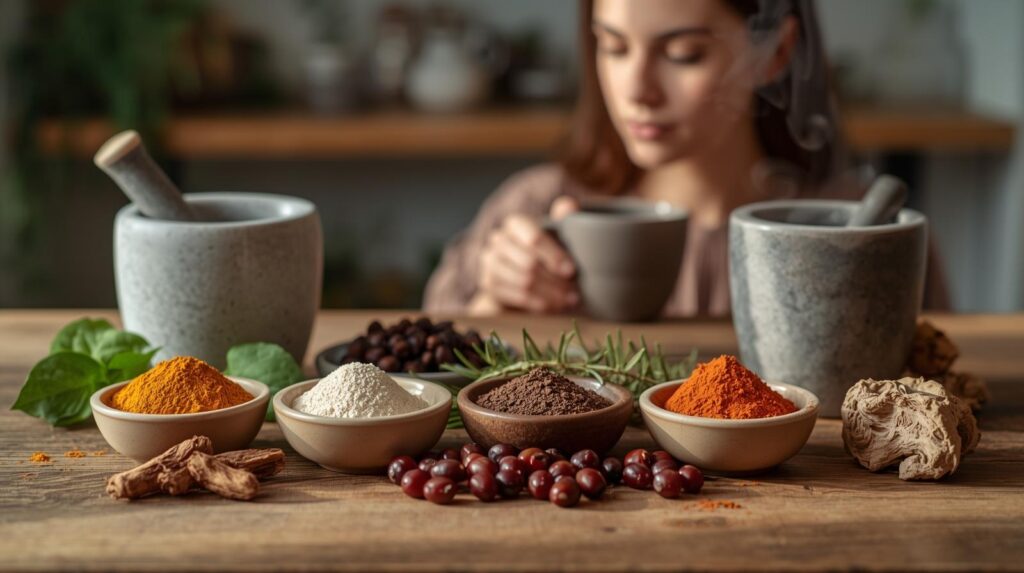
Feeling the Weight of Constant Stress? You’re Not Alone.
Do you ever feel like you’re running on a treadmill that just won’t stop? That even on a “good” day, there’s a underlying hum of anxiety, a mental fog you can’t shake, or a deep-seated exhaustion that a good night’s sleep doesn’t fix? If this sounds familiar, please know that you are not alone. For so many incredible, busy women in the prime of their lives, chronic stress has become an unwelcome companion.
We’ve tried the deep breathing, the occasional yoga class, and yes, countless cups of calming tea. While these are beautiful tools, sometimes it feels like we’re just putting a band-aid on a deeper issue. What if the missing piece to your stress management puzzle wasn’t just another practice to add to your to-do list, but a powerful, nurturing shift in what you’re already doing? What if the answer could be found right in your kitchen?
This is where the ancient, gentle wisdom of adaptogenic herbs comes in. These are not just another wellness trend; they are nature’s brilliant allies, specifically designed to help our bodies and minds build resilience from the inside out. They help us not just survive our demanding lives, but truly thrive within them. This guide is your welcoming introduction to this world, a first step towards transforming your relationship with stress. And the beautiful part?
Learning to incorporate these powerful plants doesn’t have to be complicated. In fact, it can be a simple, joyful, and deeply nourishing practice, which is exactly what we explore in our free course, Calm & Nourish: A Culinary Herbalism Guide to Stress-Free Cooking. Think of this article as your foundation, and the course as your hands-on kitchen companion.
Understanding the Stress Puzzle: It’s More Than Just a Feeling
Before we meet our herbal allies, it’s helpful to understand exactly what we’re dealing with. Stress isn’t just a mood; it’s a full-body physiological response.
What Really Happens Inside Your Body When You’re Stressed?
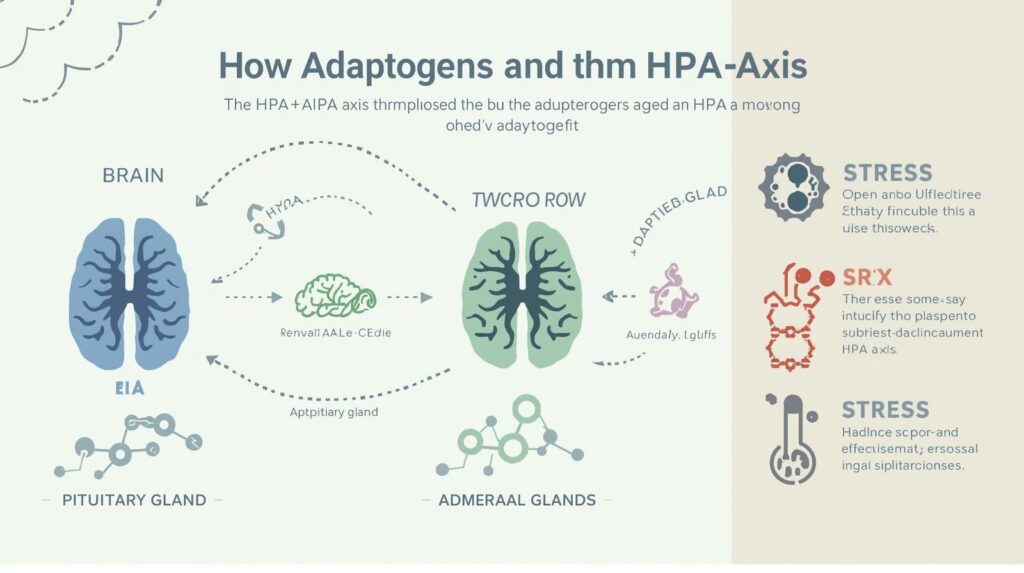
Imagine you’re walking through the woods and a bear suddenly appears. In an instant, a tiny region in your brain called the hypothalamus sounds the alarm. It sends a signal to your adrenal glands, which sit on top of your kidneys, shouting “Release the stress hormones!” This is your brilliant, innate fight-or-flight response, governed by a system known as the HPA axis (Hypothalamic-Pituitary-Adrenal axis). Two key hormones flood your system:
- Cortisol: Often called the “primary stress hormone,” it raises your blood sugar for immediate energy and modulates your immune system.
- Adrenaline: This increases your heart rate, blood pressure, and energy supplies, preparing your muscles to spring into action.
This system is perfect for short-term, life-threatening emergencies—the bear. The problem for most of us today is that the “bear” has been replaced by a relentless stream of deadlines, financial pressures, family responsibilities, and global news cycles. This creates a state of chronic stress, where the alarm bell never gets turned off. Your body is constantly pumping out cortisol, and over time, this takes a profound toll.
Why “Just Relax” Isn’t Enough: The Limits of Our Willpower
When we’re told to “just relax” or “manage our stress better,” it can feel frustrating. It’s not that we don’t want to—it’s that our nervous system is stuck in overdrive. Chronic stress can lead to what is often termed “adrenal fatigue” or HPA axis dysfunction. Think of it like this: your adrenal glands are like a dedicated team that has been working overtime for months, even years. They become exhausted. This can manifest in very real ways that you may recognize:
- Feeling tired but “wired,” unable to unwind even when exhausted.
- Difficulty falling asleep or staying asleep through the night.
- Relying on caffeine to get going and sugar or salty snacks for a quick pick-me-up.
- A weakened immune system, catching every cold that goes around.
- Brain fog, forgetfulness, and trouble concentrating.
- Increased anxiety or feelings of being overwhelmed by small things.
This is not a character flaw or a lack of willpower. It’s a biological state. And this is precisely why we need more than just mindfulness alone; we need to support our bodies on a physiological level. We need to nourish and fortify the very systems that are being taxed. This is the foundational principle of using food and herbs as medicine, a core tenet of the holistic approach taught in our Calm & Nourish course.
The Power of Adaptogens: Nature’s Intelligent Stress Balancers
Now that we understand the deep physiological impact of chronic stress, it’s time to meet our allies. Adaptogens are a unique class of healing plants that offer a profoundly intelligent and supportive response to the challenge of modern stress. They don’t simply sedate you or stimulate you; they work with your body’s own wisdom to help it find balance, a state known as homeostasis.
What Exactly Are Adaptogenic Herbs?
In the simplest terms, adaptogens are natural substances, primarily herbs and mushrooms, that help your body “adapt” to physical, mental, and environmental stressors. The concept isn’t new; it’s been a cornerstone of Ayurvedic and Traditional Chinese Medicine for thousands of years. The modern scientific definition, established in the mid-20th century, outlines three key criteria a plant must meet to be classified as an adaptogen:
- They Are Non-Specific: This means they can help your body resist a wide variety of stressors—whether it’s a demanding work project, a physical injury, an emotional hardship, or exposure to toxins.
- They Help Normalize Bodily Functions: Unlike a stimulant that only pushes you up or a sedative that only brings you down, adaptogens have a unique bidirectional or “normalizing” effect. If a system in your body is overactive, they can help calm it down. If it’s underactive, they can help gently lift it up. For example, they can help lower high cortisol levels but may also support healthy cortisol production in someone who is utterly exhausted.
- They Are Safe and Non-Toxic: They support overall health and well-being without disrupting normal body functions more than necessary.
Think of them not as a crutch, but as a dedicated support team for your adrenal glands and your entire HPA axis. They are the wise, nurturing friends that help your body remember its own innate capacity for balance and resilience.
How Do Adaptogens Actually Work? The Science Made Simple
While the exact mechanisms are complex and still being researched, the general principle is beautifully straightforward. Adaptogens work by supporting your body’s stress-response system at a cellular level. When you’re under chronic stress, your cells are essentially in a state of constant alarm, which can lead to inflammation and burnout. Adaptogens step in and act as a buffer.
Here’s a simple analogy: Imagine your nervous system is a car. Chronic stress means you’re constantly driving with one foot on the accelerator and one foot on the brake at the same time. This is incredibly taxing on the entire vehicle. An adaptogen acts like a brilliant, gentle co-pilot that helps you smoothly regulate both the gas and the brake, allowing the car to run efficiently and without unnecessary wear and tear. Scientifically, they are believed to:
- Modulate the HPA Axis: They help regulate the communication between your brain (hypothalamus and pituitary) and your adrenal glands, leading to a more balanced release of cortisol.
- Support Cellular Energy: They help your cells produce and utilize energy (in the form of ATP) more efficiently, which is why they are renowned for fighting fatigue without being stimulants.
- Protect from Oxidative Stress: They are rich in antioxidants that protect your cells from the damage caused by the inflammatory byproducts of chronic stress.
The Multifaceted Benefits of Adaptogens for Midlife Women
For women navigating the beautiful and complex journey of midlife, adaptogens offer targeted support that goes beyond just “feeling less stressed.” They can be true allies through hormonal shifts, changing energy levels, and the unique pressures of this life stage.
| Benefit | What It Means for You | How You Might Feel |
|---|---|---|
| Cortisol Regulation | Helps bring high cortisol levels down to a healthy range, supporting your sleep-wake cycle and metabolism. | More balanced energy throughout the day, less “tired but wired” at night, easier weight management. |
| Improved Sleep Quality | By calming the nervous system and balancing stress hormones, they prepare your body for deep, restorative rest. | Falling asleep more easily, staying asleep through the night, waking up feeling truly refreshed. |
| Enhanced Mental Clarity | Supports cognitive function by reducing the “brain fog” associated with high cortisol and promoting blood flow to the brain. | Sharper focus, better memory, feeling more present and able to handle mental tasks. |
| Immune System Support | Chronic stress suppresses immune function. Adaptogens help modulate the immune response, making you more resilient. | Catching fewer colds and bugs, bouncing back more quickly when you do get sick. |
| Sustainable Energy | Supports mitochondrial function and adrenal health for energy that comes from a deep, stable source, not a jittery spike. | Consistent vitality from morning to evening, without the afternoon slumps or caffeine dependency. |
This holistic support system is what makes incorporating adaptogens into your daily routine such a game-changer. And the most sustainable, enjoyable way to do that is by moving beyond capsules and embracing them as food, which is the heart of the culinary herbalism approach you’ll master in our Calm & Nourish course.
Your Guide to the Top 7 Adaptogenic Herbs for Stress
Now that we understand the ‘why’ behind adaptogens, let’s get to know the ‘who.’ Each of these herbal allies has a unique personality and set of strengths. Some are calming, some are energizing, and many offer a beautiful blend of both. As you read through these profiles, see which ones you feel intuitively drawn to—often, our bodies guide us toward the support we need most.
Ashwagandha: The Renowned Rejuvenator
Often called the “king of Ayurvedic herbs,” Ashwagandha is one of the most revered adaptogens for its profound ability to help the body cope with stress. Its name translates to “smell of the horse,” alluding not only to its distinctive earthy aroma but also to its traditional use for imparting the vigor and strength of a stallion. For the modern woman feeling stretched thin, Ashwagandha is a cornerstone for restoration.
- Primary Stress Benefit: It is exceptionally effective at lowering cortisol levels and calming the nervous system. It’s classified as a sedative adaptogen, meaning its primary action is to soothe and restore, making it ideal for those who feel “tired but wired.”
- How to Use It: Ashwagandha has a warm, earthy, and slightly bitter taste. It blends beautifully into:
- Warm milk (dairy or plant-based) with a touch of honey and cinnamon for a bedtime tonic.
- Smoothies, where its flavor can be easily masked by sweeter fruits like bananas and berries.
- Savory dishes like soups, stews, and lentil dahls, where its earthiness complements other spices.
Rhodiola Rosea: The Fatigue Fighter
If you struggle with morning fatigue and rely on caffeine to get going, Rhodiola might become your new best friend. Sourced from the cold, mountainous regions of Europe and Asia, this hardy plant is a stimulating adaptogen, known for enhancing mental and physical performance while buffering the effects of stress.
- Primary Stress Benefit: Rhodiola is renowned for reducing fatigue and enhancing focus, particularly during periods of intense mental or physical strain. It helps the body utilize oxygen more efficiently and supports the production of ATP (cellular energy), making it a powerful ally against burnout.
- How to Use It: Rhodiola has a slightly astringent, floral, and sometimes bitter taste. It’s best used in the first half of the day to support energy without disrupting sleep.
- Stir the powder into your morning oatmeal or yogurt.
- Add a tincture to your morning juice or glass of water.
- Incorporate it into energy balls with dates, nuts, and cocoa powder.
Holy Basil (Tulsi): The Sacred Soother
Known as “Tulsi” in India, Holy Basil is considered a sacred plant and a “Queen of Herbs.” Unlike the basil you use in pesto, Holy Basil is a different species with a complex, spicy, and clove-like aroma. It is cherished for its ability to promote a sense of peaceful alertness and spiritual wellness, addressing stress at both a physiological and emotional level.
- Primary Stress Benefit: Holy Basil is a premier adaptogen for easing anxiety and lifting the spirits. It helps normalize cortisol, supports healthy blood sugar levels already in normal range, and possesses anti-inflammatory properties. It’s the perfect herb for when you feel emotionally fragile and overwhelmed.
- How to Use It: Tulsi is most commonly and deliciously consumed as a tea. You can find pure Tulsi tea bags or loose-leaf blends.
- Sip a warm cup of Tulsi tea in the afternoon to combat stress without drowsiness.
- Use a Tulsi tincture in salad dressings or sparkling water.
- Add the fresh leaves to salads for a fragrant, health-boosting punch.
Licorice Root: The Adrenal Nourisher
Licorice Root is a sweet, soothing, and deeply nourishing adaptogen that is particularly beneficial for individuals whose adrenals are feeling utterly depleted. It acts by supporting the entire HPA axis and slowing the breakdown of cortisol, which can be helpful when the body is struggling to maintain adequate levels. A note of caution: due to this action, it should be used with care by those with high blood pressure.
- Primary Stress Benefit: It provides deep nourishment and support for exhausted adrenal glands. Its demulcent (soothing) properties are also excellent for calming an upset stomach caused by nerves and for supporting respiratory health.
- How to Use It: Licorice root has a naturally sweet flavor, 50 times sweeter than sugar.
- It is a classic component of many herbal tea blends, adding natural sweetness.
- A small piece of the dried root can be decocted (simmered) into broths or herbal chai.
- Use powdered licorice root sparingly to sweeten and add depth to desserts or elixirs.
Reishi Mushroom: The Queen of Calm
Reishi, known in Chinese as “Lingzhi” (the mushroom of immortality), is a magnificent fungal adaptogen. It’s not your typical culinary mushroom; it’s woody and bitter, and is most often taken as a powder, tincture, or in capsule form. Reishi is a deeply calming, immune-modulating powerhouse, often called the “spirit plant” for its ability to calm the mind and spirit.
- Primary Stress Benefit: Reishi is a supreme nervous system tonic. Its primary strength lies in its profound calming nature, making it exceptional for promoting restful sleep, easing anxiety, and supporting cardiovascular health. It helps quiet the mental chatter that keeps you up at night.
- How to Use It: Reishi is very bitter, which is a sign of its potent medicinal properties. The key is to pair it wisely.
- Blend Reishi powder into a rich, savory hot cocoa with reishi, raw cacao, and a touch of maple syrup.
- Simmer it for a long time to make a dual-extraction tea or broth.
- Take it as a tincture in a small amount of water or juice.
Schisandra Berry: The Resilient Adaptogen
This beautiful bright red berry is a treasure of Traditional Chinese Medicine, known as “the berry of five flavors” because it contains all five: sweet, sour, salty, pungent, and bitter. This complexity hints at its wide-ranging actions. Schisandra is a true adaptogen, known less for one specific action and more for its ability to increase the body’s overall resistance to stress and its rejuvenating effects.
- Primary Stress Benefit: Schisandra enhances mental performance and concentration while protecting the body from the physical effects of stress. It is particularly supportive for the liver and helps the skin glow from the inside out, making it a wonderful beauty herb as well.
- How to Use It: Schisandra’s tart, slightly sweet, and salty flavor is quite pleasant.
- The dried berries can be brewed on their own or with other herbs into a refreshing iced tea.
- Powdered Schisberry can be added to smoothies, juice, or homemade energy bars.
- Schisandra-infused vinegar makes a delicious, health-boosting salad dressing.
Eleuthero (Siberian Ginseng): The Gentle Sustainer
Don’t let the name fool you—Eleuthero is not a true ginseng, but it shares similar properties. It is one of the most researched adaptogens and is known for its gentle, sustaining energy. Eleuthero is the perfect choice for anyone with a consistently demanding lifestyle who needs to build long-term stamina and resilience without overstimulation.
- Primary Stress Benefit: Eleuthero enhances endurance, both mental and physical. It helps improve the body’s utilization of oxygen, which leads to increased energy and reduced fatigue. It’s excellent for supporting the body during prolonged periods of stress or recovery from illness.
- How to Use It: Eleuthero has a mild, slightly woody and sweet flavor.
- The powder can be easily added to morning smoothies, coffee, or tea.
- It works well in savory broths and soups.
- A tincture can be added to your daily water bottle for all-day support.
Quick-Reference Guide to Choosing Your Adaptogen
To help you find your perfect match at a glance, here is a comparative overview:
| Herb | Key Strength | Best For | Flavor Profile | Key Cautions |
|---|---|---|---|---|
| Ashwagandha | Deep calming & cortisol reduction | The “tired but wired,” poor sleep | Earthy, bitter | Avoid during pregnancy. |
| Rhodiola | Fighting fatigue & enhancing focus | Morning exhaustion, burnout | Astringent, floral | Can be overstimulating; use before 2 PM. |
| Holy Basil | Emotional balance & gentle uplift | Anxiety, feeling overwhelmed | Spicy, clove-like | Very safe for general use. |
| Licorice Root | Nourishing exhausted adrenals | Deep fatigue, sweet cravings | Very sweet | Contraindicated for high blood pressure. |
| Reishi | Calming the mind & spirit | Restlessness, insomnia, anxiety | Very bitter | Can cause dryness for some. |
| Schisandra | Overall resilience & mental clarity | Brain fog, needing broad support | Tart, sweet, salty | Very safe for general use. |
| Eleuthero | Building endurance & stamina | Long-term demanding lifestyles | Mild, woody | Can be overstimulating in high doses. |
Learning to work with these individual personalities is the first step. The true magic often happens when you learn to blend them, creating synergistic formulas tailored to your unique needs—a skill we explore in depth in our Calm & Nourish course.
Sourcing, Safety, and Smart Practices with Adaptogens
Embracing the world of adaptogens is an exciting step toward holistic well-being, but it’s one that should be taken with mindfulness and care. Just as you would carefully select the freshest ingredients for a special meal, the quality and sourcing of your herbs are paramount. And, like any powerful tool, understanding how to use them safely ensures they provide the greatest benefit.
How to Choose High-Quality Adaptogen Supplements and Powders
The market is flooded with herbal products, and their quality can vary dramatically. A poor-quality herb will be, at best, ineffective and, at worst, contaminated. Your health is worth the investment in purity and potency. Here is a simple checklist to guide your purchases:
- Look for Organic Certification: This is your first line of defense against pesticides, herbicides, and heavy metals that can accumulate in medicinal plants. Choosing organic ensures you are getting the purest plant material possible.
- Prioritize Third-Party Testing: Reputable companies will have their products tested by independent laboratories for purity (ensuring no contaminants) and potency (verifying the active compound levels). Look for a “Certificate of Analysis” (COA) on the company’s website or upon request.
- Understand Extraction Methods: For tinctures and some capsules, the method of extraction matters. For example, Reishi’s immune-supporting polysaccharides are best extracted in hot water, while its calming triterpenes are extracted in alcohol. A “dual-extraction” process is often the gold standard for mushrooms. For powders, simply being “air-dried” and “finely milled” is ideal for mixability.
- Choose Sustainable and Ethical Sources: Support companies that are transparent about where they source their herbs, practice wildcrafting (responsibly harvesting wild plants) ethically, or use regenerative farming practices. This not only ensures a better product but also supports the health of our planet.
- Trust Your Senses: High-quality herb powders should have a vibrant color and a potent, fresh aroma. If it looks dull and smells like dust, it likely is.
Important Contraindications and Who Should Be Cautious
Adaptogens are generally very safe for most people when used appropriately, but they are potent and interact with our physiology. It is crucial to be aware of situations that require extra caution or professional guidance. This list is not exhaustive, and it’s always best to consult with a qualified healthcare practitioner if you have any concerns.
- Pregnancy and Breastfeeding: This is a time of extreme caution. Most adaptogens, including Ashwagandha and Licorice Root, are not recommended during pregnancy or lactation due to a lack of safety data and their potential hormonal influences.
- Autoimmune Conditions: Adaptogens like Ashwagandha and Reishi are “immune-modulators,” meaning they can stimulate the immune system. For individuals with autoimmune conditions (like Hashimoto’s, Rheumatoid Arthritis, or MS), this stimulation could potentially exacerbate symptoms. It is essential to work with a knowledgeable practitioner.
- Medication Interactions: If you are on any prescription medications, especially for:
- Blood Thinners (e.g., Warfarin): Reishi and Licorice may increase the risk of bleeding.
- Diabetes Medication: Adaptogens that lower blood sugar (like Holy Basil) could potentially cause it to drop too low.
- Blood Pressure Medication: Licorice Root is notorious for raising blood pressure and should be avoided.
- Immunosuppressants: Immune-modulating herbs may interfere with these drugs.
- “Hot” Autoimmune Conditions or Excessive Anger: In Traditional Chinese Medicine, stimulating adaptogens like Rhodiola may be contraindicated for individuals who already present with a lot of heat, agitation, or anger, as they could potentially worsen these symptoms.
The Golden Rule of Herbalism: Listening to Your Body
Above all else, the most important practice you can cultivate is attuning yourself to the subtle messages of your body. Herbal medicine is not a one-size-fits-all solution; it is a deeply personal journey.
- Start Low and Go Slow: When introducing a new adaptogen, begin with a very small dose—perhaps half the recommended amount—for at least a week. Notice how you feel. Do you feel calmer? More energized? Or do you feel jittery, agitated, or experience digestive upset?
- Keep a Simple Journal: Note down the herb, the dose, the time of day, and any shifts you notice in your energy, mood, sleep, or digestion. This objective data is invaluable for understanding what works for you.
- Cycle Your Herbs: A common practice is to take adaptogens for 5-6 days a week, giving your body a 1-2 day break, or to use them for 2-3 months at a time followed by a 1-2 week break. This prevents your body from becoming overly accustomed to them and allows you to reassess your needs.
- Trust Your Intuition: If an herb doesn’t feel right for you, even if it’s highly recommended, honor that feeling. You are the expert on your own body.
This mindful, educated approach is what separates a nourishing practice from a stressful one. And the most joyful way to begin this practice is by moving beyond the capsule and into the kitchen, which is the very essence of the Calm & Nourish course, where you learn to weave these powerful plants into the fabric of your daily life through simple, delicious food.
Beyond the Capsule: Integrating Adaptogens into Your Daily Meals
We’ve explored the incredible “why” behind adaptogens, and now we arrive at the most joyful and sustainable part of the journey: weaving them into your daily life through the simple, nourishing act of cooking. Moving beyond capsules and tinctures to embrace culinary herbalism transforms these powerful plants from a supplement you take into a nourishing ritual you savor. This shift is at the heart of creating a truly stress-free, holistic approach to well-being.
Why Culinary Herbalism is the Key to Sustainable Stress Relief
Think about the difference between taking a vitamin C capsule and eating a sun-ripened orange. Both provide vitamin C, but the experience of peeling the orange, smelling its bright citrus scent, and tasting its sweet, juicy segments is a sensory pleasure that nourishes you on multiple levels. The same is true for adaptogens.
When you incorporate them into your food, you are doing more than just consuming their active compounds. You are:
- Creating a Ritual of Self-Care: The act of preparing a calming latte or a supportive broth is a mindful pause in your day. It is a tangible way to say to yourself, “My well-being matters.”
- Enhancing Bioavailability and Digestion: Many adaptogens are fat-soluble, meaning they are better absorbed when consumed with fats. Cooking them into foods that contain healthy fats (like coconut milk, ghee, or nuts) can enhance their effectiveness. Furthermore, the simple act of consuming them as a warm, cooked food is often gentler on the digestive system.
- Building a Long-Term Relationship: Taking a capsule can become a chore, but enjoying a delicious, herb-infused meal is a pleasure. This positive association makes it far more likely that you’ll maintain this supportive practice for the long haul, building resilience day by day.
- Synergizing Nutrients: When you add adaptogens to a smoothie, soup, or sauce, you are combining them with a whole symphony of other vitamins, minerals, and phytonutrients from the whole foods in the recipe. This creates a synergistic effect that supports your body in a more complete and holistic way than an isolated supplement ever could.
This is the profound philosophy behind our free course, Calm & Nourish: A Culinary Herbalism Guide to Stress-Free Cooking. It’s designed to guide you from feeling confused in the kitchen to feeling confident and creative, turning your daily meals into a source of deep, sustainable calm.
Your Adaptogen Kitchen Toolkit: Powders, Teas, and Tinctures
Before we dive into recipes, let’s get familiar with the different forms of adaptogens you’ll want to have on hand. Each has its own strengths and best uses in the kitchen.
- Powders: This is the most versatile form for culinary use. Finely milled powders from the root, leaf, or mushroom can be easily blended into both sweet and savory dishes.
- Best For: Smoothies, lattes, elixirs, soups, stews, sauces, energy balls, and baked goods.
- Tip: Start with ½ to 1 teaspoon per serving and adjust to your taste and tolerance.
- Dried Whole Herbs & Teas: Many adaptogens, like Holy Basil (Tulsi) and Schisandra berries, are perfectly suited for being brewed into teas. This is a gentle and hydrating way to enjoy their benefits.
- Best For: Infusions (steeping in hot water), decoctions (simmering harder roots like licorice), and as a base for broths.
- Tip: You can make a strong quart of tea and use it as the liquid in your smoothies or oatmeal.
- Tinctures: These are concentrated liquid extracts, usually in an alcohol base. They are potent and have a long shelf life.
- Best For: When you need a quick, convenient option. They can be added to a glass of water, juice, or a finished dish after cooking, as high heat can degrade the alcohol-based extract.
- Tip: A few drops in a salad dressing or drizzled over cooked grains can be an easy way to incorporate them.
Having a small collection of these forms in your pantry—perhaps an Ashwagandha powder for your evening tonic, a Rhodiola tincture for busy mornings, and a bag of Tulsi tea for afternoon breaks—empowers you to support your body in a way that fits seamlessly into the rhythm of your day.
Simple & Soothing Adaptogen Recipes for a Busy Life
Now for the most delightful part—bringing these powerful plants to life in your kitchen! The goal here is not to become a gourmet chef, but to discover a few simple, forgiving recipes that you can easily weave into your existing routine. These are designed to be flexible, allowing you to swap herbs based on what you have and how you feel each day. Remember, this is about adding nourishment, not complexity.
Morning Rituals: Start Your Day Centered
How you begin your morning sets the tone for your entire day. Instead of jolting your system with caffeine, these recipes offer a gentle, sustained lift that supports your adrenal glands and nervous system from the moment you wake up.
Adaptogenic Coffee Alternative Latte
This rich, creamy latte provides the comforting ritual of a warm morning beverage without the caffeine crash. It’s a beautiful way to gently support your energy levels and stress resilience.
Ingredients:
- 1 cup of unsweetened plant-based milk (almond, oat, or coconut work beautifully)
- 1 teaspoon of Ashwagandha powder (for calm focus) or Rhodiola powder (for energizing focus)
- 1 teaspoon of raw cacao powder or cocoa powder
- ½ teaspoon of cinnamon
- ¼ teaspoon of vanilla extract
- A pinch of black pepper (enhances the absorption of the herbs)
- Natural sweetener to taste (like 1 teaspoon of maple syrup or raw honey)
Instructions:
- Gently Warm the Milk: Pour the milk into a small saucepan and warm it over medium heat until it is hot but not boiling. Alternatively, you can heat it in a mug in the microwave for 1-2 minutes.
- Combine Ingredients: Carefully transfer the warm milk to a blender. Add the adaptogen powder, cacao, cinnamon, vanilla, black pepper, and your chosen sweetener.
- Blend Until Frothy: Secure the lid on the blender and blend on high for 30-45 seconds until the latte is frothy and perfectly combined. Tip: If you don’t have a blender, you can use a small whisk or a milk frother, but the blender creates the best texture and ensures the powder is fully dissolved.
- Pour and Intend: Pour your latte into your favorite mug. Take a moment before you drink to set an intention for your day—perhaps for calm, clarity, or resilience.
Quick Smoothie Boosters
For those mornings when you need to walk out the door with nourishment in hand, a smoothie is your best friend. Here’s how to transform your standard smoothie into a powerful adaptogenic tonic.
- The Calming Creamsicle: Blend 1 cup of orange segments (fresh or frozen), ½ cup of full-fat coconut milk, ½ cup of water, 1 teaspoon of Ashwagandha powder, and a dash of vanilla.
- The Focus & Energy Blend: Blend 1 cup of mixed berries, 1 cup of spinach, 1 cup of unsweetened almond milk, 1 teaspoon of Rhodiola powder, and 1 tablespoon of almond butter.
- The Resilient Green Goddess: Blend 1 cup of pineapple, 1 cup of kale, ½ an avocado, 1 cup of coconut water, and 1 teaspoon of Schisandra powder.
The key is to start with a simple base—fruit + liquid + healthy fat—and then add your ½ to 1 teaspoon of adaptogen powder. This is a practice we explore in depth in our Calm & Nourish course, with countless combinations to suit your taste and needs.

Midday Meals: Sustain Your Energy and Focus
Lunch is often a forgotten meal, but it’s a critical opportunity to refuel and re-center during a busy day. These savory options are designed to be prepared ahead of time, making a nourishing lunch effortless.
Stress-Supporting Savory Broth
A warm cup of broth is like a hug from the inside out. It’s hydrating, mineral-rich, and the perfect vehicle for adaptogens that support the adrenal glands. You can sip this from a thermos at your desk.
Ingredients:
- 2 cups of high-quality chicken or vegetable broth
- 1 teaspoon of dried Astragalus root slices (a classic adrenal tonic) or ½ teaspoon of Reishi powder
- 1 tablespoon of coconut aminos or tamari
- 1 teaspoon of minced fresh ginger
- 1 clove of garlic, smashed
- Optional: A pinch of dried seaweed flakes for minerals and a savory flavor.
Instructions:
- Simmer Gently: In a small saucepan, combine the broth, Astragalus root (if using), ginger, and garlic. If using Reishi powder, wait to add it until the end.
- Infuse the Herbs: Bring the mixture to a gentle simmer, then reduce the heat to low, cover, and let it steep for 15-20 minutes. Do not boil vigorously, as this can break down the delicate compounds.
- Strain and Season: Remove the pot from the heat. Strain out the Astragalus root slices and garlic clove. Whisk in the coconut aminos and the Reishi powder (if using).
- Sip and Reset: Pour into a mug and sip slowly. Feel the warmth spread through your body, grounding and replenishing you for the rest of your afternoon.
How to Stir Adaptogen Powders into Savory Dishes
You can easily “sneak” adaptogens into your everyday lunches without changing the flavor profile significantly.
- Soups and Stews: Stir ½ teaspoon of Ashwagandha or Reishi powder into a single serving of creamy soups like butternut squash, potato leek, or mushroom bisque. The earthy flavors blend in perfectly.
- Salad Dressings: Add a pinch of Eleuthero or Schisandra powder to your vinaigrette. Whisk it into the olive oil, lemon juice, and mustard before tossing with your greens.
- Guacamole or Hummus: Blend ½ teaspoon of Ashwagandha into your next batch of guacamole or hummus. The strong flavors of garlic, lemon, and cumin will easily mask the herb’s earthiness.
Evening Wind-Down: Prepare for Restful Sleep
The evening is all about signaling to your nervous system that the day is done and it’s safe to rest and repair. These calming recipes are the perfect way to transition into a night of deep, restorative sleep.
Golden Moon Milk with Ashwagandha
This is the ultimate bedtime elixir. The combination of warm milk, soothing spices, and calming adaptogens tells your brain and body that it’s time to shut down.
Ingredients:
- 1 cup of unsweetened plant-based milk (almond or coconut are great)
- 1 teaspoon of Ashwagandha powder
- ½ teaspoon of turmeric powder
- ¼ teaspoon of cinnamon
- A pinch of black pepper (to activate the turmeric)
- A tiny pinch of nutmeg
- 1 teaspoon of ghee or coconut oil (this adds healthy fats for better absorption and a richer texture)
- Natural sweetener to taste (like ½ teaspoon of maple syrup or honey)
Instructions:
- Warm the Base: Gently warm the milk in a small saucepan over medium heat.
- Create the Paste: In a mug, combine the Ashwagandha, turmeric, cinnamon, black pepper, nutmeg, and ghee/coconut oil. Add a tablespoon of the warm milk and stir to create a smooth paste. This step prevents the powders from clumping.
- Combine and Froth: Pour the remaining warm milk into the mug and whisk vigorously or use a frother until everything is well combined and frothy on top.
- Sweeten and Settle: Add your sweetener, stir, and find a quiet place to sip your moon milk. Put away your screens, and allow yourself to truly unwind. This simple ritual is a cornerstone of stress-free evening nourishment, just as we teach in the Calm & Nourish course.
Building Your Personalized Adaptogen Protocol
You now have the knowledge of the key herbs and the delicious recipes to use them in. The final, and most personal, step is to weave these elements together into a sustainable routine that is uniquely tailored to your body’s needs. This isn’t about creating a rigid schedule, but rather cultivating a flexible, intuitive practice that supports you through the ever-changing seasons of life.
Starting Slow: The “One at a Time” Principle
When you feel excited about the potential of adaptogens, the temptation can be to try everything at once. I encourage you to gently resist this urge. The wisest and most effective approach is to introduce just one new adaptogen at a time.
Think of it as making a new friend. You wouldn’t invite a whole group of strangers into your home at once and expect to form a deep, meaningful connection with each of them. You’d spend quality one-on-one time to truly get to know them. The same is true for herbs.
- Choose Your First Ally: Look back at the herb profiles and see which one you felt most drawn to. Perhaps it’s Ashwagandha for its calming properties, or Rhodiola for its energizing lift. Trust your intuition.
- Commit to a Two-Week “Introduction”: For a period of 10-14 days, incorporate this single herb into your daily routine using one of the simple recipes provided. A great starting dose is ½ teaspoon of powder or the recommended dose on a tincture.
- Become a Detective: During this time, pay close attention. Keep it simple and just notice: Do you feel any different? Is your sleep deeper? Is your afternoon energy crash less severe? Do you feel a greater sense of patience? Or, conversely, do you feel any agitation, digestive discomfort, or other negative effects?
- Assess and Decide: After the trial period, decide if this herb is a good fit for you. If it feels supportive, you can continue with it. If not, you can discontinue it and try a different one after a few days’ break. This method ensures you know exactly what is working—and what isn’t—for your unique constitution.
Creating Synergy: Blending Herbs for Enhanced Effects
Once you have gotten to know one or two adaptogens individually, you can begin to explore the art of blending. This is where the true magic of herbalism happens. By combining herbs, you can create a formula that addresses multiple aspects of your well-being simultaneously, often with more balanced and nuanced results than a single herb can provide.
Here are a few synergistic blends you can experiment with:
- The “Calm & Focus” Blend (for mental overwhelm and distraction):
- Ashwagandha (½ tsp): To calm the nervous system and reduce background anxiety.
- Rhodiola (½ tsp): To enhance mental clarity, focus, and fight fatigue.
- Best in: Your morning latte or smoothie to start the day centered and sharp.
- The “Resilience & Rest” Blend (for deep exhaustion and poor sleep):
- Reishi (½ tsp): To deeply calm the mind and spirit, preparing the body for sleep.
- Ashwagandha (½ tsp): To further support the lowering of cortisol levels in the evening.
- Licorice Root (a small pinch, if your blood pressure is normal): To provide deep adrenal nourishment.
- Best in: Your evening Moon Milk or a calming tea before bed.
- The “All-Day Sustenance” Blend (for long-term stamina and immune support):
- Eleuthero (½ tsp): For building endurance and supporting consistent energy.
- Schisandra (½ tsp): For overall resilience, mental performance, and that inner “glow.”
- Holy Basil (as a tea base or ½ tsp powder): For emotional balance and immune modulation.
- Best in: A thermos of tea that you sip throughout the day, or in your lunchtime broth.
Tracking Your Journey: A Simple 7-Day Journal Prompt
You don’t need a complicated system to track your progress. A simple notebook and a few mindful moments each evening are all you need. Here are a few prompts to guide your observations. You don’t need to answer all of them every day—just the ones that feel relevant.
- Today’s Herbs & Dose: (e.g., 1 tsp Ashwagandha in my morning latte).
- Energy Levels: How was my energy throughout the day? (Rate 1-10 in the morning, afternoon, and evening).
- Sleep Quality: How did I sleep last night? Did I fall asleep easily? Did I wake up during the night? Did I feel rested this morning?
- Mood & Mental State: Did I feel anxious, calm, irritable, patient, foggy, or clear today?
- Stress Response: How did I handle a stressful event today? Did I feel more resilient than usual?
- Physical Sensations: Any notes on digestion, body tension, or other physical feelings?
- One Nourishing Thing I Did for Myself Today:
After a week of consistent use and gentle observation, you will have gathered invaluable data about what this new practice is doing for you. This self-knowledge is the most powerful tool you have. It transforms you from someone following a protocol to someone who is an active, wise participant in your own health journey, a core philosophy we embrace in the Calm & Nourish course.
A Holistic Foundation: Supporting Your Adaptogens
While adaptogens are powerful allies, they are not a magic bullet. They work most effectively when they are part of a holistic foundation of self-care. Think of your well-being as a beautiful, sturdy table. The adaptogens are one strong leg, but they need the other legs—nourishing food, mindful movement, and restorative rest—to create a stable and supportive surface for your life. When all legs are strong, you can handle whatever life places upon you with grace and resilience.
The Foundational Role of Nourishing Foods
Adaptogens are incredible, but they cannot compensate for a diet that is inherently stressful to the body. The goal is to create a nutritional environment that is so deeply supportive that the adaptogens can do their specialized work with ease.
- Balance Your Blood Sugar: One of the most significant stressors on the adrenal glands is erratic blood sugar. When you skip meals or rely on sugary snacks, your cortisol has to spike to bring your levels back up. To support this:
- Eat a balanced breakfast with protein, healthy fats, and complex carbohydrates within an hour of waking.
- Don’t go longer than 4-5 hours without eating. Include protein and fat with each meal and snack to create sustained energy.
- Reduce refined sugars and flours, which cause rapid spikes and crashes.
- Nourish Your Gut-Brain Connection: The gut is often called the “second brain,” and there is a direct line of communication—the vagus nerve—between your gut and your brain. A stressed brain can disrupt digestion, and an unhealthy gut can send stress signals to the brain. Support this connection by:
- Eating a diverse array of plants to feed your beneficial gut bacteria.
- Including fermented foods like yogurt, kefir, sauerkraut, and kimchi.
- Staying hydrated with water and herbal teas throughout the day.
When your body is receiving steady, nourishing fuel, your stress levels naturally decrease, and your adaptogens can focus on building resilience rather than putting out dietary fires.
The Power of Breath and Gentle Movement
When we are stressed, our breath becomes shallow and our muscles tense. We can consciously use breath and movement to signal to our nervous system that we are safe, powerfully enhancing the effects of our adaptogens.
- The Magic of the Exhale: The simplest and most powerful stress-relief tool you have is your breath. The nervous system is calmed most effectively by lengthening the exhale. Try this anytime you feel overwhelmed:
- The 4-7-8 Breath: Inhale quietly through your nose for a count of 4. Hold your breath for a count of 7. Exhale completely through your mouth, making a whoosh sound, for a count of 8. Repeat 3-4 times.
- Movement as Medicine, Not Punishment: Intense, high-impact exercise can be another form of stress on the body. For sustainable stress relief, focus on movements that calm the nervous system:
- Gentle Walking in Nature: This combines rhythmic movement, fresh air, and the calming effects of being in a green space.
- Yoga or Tai Chi: These practices beautifully unite breath with movement, promoting flexibility, strength, and a deep sense of calm.
- Dancing to Your Favorite Music: A joyful way to move your body and release endorphins without any pressure to perform.
Creating Rituals of Rest in a Busy World
In our productivity-obsessed culture, rest is often seen as laziness. In reality, it is a biological necessity and a radical act of self-care. Adaptogens can help you rest, but you must also create the space for it.
- Schedule “Non-Negotiable” Downtime: Just as you would schedule a meeting, block out time in your calendar for rest. This isn’t time for chores or scrolling on your phone. This is time for true, guilt-free inactivity—reading a novel, sitting on the porch, taking a bath, or simply daydreaming.
- Craft a Technology Curfew: The blue light from screens disrupts melatonin production, the hormone essential for sleep. Aim to turn off all screens at least one hour before bedtime. This is the perfect time to enjoy your Golden Moon Milk and a good book.
- Embrace the “Good Enough”: Perfectionism is a major source of stress for many high-achieving women. Practice releasing the need to have everything perfectly in order. Ask yourself, “Is this good enough for now?” This simple question can free up immense mental and emotional energy.
Remember, adaptogens are a beautiful part of the puzzle, but they are at their most powerful when they are supporting a life that is already oriented toward balance. They are the helpers, the supporters, the gentle guides back to your own center. Learning to weave all of these elements—food, herbs, breath, movement, and rest—into a sustainable tapestry is the ultimate goal of a holistic practice, and it’s a journey we take together in the Calm & Nourish course.
Conclusion: Embracing a Life of Nourished Calm
And so, dear friend, we arrive at the end of this guide and the beautiful beginning of your own personal journey with adaptogens. What started as an exploration of powerful plants has hopefully blossomed into a new perspective—one where your kitchen becomes your sanctuary and your meals become your medicine. You are now equipped not just with information, but with a practical, empowering pathway to resilience.
Remember, this isn’t about adding more to your already-full plate. It is about transforming what is already on your plate into a source of deep, sustainable nourishment. It’s about swapping a stressful obligation for a joyful ritual. That morning smoothie is no longer just a quick breakfast; it’s a potent elixir of focus and calm. That evening cup of tea is no longer just a habit; it’s a sacred signal to your nervous system that the day is done and it is safe to rest and restore.
You have learned that adaptogens like Ashwagandha, Rhodiola, and Holy Basil are not mere supplements, but intelligent allies. They work with your body’s innate wisdom, helping you navigate life’s demands with greater grace and less wear and tear. You’ve discovered that the highest quality herbs, sourced with care and used with mindful intention, can become a cornerstone of your well-being. And most importantly, you’ve seen how easily they can be woven into the fabric of your day through simple, delicious recipes that feel like a gift to yourself, not another chore.
This journey with adaptogens is a profound step toward reclaiming your vitality and peace. It is a commitment to supporting your magnificent body and busy mind with the nurturing power of nature. You deserve to feel not just okay, but truly vibrant, calm, and resilient.
If this guide has ignited a spark of curiosity and you find yourself yearning for more—more recipes, more knowledge, and a supportive community to guide you—then your next step awaits. Our free course, Calm & Nourish: A Culinary Herbalism Guide to Stress-Free Cooking, is designed to be your hands-on companion. Inside, we’ll dive deeper into creating personalized herbal blends, master a wider array of soothing recipes, and build the confidence to make culinary herbalism a natural, stress-free part of your life. Let this be the moment you choose to move from learning to truly living a life of nourished calm. We are so excited to welcome you.

Frequently Asked Questions (FAQ) About Adaptogenic Herbs for Stress
Q1: How long does it take for adaptogens to work for stress?
A: Adaptogens work cumulatively. While you might feel a subtle shift after a single dose, most people notice more significant and consistent benefits—such as improved sleep, better energy, and a calmer mood—after 2-4 weeks of consistent, daily use. They are building resilience, not providing an instant fix.
Q2: Can I take multiple adaptogens at the same time?
A: Yes, and this is often where the most benefit is found through synergy. However, the golden rule is to start one at a time. Introduce a single adaptogen for 1-2 weeks to see how your body responds before adding a second. This allows you to pinpoint what works best for you and avoid any potential reactions.
Q3: Are adaptogens safe for people with thyroid conditions?
A: This requires caution and professional guidance. Some adaptogens, like Ashwagandha, can support thyroid function, but for those with autoimmune thyroid conditions like Hashimoto’s, they may potentially stimulate the immune system. It is absolutely essential to consult with your healthcare provider before use.
Q4: What’s the difference between an adaptogen and a stimulant like coffee?
A: This is a crucial distinction. A stimulant like coffee forces your body to release stress hormones, providing a sharp, often jittery energy that ends in a crash. An adaptogen, however, helps your body manage its response to stress, supporting your adrenal glands to provide sustainable, smooth energy without the crash. They work with your body, not against it.
Q5: Can I use adaptogens if I’m on prescription medication?
A: It depends on the medication. Adaptogens can interact with certain drugs, including those for blood pressure, diabetes, and blood thinners. For example, Licorice Root can raise blood pressure, and others may affect blood sugar levels. Always discuss with your doctor or a qualified clinical herbalist before combining adaptogens with prescription medications.
Q6: Where is the best place to buy high-quality adaptogenic herbs?
A: Prioritize reputable companies that are transparent about their sourcing. Look for vendors who:
Provide organic certification.
Offer third-party testing (Certificates of Analysis) for purity and potency.
Use sustainable and ethical harvesting practices.
Specialize in medicinal herbs rather than general supplement brands.






Responses