
Why Am I Always Tired? An Ayurvedic Perspective on Midlife Burnout (2025)


Table of Contents
It’s Not Just You, It’s Your Body’s Signal
If you’ve found yourself asking, “Why am I always tired?” more times than you can count, please know this first and foremost: you are not lazy, broken, or alone. That pervasive sense of exhaustion that coffee can’t touch, that heavy fog that makes even simple decisions feel monumental, is not a personal failing. It is a signal—a crucial, intelligent message from your body that the way you are living is no longer sustainable.
In our modern world, we’ve been taught to push through, to hustle, to ignore the whispers of our bodies until they become a desperate, roaring shout for rest. But in midlife, the body’s resilience changes. The systems that once kept up with the pace begin to falter under the cumulative weight of stress, hormonal shifts, and a lifestyle that prioritizes output over replenishment. This is where Ayurveda, the 5,000-year-old “science of life” from India, offers not just another quick fix, but a profound and compassionate paradigm shift. It provides a map to understand the unique roots of your fatigue and a path to restore your energy at its very source.
This journey of applying an Ayurvedic perspective on midlife burnout is about learning to listen to your body’s wisdom and responding with nurturing care. If you’re ready to trade that constant question of “why am I always tired?” for a life of vibrant, sustainable energy, you are in the right place. For those seeking a structured, personalized path through this transformation, our course, The Art of Abundant Energy: Your Flourishing Ayurvedic Path Out of Midlife Fatigue, offers the deep, guided support you deserve.
Think of this not as one more thing you have to do, but as an invitation to finally stop, to listen, and to begin a loving dialogue with your own well-being. Ayurveda teaches us that true energy isn’t about a frantic, jittery buzz; it’s a calm, steady, and resilient flow that allows you to move through your days with purpose and joy. It is your birthright to feel vital and alive, and the answers have been within you—and within this ancient wisdom—all along. Let’s begin the beautiful work of uncovering them together.
Beyond “Just Stressed”: How Ayurveda Defines Burnout and Fatigue
To solve the problem of chronic fatigue, we must first understand its true nature. In the Western paradigm, we often get a label—”adrenal fatigue,” “burnout,” “chronic fatigue syndrome”—but rarely a deep, systemic explanation of why it’s happening to you. Ayurveda moves beyond these labels to identify the fundamental physiological and energetic imbalances that lead to exhaustion. It gives us a language to describe the subtleties of our tiredness, which is the first step toward healing it.
Ojas: Your Essential Reservoir of Vitality and How It Becomes Depleted
In Ayurveda, the ultimate source of our vitality, immunity, and bliss is a subtle substance called Ojas (pronounced O-jus). Think of Ojas as your body’s essential battery reserve or your deepest savings account of energy. It is the refined end-product of perfect digestion—not just of food, but of all our experiences, thoughts, and emotions. When Ojas is plentiful, you radiate health, you have a strong immune system, your mind is clear, and you feel resilient in the face of stress.
However, a modern midlife—filled with chronic stress, poor sleep, processed foods, and overstimulation—steadily depletes this precious reserve. Every late night, every stressful confrontation, every hurried meal drains a little more from your Ojas account. The profound fatigue of burnout is, at its core, a state of severely depleted Ojas. Replenishing it is not about a single supplement or a week off; it’s about a consistent lifestyle dedicated to nurturing practices that slowly and steadily rebuild this foundational energy. This is the core mission of applying an Ayurvedic perspective on midlife burnout.
Ama: The Toxic Fatigue Caused by Undigested Experiences and Food
If depleted Ojas is an empty battery, then Ama is the sludge that clogs the system and prevents it from charging. Ama is the concept of toxins in Ayurveda—a sticky, heavy, waste product that forms as a result of incomplete digestion. We create Ama when we eat foods that are wrong for our body type, eat while stressed or distracted, or are exposed to environmental toxins. But crucially, we also create Ama from undigested life experiences: unresolved emotions, chronic stress, and trauma that we “swallow” but never process.
This toxic sludge circulates in the body, clogging the subtle channels through which energy and information flow. It creates a profound sense of heaviness, brain fog, stiffness, and low-grade inflammation. When you feel “toxic tired”—heavy, sluggish, and mentally cloudy—you are likely experiencing the effects of Ama. Therefore, healing fatigue is a two-part process: we must simultaneously clear the existing Ama while also taking steps to stop producing more.
The Three Pillars of Life: How Imbalance in Vata, Pitta, and Kapha Creates Unique Types of Exhaustion
Ayurveda recognizes three fundamental biological energies, or Doshas, that govern all our physical and mental processes: Vata (Air/Ether), Pitta (Fire/Water), and Kapha (Earth/Water). We all have a unique combination of these three, which defines our natural constitution. However, when these Doshas fall out of balance due to lifestyle, diet, and stress, they create distinct patterns of disease—including distinct types of fatigue.
Understanding which Dosha is primarily aggravated is key to choosing the right healing path. You’re not just “tired”; you could be experiencing the frantic, anxious exhaustion of Vata imbalance, the angry, burnt-out fatigue of Pitta imbalance, or the heavy, sluggish lethargy of Kapha imbalance. By asking “why am I always tired?” through this lens, you move from a generic question to a personalized inquiry, which is the first step toward a truly effective solution. We will explore these fatigue types in detail in the next section, giving you the clarity to understand your own energy crisis.
The Modern Midlife Storm: Why Women Over 40 Are So Vulnerable
Understanding the Ayurvedic concepts of Ojas, Ama, and the Doshas gives us the framework, but we must also look at the modern landscape that makes this period of life a perfect storm for energy depletion. It’s not your imagination; the demands on you have created a unique physiological and emotional crucible. Let’s break down the key factors that converge to create the chronic exhaustion so many midlife women experience.
The Hormonal-Hustle Cascade: Estrogen, Cortisol, and the Energy Crisis
For decades, your endocrine system operated with a certain rhythm. Now, as you enter perimenopause and menopause, the primary source of estrogen—your ovaries—begins to fluctuate and decline. Estrogen is far more than a reproductive hormone; it has a profound influence on energy metabolism, brain function, mood, and sleep. As it becomes erratic, so too can your vitality. But there’s a more insidious interaction at play: the one between estrogen and cortisol, your primary stress hormone. For years, you may have been running on adrenaline and cortisol to manage a high-stress career, family demands, and societal pressures—a state often called the “hustle.”
This constant output keeps cortisol chronically elevated. The problem is that your body uses the same precursor hormone (pregnenolone) to make both cortisol and progesterone. When you are in a constant state of “hustle,” your body prioritizes cortisol production, essentially “stealing” the raw materials needed to make progesterone. This leads to a state of relative estrogen dominance and progesterone deficiency, which exacerbates sleep problems, anxiety, and weight gain. This hormonal hijacking creates a vicious cycle: hormonal shifts increase stress and fatigue, and chronic stress further disrupts hormonal balance. This is a primary reason why the generic advice to “reduce stress” feels impossible; the fatigue is now wired into your very biology.
The “Empty Tank” Syndrome: Decades of Giving Without Adequate Self-Refueling
Let’s speak plainly about the emotional labor and energy output of a woman’s life. For decades, your energy has likely been a resource for others—your children, your partner, your aging parents, your colleagues. You have been the planner, the nurturer, the problem-solver, the emotional anchor. While deeply loving, this is also depleting. Ayurvedically, this is a direct drain on your Ojas. For years, you may have been running on a deficit, refueling with quick hits of caffeine and sugar instead of deep, nourishing rest and self-care.
Midlife is when the cumulative debt of this “energy expenditure” comes due. The tank isn’t just low; it’s bone-dry. The systems that have been compensating finally wave a white flag. This isn’t a sudden failure; it’s a predictable outcome of a lifestyle where your own replenishment was consistently placed at the bottom of the priority list. Recognizing this “Empty Tank” syndrome is not about casting blame, but about acknowledging the truth of your experience, which is the first step in making a different, more sustainable choice.
The Digital Drain: How Constant Connectivity Sabotages Our Nervous System’s Recovery
Add to the hormonal and emotional drains a third, relentless factor: the digital age. The constant ping of notifications, the blue light from screens, the 24/7 news cycle, and the pressure to be perpetually “on” and responsive is a massive, unseen tax on your nervous system. This environment chronically aggravates the Vata dosha, which governs the nervous system. Vata is light, mobile, and quick—and modern technology mimics and exaggerates these qualities, leading to a state of sensory and mental overload. This “digital drain” prevents your nervous system from ever fully dropping into the “rest and digest” (parasympathetic) state, which is essential for cellular repair, hormone production, and Ojas replenishment.
Even when you finally sit down to rest, your mind is often still scrolling, worrying, or processing. This makes your rest less restorative, perpetuating the cycle of fatigue. The answer to “why am I always tired?” must include an audit of your digital consumption, as it directly impacts your body’s fundamental ability to recover. Applying an Ayurvedic perspective on midlife burnout means creating clear boundaries with technology to protect your most valuable resource: your calm, focused, and restored nervous system. For a practical blueprint on creating these boundaries and other vital rituals, our course, The Art of Abundant Energy, provides the step-by-step guidance to reclaim your peace.
What Type of Tired Are You? A Guide to the 3 Ayurvedic Energy Imbalances
One of the most empowering aspects of Ayurveda is its move away from a one-size-fits-all solution. It recognizes that “tired” can feel very different from person to person, because the root cause is different. By understanding which of the three Doshas is primarily out of balance, you can stop fighting generic fatigue and start applying targeted solutions that actually work. Let’s explore the three primary archetypes of exhaustion. As you read, see which one resonates most deeply with your experience.
Vata-Type Fatigue: The Wired-but-Tired Burnout
This is the fatigue of an overactive nervous system and relentless mental chatter. If your energy is erratic—coming in sudden, frantic bursts followed by complete crashes—you are likely experiencing Vata imbalance. This isn’t a calm tiredness; it’s a restless, anxious exhaustion.
- Signs & Symptoms:
- Feeling “wired but tired”—mentally exhausted but physically unable to relax or sleep.
- Difficulty falling asleep due to a racing mind.
- Energy is unpredictable; you might feel great one hour and utterly drained the next.
- Prone to anxiety, worry, and feeling ungrounded or scattered.
- Dry skin, constipation, and feeling easily chilled.
- Forgetfulness and an inability to focus.
This type of fatigue stems from a depletion of the nervous system. Too much stimulation, travel, multitasking, and uncertainty aggravate Vata, burning through your energy reserves in a frantic, inefficient way.
Pitta-Type Fatigue: The Angry, Driven Burnout
This is the fatigue of the high-achiever who has hit a wall. It’s not about a lack of energy, but about the energy turning in on itself as frustration, irritability, and inflammation. If your tiredness feels sharp, critical, and hot, Pitta is likely the culprit.
- Signs & Symptoms:
- Feeling burnt out, resentful, and impatient.
- Perfectionism that leads to frustration when things (or people) don’t meet your standards.
- Waking up in the middle of the night (often between 1-3 am) with a busy mind.
- Feeling hot, experiencing acid reflux, inflammation, or skin rashes.
- A critical inner voice, both for yourself and others.
- You push through exhaustion with willpower until you suddenly collapse.
This burnout comes from over-relying on your “fire” (Pitta) for too long. Constant striving, intense deadlines, and a go-go-go mentality eventually cause your internal fire to rage out of control, burning up your energy reserves from the inside out.
Kapha-Type Fatigue: The Heavy, Sluggish Burnout
This is the fatigue of stagnation and heaviness. It’s not a frantic or angry tiredness, but a dense, slow, and lethargic feeling. If getting out of bed feels like a Herculean effort and you feel weighed down physically and mentally, look to a Kapha imbalance.
- Signs & Symptoms:
- A constant feeling of heaviness, lethargy, and needing excessive sleep.
- “Brain fog”—a slow, dull, or cloudy mental state.
- Difficulty getting motivated or starting new tasks.
- Feeling sluggish after eating, and a tendency to gain weight easily.
- Prone to congestion, sinus issues, and fluid retention.
- A tendency toward sadness or feeling stuck in a rut.
This type of fatigue is caused by a buildup of Ama (toxins) and a slowing down of the body’s metabolic processes. A sedentary lifestyle, a diet of heavy, cold, or sweet foods, and a lack of mental stimulation can all lead to Kapha-type exhaustion, where energy simply fails to circulate.
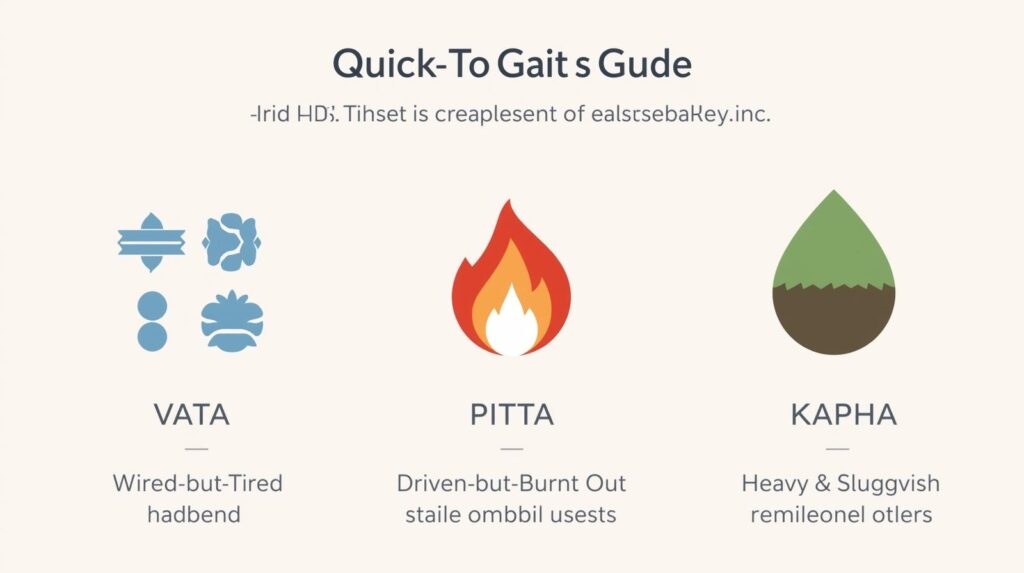
To help you visualize and compare these different types of fatigue, here is a clear summary:
| Dosha Imbalance | Vata (Air/Ether) | Pitta (Fire/Water) | Kapha (Earth/Water) |
|---|---|---|---|
| Root Cause of Fatigue | Nervous system depletion from overstimulation & unpredictability. | Adrenal & metabolic burnout from constant striving & intensity. | Metabolic stagnation from sluggish digestion & lack of movement. |
| Key Symptoms | Anxiety, insomnia, erratic energy, feeling ungrounded, dry skin. | Irritability, perfectionism, inflammation, waking at 2 am, feeling burnt out. | Lethargy, brain fog, weight gain, excessive sleep, congestion, feeling stuck. |
| The “Flavor” of Tired | Wired-but-Tired. Restless, anxious, scattered. | Driven-but-Burnt Out. Sharp, critical, fiery. | Heavy & Sluggish. Dull, slow, stagnant. |
Identifying your primary imbalance is a game-changer. It moves you from asking the generic “why am I always tired?” to asking the more powerful question: “How can I best rebalance my unique system?” This is the essence of applying an Ayurvedic perspective on midlife burnout. For a more detailed assessment and a personalized plan tailored to your specific Doshic imbalance, our course, The Art of Abundant Energy, provides the in-depth analysis and guidance needed for true transformation.
The Ayurvedic Energy Protocol: Replenishing Your Depleted Reserves
Knowing your Doshic imbalance is the diagnosis; this protocol is the prescription for healing. Ayurveda is not a system of isolated tips and tricks. It is a logical, sequential approach that builds a foundation for lasting vitality. Trying to skip steps is like trying to build a house without a foundation—it will not stand. This three-step protocol systematically addresses the root causes of fatigue, guiding you from a state of depletion to one of abundant, sustainable energy.
Step 1: Kindling Agni (Digestive Fire) – The Foundation of All Energy
In Ayurveda, everything begins with Agni—your digestive fire. It is the gatekeeper of your health. A strong, balanced Agni efficiently digests food, experiences, and information, creating nourishing tissues (Ojas) and leaving little to no toxic residue (Ama). A weak or irregular Agni is the primary cause of Ama accumulation, which clogs your channels and leads to the heavy, toxic fatigue we discussed.
Therefore, the very first step in reversing fatigue is not to grab an energy drink, but to gently and consistently stoke your internal fire. This involves eating warm, cooked, and easily digestible foods at regular meal times, avoiding cold drinks and raw foods (especially if your digestion is weak), and practicing mindful eating without distractions. When you prioritize your Agni, you are not just improving your digestion; you are ensuring that every bite of food becomes pure, usable energy instead of fatigue-inducing sludge. This is the non-negotiable first step in answering the question, “why am I always tired?”
Step 2: Clearing Ama (Metabolic Toxins) – Removing the Sludge That Causes Fatigue
Once you have begun to stabilize your Agni, the next step is to gently support your body’s natural detoxification processes to clear the existing Ama. This is not about harsh cleanses or extreme fasting, which can further aggravate Vata and deplete Ojas. Instead, it’s about incorporating gentle, daily practices that encourage the body to let go of accumulated waste. This includes practices like drinking warm ginger water throughout the day, incorporating detoxifying spices like turmeric and cumin into your cooking, and engaging in daily self-massage (Abhyanga) with warm oil to help mobilize toxins from the tissues.
As Ama begins to clear, you will likely notice a significant lifting of brain fog, a decrease in bodily heaviness and stiffness, and a renewed sense of mental clarity. This step is like cleaning the filters in your engine; it allows energy to flow freely again.
Step 3: Rebuilding Ojas (Vital Essence) – The Deep, Long-Term Work of Restoring Vitality
With a strong Agni and a cleaner internal environment, you have created the ideal conditions for the most important work: rebuilding your Ojas. This is the deep, nourishing work that truly reverses burnout and restores resilience. Rebuilding Ojas requires a shift from doing to receiving. It involves prioritizing deep, restful sleep, engaging in nourishing practices like meditation and gentle yoga, spending time in nature, consuming Ojas-building foods (like sweet, ripe fruits, ghee, almonds, and dates), and cultivating positive emotions and relationships.
This step is slow and steady. It is the antithesis of the “quick fix.” It requires patience and self-compassion, as you are literally rebuilding your fundamental life force from the ground up. This is the ultimate goal of applying an Ayurvedic perspective on midlife burnout—to move from mere survival to a state of thriving, where your energy is not just restored, but is more abundant and resilient than ever before.
This three-step protocol provides a powerful framework. To make it practical, let’s translate it into simple, daily rituals you can start tomorrow. For a complete, done-for-you plan that guides you through each of these steps with personalized detail and supportive community, our course, The Art of Abundant Energy, is designed to be your companion on this transformative journey.
Your Daily Blueprint: 5 Ayurvedic Rituals to Reverse Fatigue
Understanding the theory is essential, but the magic happens in the consistent, daily application. These five rituals are designed to be non-negotiable pillars in your day, directly addressing the Ayurvedic energy protocol. They are your daily investment in rebuilding Ojas, clearing Ama, and kindling Agni. By weaving these practices into the fabric of your life, you systematically reverse the patterns of burnout and answer the question of “why am I always tired?” with powerful, embodied action.
Ritual 1: Tongue Scraping & Oil Pulling – Morning Detox for Mental Clarity
Before you even have a sip of water, begin your day by clearing the night’s metabolic waste. Overnight, your body works to process toxins, and a significant amount is deposited on the surface of your tongue. Using a copper or stainless steel tongue scraper, gently scrape your tongue from the back to the front 5-7 times. This simple, 30-second practice instantly removes Ama, enhances your sense of taste, and improves oral hygiene.
Following this with oil pulling—swishing a tablespoon of organic sesame or coconut oil in your mouth for 5-20 minutes—further draws out toxins, supports oral health, and has a grounding effect on the mind. This ritual is a powerful signal to your body that you are supporting its natural detoxification processes, setting the stage for a clear-headed, energized day.
Ritual 2: Abhyanga (Self-Massage) – Nourishing the Nervous System and Building Ojas
If you only adopt one ritual, let it be this. Abhyanga, the practice of massaging your entire body with warm, dosha-specific oil (Sesame for Vata, Coconut or Sunflower for Pitta, Sesame or Mustard for Kapha) before your shower, is perhaps the most profound practice for healing nervous system depletion and rebuilding Ojas. It is not a rushed lotion application; it is a loving, meditative act of self-care. The oil nourishes the deepest layers of your skin, calms the Vata dosha (the root of anxiety and instability), and strengthens the entire physical body.
As you massage your limbs and torso, you are quite literally sealing energy into your tissues and telling your nervous system, “You are safe, you are supported, you are nourished.” The resulting feeling is one of profound groundedness and calm vitality, not a jittery energy, but a deep, resilient strength.
Ritual 3: Pranayama (Energy-Breathing) – Specific Breathing Exercises for Your Fatigue Type
Your breath is the direct link between your mind and your body, and a powerful tool for moving energy. Instead of your shallow, stress-induced breathing, dedicate 5 minutes to conscious pranayama.
- For Vata (Wired-but-Tired): Nadi Shodhana (Alternate Nostril Breathing). This is the ultimate balancing breath. It calms the mind, soothes anxiety, and harmonizes the left and right hemispheres of the brain, bringing a sense of equilibrium to a frazzled system.
- For Pitta (Driven-but-Burnt Out): Sheetali (Cooling Breath). Curl your tongue and inhale slowly through it, then exhale through your nose. This has an instant cooling and calming effect on Pitta’s fiery energy, diffusing irritability and mental heat.
- For Kapha (Heavy & Sluggish): Kapalabhati (Skull-Shining Breath). This involves short, powerful exhales and passive inhales. It is stimulating and heating, helping to “wake up” a sluggish system, clear brain fog, and get your energy moving.
Ritual 4: Mindful Eating for Your Dosha – Turning Food into Fuel, Not Fatigue
Every meal is an opportunity to either fight fatigue or fuel your vitality. This ritual is about turning eating from a rushed task into a sacred act of self-kindling.
- Sit down to eat in a calm environment, without screens.
- Bless your food or take a moment of gratitude to transition into a relaxed state, which is essential for proper digestion (strong Agni).
- Eat your largest meal at lunchtime, when your digestive fire is naturally strongest, and keep breakfast and dinner lighter.
- Choose foods that balance your dominant Dosha (as outlined in the next section).
Ritual 5: Digital Sunset & Early Bedtime – The Non-Negotiable for Hormonal and Nervous System Repair
The single most important ritual for rebuilding Ojas is prioritizing sleep, specifically by getting to bed before 10 p.m. Ayurveda considers the hours before midnight to be the most profoundly restorative for the nervous system. To make this possible, institute a “digital sunset”—turning off all screens at least 60-90 minutes before bed. The blue light from devices suppresses melatonin production and keeps your mind in a stimulated, Pitta-driven state. Use this time for your Abhyanga, reading a physical book, or gentle stretching.
This commitment to early, deep sleep is the cornerstone upon which all other energy-building practices rest. It is the time when your body does its most profound repair work, clearing Ama and replenishing Ojas. For a complete daily schedule and deeper guidance on integrating these rituals seamlessly into your life, our course, The Art of Abundant Energy, provides the structure and support to make them stick.

The Ayurvedic Kitchen Pharmacy: Foods to Fight Fatigue
In Ayurveda, food is not just calories; it is prana—life force itself. Every bite is either building your health or contributing to disease. The goal is to consciously choose foods that are easy to digest, nourish your tissues, and ultimately build Ojas, while avoiding foods that create Ama and dampen your digestive fire. This is not about restrictive dieting, but about intelligent, joyful eating that fuels your vitality. The following guidelines are tailored to your dominant Doshic imbalance to help you make the most energizing choices.
For Vata Fatigue: Warm, Moist, Grounding Foods
When you are experiencing the anxious, scattered fatigue of a Vata imbalance, your primary needs are warmth, moisture, and stability. Your diet should be grounding and nourishing to calm your nervous system.
- Favor: Cooked, warm, and slightly oily foods. Sweet, sour, and salty tastes.
- Excellent Choices:
- Grains: Oats, cooked rice, quinoa.
- Proteins: Well-cooked lentils, mung beans, tofu, warm dairy (like milk with a pinch of cardamom).
- Vegetables: Cooked root vegetables (sweet potatoes, carrots, beets), asparagus, zucchini.
- Fats: Ghee, olive oil, sesame oil.
- Spices: Ginger, cumin, fennel, cinnamon, black pepper.
For Pitta Fatigue: Cooling, Sweet, Calming Foods
For the fiery, irritable exhaustion of a Pitta imbalance, you need to cool and soothe your system. Your diet should be calming and refreshing, without being too raw or cold.
- Favor: Cooling, slightly dry, and sweet, bitter, and astringent tastes.
- Excellent Choices:
- Grains: Basmati rice, barley, oats.
- Proteins: Mung beans, chickpeas, tofu, white chicken meat.
- Vegetables: Sweet, bitter, and astringent veggies like cucumber, zucchini, leafy greens, broccoli, cauliflower.
- Fats: Coconut oil, ghee, sunflower oil.
- Spices: Coriander, fennel, cardamom, turmeric (cooling spices).
For Kapha Fatigue: Light, Warm, Stimulating Foods
To counteract the heavy, sluggish fatigue of a Kapha imbalance, your diet needs to be light, warm, and stimulating to kickstart your metabolism and clear stagnation.
- Favor: Light, dry, warm foods and pungent, bitter, and astringent tastes.
- Excellent Choices:
- Grains: Barley, corn, millet, quinoa.
- Proteins: Small legumes like red lentils, mung beans, lean poultry.
- Vegetables: All leafy greens, broccoli, cauliflower, cabbage, radishes, onions, garlic.
- Fats: Small amounts of ghee, mustard oil, flaxseed oil.
- Spices: Ginger, black pepper, turmeric, cumin, chili (in moderation).
To understand the science behind how these foods work on a physiological level, resources like the National Ayurvedic Medical Association (NAMA) provide a wealth of credible information on Ayurvedic nutrition and its principles.

Herbal Allies for Energy: A Safe Introduction to Ayurvedic Adaptogens
While diet and lifestyle form the bedrock of Ayurvedic healing, herbs are the masterful tools that can accelerate the process. In Ayurveda, herbs are not used to suppress symptoms but to gently guide the body back to its natural state of balance. The following adaptogenic herbs are renowned for their ability to help the body resist the effects of stress and rebuild vitality. However, they are powerful, and their effect can vary based on your unique constitution and imbalance.
Ashwagandha: For Vata-type Exhaustion and Adrenal Support
Known as the “strength of the horse,” Ashwagandha is perhaps the most celebrated herb for combating fatigue rooted in nervous system depletion. It is a quintessential rejuvenating tonic (Rasayana) for Vata dosha. If your fatigue is accompanied by anxiety, insomnia, and feeling “wired but tired,” Ashwagandha can be a profound ally. It works by calming the nervous system, supporting healthy cortisol levels, and building Ojas. It helps to ground erratic energy, promote deep, restorative sleep, and increase resilience to both physical and mental stress. Think of it as a nourishing, grounding anchor for a frazzled system.
Shatavari: For Pitta-type Burnout and Hormonal Balance
Shatavari, which means “she who possesses a hundred husbands,” is a powerful rejuvenating herb for the female reproductive system and a premier tonic for Pitta dosha. It is cooling, moistening, and nourishing. For the woman experiencing the sharp, irritable, burnt-out fatigue of a Pitta imbalance—especially when it’s intertwined with perimenopausal symptoms like hot flashes, night sweats, and hormonal volatility—Shatavari is a wonderful support. It helps to cool the inflammatory fire of Pitta, nourish the body’s fluids, and support hormonal balance. It builds Ojas by providing deep hydration and nourishment to the tissues.
Triphala: The Gentle Cleanser for All Types, Supporting Agni and Clearing Ama
Triphala is not a single herb but a classic Ayurvedic formula made from three fruits: Amalaki, Bibhitaki, and Haritaki. It is the cornerstone of gentle, daily detoxification and is considered tridoshic, meaning it helps balance all three Doshas. Triphala’s primary role in fighting fatigue is twofold. First, it kindles Agni, supporting healthy digestion and assimilation. Second, it gently and systematically cleanses the body of Ama (toxins) without being harsh or depleting. By ensuring the digestive tract is clear and functioning optimally, Triphala removes the source of toxic, heavy fatigue and allows for better nutrient absorption and energy production. It is often taken as a warm tea at bedtime.
Crucial Safety Note: The Importance of Professional Guidance with Herbs
While these herbs are natural, they are potent medicine. Self-prescribing can lead to imbalances. For instance, Ashwagandha, while calming, can be too heavy for someone with a strong Kapha imbalance. It is highly recommended to consult with a qualified Ayurvedic practitioner or your healthcare provider before beginning any new herbal regimen, especially if you are pregnant, nursing, or on medication. They can provide a personalized prescription based on your unique Prakriti (constitution) and Vikriti (current imbalance). This personalized approach is a core principle of the journey we guide you through in The Art of Abundant Energy, ensuring your path to vitality is both safe and effective.
A New Relationship with Energy: Shifting from Hustle to Harmony
The ultimate goal of this Ayurvedic journey is not just to feel less tired, but to fundamentally transform your relationship with energy itself. For years, you may have operated under the “hustle” paradigm: energy is a finite resource to be spent, and productivity is the highest measure of a day’s worth. Ayurveda invites you into a different reality—one of “harmony,” where energy is a renewable flow that you cultivate through alignment with nature’s rhythms. This final shift is what makes the change from burnout to vitality permanent.
Listening to Your Body’s Rhythms, Not the Clock
Our modern world runs on the clock, a rigid, artificial structure that often conflicts with our body’s natural, intelligent rhythms. Ayurveda is built on the principle of living in sync with these rhythms—the daily cycle of the Doshas (Dinacharya) and the seasonal cycles (Ritucharya). This means honoring that your digestive fire is strongest at midday (Pitta time) and making lunch your largest meal.
It means waking with the sun (during the Vata time of lightness and movement) and winding down as darkness falls (during the Kapha time of heaviness and rest). Instead of forcing yourself to work out at 6 p.m. when you’re exhausted, you might listen to your body’s need for a gentle walk or restorative yoga. This is not a lack of discipline; it is the highest form of intelligence—honoring the natural flow of energy rather than fighting against it.
Redefining Productivity: Why Rest is Productive
In the hustle paradigm, rest is seen as wasted time, a gap in productivity. In the harmony paradigm, rest is recognized as the most productive thing you can do for your long-term vitality and creativity. It is during deep rest that your body clears Ama, repairs tissues, and rebuilds Ojas. When you prioritize sleep, take a true lunch break without screens, or schedule a 10-minute meditation, you are not being lazy; you are actively “producing” health, clarity, and resilience.
You are investing in your future energy reserves. By redefining a “productive” day as one where you honored your energy levels—whether that meant accomplishing a big project or taking a necessary nap—you release the guilt that often accompanies self-care and fully embrace its essential role.
The Power of “Enough”: Releasing the Need to Do It All
A major driver of midlife burnout is the unconscious belief that you must “do it all” and be everything to everyone. This is a surefire path to depleting your Ojas. The Ayurvedic path toward harmony requires a conscious, compassionate audit of your commitments and a courageous practice of saying “no.” It’s about embracing the power of “enough.” Your work for today is enough. The care you provided is enough. You are enough, exactly as you are in this moment.
Releasing the superwoman archetype is not a failure; it is a profound initiation into wisdom. It creates the spaciousness needed for your energy to flow freely, unencumbered by the weight of endless obligation. This shift from a mindset of scarcity (“I must do more”) to one of sufficiency (“What I have done and who I am is enough”) is the final, liberating step in healing the Ayurvedic perspective on midlife burnout.
This new relationship is a practice, not a perfect state. It is the soul-level work that our course, The Art of Abundant Energy, is designed to support, guiding you to release old patterns and embody a life of sustainable, joyful vitality.
Your Journey to Abundant Energy is a Return to Yourself
The path out of chronic fatigue is not a frantic search for an external solution, but a gentle, courageous journey of return. It is a homecoming to the rhythms, needs, and wisdom of your own body. You began this guide asking a desperate question: “Why am I always tired?” You now have a new framework—an Ayurvedic perspective on midlife burnout—that reveals fatigue not as a life sentence, but as a map.
A map that points toward the areas of your life that need more nourishment, more rest, more warmth, and more love. Healing is not about adding more tasks to your to-do list, but about subtraction: releasing the habits, foods, and thought patterns that drain you, and consciously choosing those that replenish you.
This journey requires patience and self-compassion. You are reversing decades of conditioning and rebuilding your vital reserves from the ground up. There will be days of incredible clarity and energy, and there will be days where the old fatigue whispers to you. On those days, be kind. Return to one simple ritual—a warm meal, a few minutes of conscious breathing, an early night. Trust the process. Every conscious choice you make to support your Agni, clear Ama, and build Ojas is a deposit into your account of lifelong vitality. You are not just fighting fatigue; you are learning the art of flourishing.
You have the wisdom and the power within you to create a life of abundant, sustainable energy. It is your birthright. If you feel ready to walk this path with a detailed map and a supportive guide, we are here to walk with you. Our course, The Art of Abundant Energy: Your Flourishing Ayurvedic Path Out of Midlife Fatigue, is designed to translate this knowledge into a personalized, day-by-day practice that leads you home to your most vibrant, energized self.
Frequently Asked Questions (FAQ) About Ayurveda and Fatigue
1. How long until I feel a difference with Ayurveda?
This depends on the depth of your imbalance and your consistency. Some people feel a shift in digestion and mental clarity within a week of implementing dietary changes and morning rituals. For a more profound rebuilding of energy and Ojas, plan on a committed practice of 3 to 6 months to see lasting, transformative change.
2. Can I practice Ayurveda if I’m on medication?
Yes, but with caution and communication. Ayurvedic lifestyle and dietary changes are generally safe and supportive. However, you must inform both your medical doctor and a qualified Ayurvedic practitioner about all supplements and medications you are taking, as some herbs can interact with pharmaceuticals.
3. What’s the first thing I should do today for my energy?
Start with one simple ritual from the “Daily Blueprint.” The most impactful is often to drink a large glass of warm water with a slice of fresh ginger and a squeeze of lemon upon waking. This gently kindles your digestive fire (Agni) and hydrates your system for the day.
4. Is Ayurvedic eating complicated?
It doesn’t have to be. Start with the universal principles: eat warm, cooked foods; make lunch your largest meal; and focus on eating in a calm environment. You don’t need to overhaul everything at once. Begin by incorporating one or two foods that balance your dominant Dosha and go from there.
5. I have all three types of fatigue symptoms. What should I do?
This is very common, as imbalances often overlap. The best approach is to address the most predominant Dosha first, often starting with Vata to ground the nervous system. A qualified practitioner can help you unravel the layers, but a safe start for a mixed imbalance is to focus on a Vata-pacifying diet and routine, as calming the nervous system often helps clarify the other imbalances.
6. Do I have to become vegetarian to follow Ayurveda?
No. Ayurveda is not a strictly vegetarian system. It emphasizes eating according to your constitution and digestive capacity. For some, especially those with a Vata imbalance, well-cooked, warm animal protein in moderation can be grounding and nourishing. The focus is on the quality, preparation, and mindful consumption of food.
7. Is this just for women in perimenopause and menopause?
While this guide is tailored for midlife women, the principles of Ayurveda are universal. The concepts of balancing Doshas, strengthening Agni, and building Ojas are applicable to anyone experiencing fatigue, regardless of age or gender. The specific manifestations and emphasis simply shift with life stage.






Responses