
Beyond Coffee: Your Guide to Ayurvedic Alternatives for Sustainable Midlife Energy (2025)


Table of Contents
The Caffeine Trap – Why Your Midlife Body Is Saying “Enough”
That first sip of coffee in the morning can feel like a lifeline. It’s the warm, familiar ritual that promises to cut through the brain fog and propel you into your day. But if you’re a woman in midlife, you may have noticed a troubling shift. That one cup has become two, the afternoon crash feels deeper, and the jitters and anxiety are harder to ignore. You find yourself asking, “Is this still working for me, or is it working against me?”
This, dear one, is your body’s wise voice cutting through the noise, telling you that the caffeine trap is no longer sustainable. The very substance you rely on for energy is likely deepening the fatigue, hormonal chaos, and nervous exhaustion that defines midlife burnout for so many. This article is your guide out of that trap. We will explore the beautiful, nourishing world of Ayurvedic alternatives for sustainable midlife energy, moving you from a cycle of spikes and crashes to a state of calm, steady, and resilient vitality. If you’re ready to discover a new way to energize that truly supports your changing body, you are in the right place.
For a complete roadmap to transforming your energy from the ground up, our course, The Art of Abundant Energy: Your Flourishing Ayurvedic Path Out of Midlife Fatigue, offers the deep, personalized support you need.
Think of this not as giving something up, but as making space for something far better. It’s about trading a shaky, borrowed energy for a kind that is authentically your own—one that doesn’t abandon you by 3 p.m. or steal your sleep at night. We’ll explore satisfying herbal brews, simple morning rituals, and powerful herbs that work with your body’s innate wisdom, not against it. This is your invitation to step off the rollercoaster and onto solid ground. Let’s begin the journey beyond coffee to a life of true, flourishing energy.
The Midlife & Caffeine Crash: Understanding Why Coffee Stops Working
To break free from the cycle, it’s empowering to understand exactly what’s happening inside your body. Coffee isn’t “evil,” but its mechanism of action becomes increasingly problematic as your hormonal and nervous systems become more sensitive in midlife. Let’s break down the science behind the crash.
Cortisol, Caffeine, and Your Hormones: A Vicious Cycle
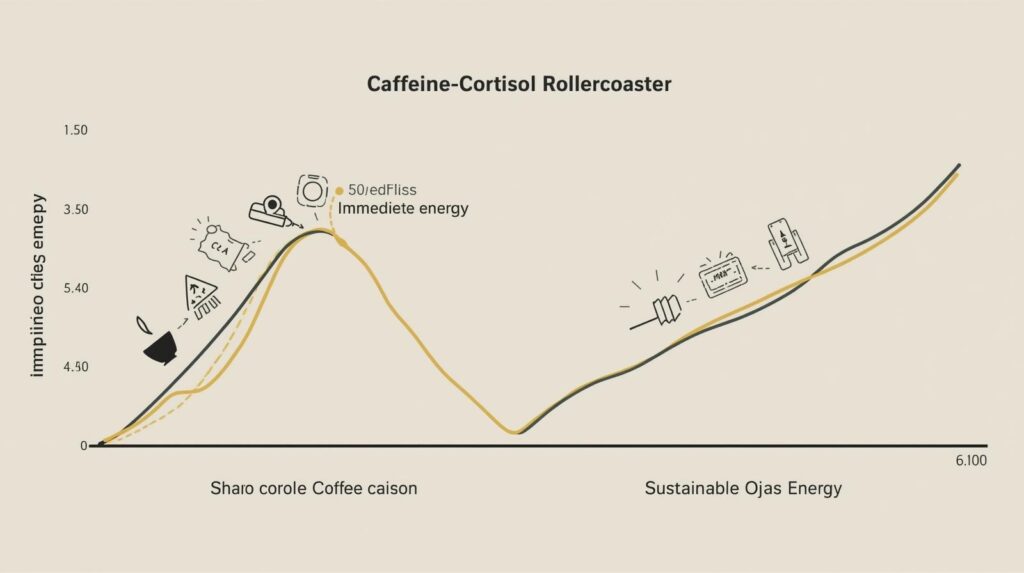
Cortisol, your primary stress hormone, has a natural rhythm: it should be highest in the morning to help you wake up and gradually decline throughout the day. Caffeine artificially spikes your cortisol levels. In the short term, this creates that feeling of alertness. But over time, especially in midlife when cortisol balance is already precarious, this constant artificial stimulation can lead to dysregulation. Your adrenal glands become overworked, and your natural cortisol rhythm becomes flattened or inverted.
This is disastrous for hormonal balance. High cortisol directly interferes with the production of progesterone, a key hormone for sleep and mood stability, often leading to or worsening estrogen dominance. Furthermore, the caffeine-induced cortisol spike can exacerbate perimenopausal and menopausal symptoms like anxiety, hot flashes, and sleep disturbances. So, while you’re drinking coffee for energy, you may unintentionally be fueling the very hormonal chaos that’s draining you.
The Adrenal Drain: From Prop to Burnout
Your adrenal glands are your resilience organs, designed to handle acute stress. When you rely on coffee day after day, you are essentially asking them to be in a low-grade “fight-or-flight” mode constantly. Instead of providing a gentle, natural wake-up call, you’re blaring an air horn at your endocrine system every morning. For midlife women who are often navigating the cumulative stress of careers, family, and life transitions, this is the last thing their adrenals need.
This constant state of alert drains your vital energy reserves, known in Ayurveda as Ojas. What starts as a simple prop can, over years, contribute to a state of deep adrenal fatigue or burnout, where you feel utterly exhausted no matter how much you sleep or coffee you drink. The coffee is no longer a solution; it’s a central part of the problem, preventing your body from accessing its true, deep well of energy.
The Agni (Digestive Fire) Extinguisher
In Ayurveda, the root of all energy is a strong digestive fire, known as Agni. It is responsible for transforming food and drink into usable energy and vitality. Coffee, with its sharp, hot, and pungent qualities, is considered to have a scattering and aggravating effect on Agni. While it might feel like it “gets things moving,” it often does so in a harsh, stimulating way that can ultimately weaken your digestive capacity over time. Think of Agni as a steady, glowing campfire.
Coffee is like throwing a cup of gasoline on it—a brilliant, short-lived flare-up, followed by a weaker, cooler fire than before. A weak Agni leads to poorly digested food, which creates toxins (Ama) that clog your system and lead to inflammation, brain fog, and that heavy, sluggish feeling of fatigue. Therefore, relying on coffee can directly undermine the very foundation of your long-term energy production.
The Ayurvedic Energy Philosophy: Building a Fire, Not Lighting a Match
To truly move beyond coffee, we need a new model for what energy can feel like. The caffeine-driven model is one of emergency and reaction. The Ayurvedic model is one of cultivation and nourishment. It’s the difference between frantically striking a match for a moment of blinding light, and patiently building a strong, steady fire that provides lasting warmth and illumination for hours.
Contrasting the short “match” of caffeine with the sustained “fire” of Ojas (vitality)
A match is brilliant, but it burns out quickly, leaving you in the dark again, often with the faint smell of smoke—the “jitters” and anxiety that follow a caffeine spike. This is the quintessential experience of coffee energy: external, frantic, and finite. Ojas, however, is different. It is not a stimulant but the refined essence of your health—the final product of perfect digestion, positive emotions, and a balanced lifestyle. Think of Ojas as the deep, glowing embers of a well-tended fire.
It doesn’t flare up dramatically, but it provides a constant, radiant warmth that sustains you through the day. It is the source of true stamina, mental clarity, emotional stability, and immunity. When your Ojas is abundant, you don’t need an external trigger to feel awake and alive; you carry that vitality within you. The journey beyond coffee is fundamentally a journey of shifting your energy source from the fleeting match to the enduring, radiant fire of your own Ojas.
The role of strong Agni (digestion) in creating true, lasting energy
So, how do you build this Ojas? It all begins with Agni, your digestive fire. In Ayurveda, energy isn’t just something you consume; it’s something you create. Every bite of food, every experience, is a raw material. Your Agni is the metabolic engine that transforms these raw materials into pure, usable energy (Ojas) or, if it’s weak, into toxic waste (Ama). A strong, balanced Agni is therefore the non-negotiable foundation of sustainable energy.
It ensures that your food becomes vital tissues and vibrant energy, not the sludge that makes you feel heavy and tired. The practices that strengthen Agni—like eating warm, cooked foods, drinking ginger tea, and eating your largest meal at midday—are not just about avoiding bloating; they are the primary acts of generating your own fuel from within. This is the opposite of the coffee paradigm, which bypasses your internal energy production and forces a withdrawal from your reserves.
How balancing your Dosha is key to unlocking your unique energy source
Finally, Ayurveda recognizes that there is no single “best” way to create energy that works for everyone. Your path is unique to your mind-body constitution, or Dosha. The feeling of being tired is universal, but the nature of that fatigue—and thus the most effective remedy—depends on which of the three Doshas (Vata, Pitta, or Kapha) is out of balance.
- A Vata imbalance leads to a scattered, “wired-but-tired” fatigue that needs grounding, warm, and calming energy sources.
- A Pitta imbalance creates a sharp, burnt-out fatigue that needs cooling, soothing, and non-stimulating energy.
- A Kapha imbalance results in a heavy, sluggish fatigue that needs light, warm, and stimulating energy.
By understanding your dominant Dosha, you can choose the specific foods, herbs, and rituals that will bring your system back into harmony, unlocking the energy that is naturally yours. This personalized approach is what makes the shift beyond coffee so effective and sustainable. For a detailed assessment of your Dosha and a personalized plan to balance it, our course, The Art of Abundant Energy, provides the expert guidance to help you build your unique, lasting fire.
Your Ayurvedic Coffee Replacement Toolkit: 5 Rituals for Morning Energy
Replacing coffee is about more than just swapping drinks; it’s about creating a new, nurturing morning ritual that actively builds your energy reserves instead of depleting them. These five practices are designed to be done sequentially, creating a powerful, grounding start to your day that will leave you feeling calm, focused, and authentically energized.
Ritual 1: The Warm Water Wake-Up – Kindling your digestive fire gently
Before you even think about food or drink, begin with a simple yet profound act: drink a large glass of warm water. You can enhance it with a squeeze of fresh lemon juice and a thin slice of fresh ginger. This is the polar opposite of the shock that coffee delivers to your system. The warm water hydrates your body after a night’s rest, gently awakens your digestive tract, and begins the process of kindling your Agni (digestive fire).
The lemon helps to cleanse the palate and liver, while the ginger stimulates circulation and digestion. This ritual signals to your body that it’s time to wake up and prepare for nourishment in a soft, supportive way, setting a tone of gentle care for the rest of the day.
Ritual 2: Pranayama (Energy-Breathing) – Oxygenating your body and brain
Instead of reaching for an external stimulant, tap into the most immediate source of energy you have: your breath. Dedicate just five minutes to a breathing practice called Bhastrika (Bellows Breath). Sit comfortably with a straight spine. Take a deep breath in, then exhale forcefully through your nose, followed by an equally forceful inhale. Continue this cycle at a rapid but comfortable pace for 30 seconds to one minute. This powerful practice rapidly oxygenates your blood, clears brain fog, increases alertness, and stimulates your core, creating a natural, jitter-free energy boost. It is like giving your internal engine a jump-start using nothing but the power of your own lungs.
Ritual 3: Abhyanga (Self-Massage) – Grounding your nervous system for calm alertness
This is perhaps the most nurturing ritual for moving beyond coffee. Before your shower, massage your entire body with warm, dosha-specific oil (sesame oil is excellent for most). Use long, sweeping strokes on your limbs and circular strokes on your joints. This practice, known as Abhyanga, is profoundly grounding for the nervous system. It calms Vata dosha (the root of anxiety and racing thoughts), lubricates the joints, and nourishes the skin.
Most importantly, it sends a direct message to your entire being that you are safe, cared for, and supported. The resulting feeling is not one of frantic energy, but of a deep, calm, and resilient alertness—a state from which you can handle your day with grace instead of grit.
Ritual 4: A Dosha-Balancing Breakfast – Fueling your body with slow-burning energy
What you break your fast with sets your energy trajectory for hours. Ditch the sugary cereal or toast and choose a warm, cooked, and easily digestible meal. This provides sustained energy without the blood sugar spike and crash.
- For Vata Imbalance: A warm bowl of oatmeal cooked with ghee, cinnamon, and chopped dates.
- For Pitta Imbalance: Cooked quinoa or amaranth with stewed apples and a dash of cardamom.
- For Kapha Imbalance: A light, spiced millet porridge or a savory scramble with leafy greens.
Ritual 5: Mindful Movement – Generating energy through gentle circulation
The final step is to get your energy flowing with gentle movement. This is not a high-intensity workout, which can be another form of stress on the system. Instead, choose 10-15 minutes of gentle yoga, tai chi, or a walk in nature. The goal is to circulate your blood and lymph, release stiffness, and connect your mind and body. This movement generates warmth and energy from the inside out, leaving you feeling invigorated and ready to step into your day with presence and purpose.
By committing to these five rituals, you are building a foundation of vitality that no cup of coffee can ever provide. For a complete daily schedule and deeper guidance on these practices, our course, The Art of Abundant Energy, offers the structure and support to make them a lasting part of your life.

Sip This, Not That: Ayurvedic Herbal Brews & Superfood Lattes
The ritual of preparing and sipping a warm beverage is a powerful part of the day. The good news is, you don’t have to give up that comfort—you simply need to transform it. The following Ayurvedic drinks provide a satisfying sensory experience while delivering targeted health benefits, from mental clarity to deep calm, without the caffeine crash.
Herbal Teas for Mental Clarity & Focus
When you need to concentrate but want to avoid coffee’s jitters, these herbal teas are your perfect allies. They work by enhancing cognitive function and calming the nervous system, not by forcing it into overdrive.
- Brahmi Tea: Brahmi (Gotu Kola) is renowned in Ayurveda as a powerful brain tonic. It enhances memory, improves concentration, and calms the mind, making it ideal for study or focused work.
- Gotu Kola Tea: While often used interchangeably with Brahmi, Gotu Kola is specifically celebrated for its ability to support mental clarity and soothe nervous exhaustion. It’s excellent for when you feel mentally drained.
- Rosemary Tea: A simple, accessible option. Rosemary is a circulatory stimulant that increases blood flow to the brain, sharpening focus and memory. Its invigorating scent alone can be mentally clarifying.
Grounding & Warming Superfood Lattes
For those who crave the creamy, comforting ritual of a latte, these Ayurvedic versions provide deep nourishment and targeted support.
- Ashwagandha Latte: This is the ultimate adrenal-supporting drink. Ashwagandha is an adaptogen, meaning it helps your body manage stress. Combined with warm, non-dairy milk, cinnamon, and a touch of maple syrup, it creates a deeply grounding, calming beverage that builds resilience. It’s perfect for the evening when you need to wind down.
- Golden Milk (Turmeric Latte): A classic for a reason. Turmeric is a powerful anti-inflammatory, and when combined with other warming spices like ginger, cinnamon, and black pepper (which enhances turmeric absorption), it soothes the entire body. It’s excellent for easing joint stiffness and promoting overall wellness.
- Reishi Mushroom Cocoa: Reishi is known as the “Queen of Mushrooms” for its profound calming and immune-modulating properties. Blended with raw cacao, which is rich in magnesium and mood-enhancing compounds, and warm milk, it creates a deeply relaxing, slightly bitter brew that is perfect for replacing an after-dinner coffee and promoting restful sleep.
The Ultimate Ayurvedic Coffee Substitute: Roasted Chicory Root & Ayurvedic Spice Brew
If you miss the rich, dark, and bitter taste of coffee itself, this blend is a game-changer. It provides a deeply satisfying coffee-like experience without any caffeine.
- The Base: Roasted chicory root. It has a remarkably similar color and bitter profile to coffee but is naturally caffeine-free. It’s also prebiotic, meaning it supports gut health.
- The Ayurvedic Boost: To this base, add a pinch of Ayurvedic spices to enhance its healing properties and complexity.
- A pinch of cinnamon for blood sugar balance.
- A cardamom pod for digestion and a soothing aroma.
- A clove for its warming and cleansing qualities.
- A small slice of fresh ginger for kindling Agni.
- How to Prepare: Simmer one tablespoon of roasted chicory root and your chosen spices in two cups of water for 5-10 minutes. Strain and enjoy black or with a splash of milk and a natural sweetener. This brew is deeply grounding, supports digestion, and provides the comforting ritual you crave, making the transition beyond coffee feel not like a loss, but an upgrade.
Top 5 Ayurvedic Herbs for Sustainable Energy (Without the Jitters)
These herbs are not simple stimulants. They are adaptogens—a class of herbs that help the body adapt to stress and normalize physiological functions. They work by supporting your body’s own systems, particularly the adrenal glands and the HPA axis (the command center for your stress response), to build resilience and vitality from the inside out. Here are the top five Ayurvedic herbs to help you move beyond coffee and into a state of sustained, calm energy.
| Herb | Primary Benefit | Best For | How to Use |
|---|---|---|---|
| Ashwagandha | Adaptogen for resilience & adrenal support. | Vata-type fatigue, anxiety, burnout, poor sleep. | Powder in warm milk (latte), capsules. |
| Shatavari | Nourishing tonic for hormonal balance & vitality. | Pitta-type burnout, hormonal swings, dryness, heat. | Powder in warm water or milk, capsules. |
| Tulsi (Holy Basil) | Stress-relieving mental clarity booster. | Mental fatigue, brain fog, feeling overwhelmed. | As a tea, tincture, or capsule. |
| Ginseng | Stamina & endurance builder. | Physical fatigue, low motivation, convalescence. | Tea, tincture, or capsule (short-term use). |
| Triphala | Gentle cleanser for a clear mind & body. | All types, especially Kapha-related sluggishness & toxin-related fatigue. | As a warm tea at bedtime. |
Ashwagandha: The Adaptogen for Resilience and Adrenal Support
Ashwagandha is often called the “king of Ayurvedic herbs” for its profound ability to help the body cope with stress. If your fatigue is tied to feeling wired, anxious, and overwhelmed (classic Vata imbalance), Ashwagandha is your premier herb. It works by modulating the stress response, helping to lower cortisol levels, and supporting the nervous system. This leads to improved sleep, reduced anxiety, and a greater sense of grounded energy. Unlike coffee, which gives you energy by agitating your system, Ashwagandha provides energy by calming and strengthening it.
Shatavari: The Nourishing Tonic for Hormonal Balance and Vitality
Shatavari is the premier rejuvenating tonic for women. Its name means “she who possesses a hundred husbands,” speaking to its traditional use for supporting vitality and reproductive health. It is a cooling, moistening herb that is excellent for the fiery, burnt-out fatigue of a Pitta imbalance, especially when it’s intertwined with perimenopausal symptoms like hot flashes, irritability, and vaginal dryness. Shatavari nourishes the body’s fluids, supports hormonal balance, and helps build Ojas, the essence of vitality. It provides a gentle, sustained energy that comes from deep nourishment.
Tulsi (Holy Basil): The Stress-Relieving Mental Clarity Booster
Revered in India as “The Incomparable One,” Tulsi is a sacred plant known for its ability to purify the mind and elevate consciousness. On a practical level, it is a superb adaptogen for mental and emotional stress. If your fatigue is centered in your mind—manifesting as brain fog, difficulty concentrating, or feeling mentally drained—Tulsi can help clear the fog and restore mental alertness without overstimulation. It has a light, uplifting quality that helps to ease feelings of overwhelm and promote a positive mindset.
Ginseng (Asian or American): The Stamina and Endurance Builder
Ginseng is a powerful rejuvenating herb known for boosting physical stamina and endurance. It is considered a “yang” tonic in Traditional Chinese Medicine, meaning it helps to warm the body and support physical activity and vitality. It is excellent for times when you need an extra boost for physical exertion or are recovering from illness or prolonged stress. *Note: Ginseng is a potent herb and is generally used for shorter periods (e.g., 2-3 weeks) rather than as a daily tonic like Ashwagandha or Tulsi, and may be too heating for a strong Pitta constitution.*
Triphala: The Gentle Cleanser for a Clear Mind and Body
While not a direct energy booster, Triphala is included here because it is fundamental to creating the conditions for energy to flow. Triphala is a classic Ayurvedic formula made from three fruits: Amalaki, Bibhitaki, and Haritaki. It is a gentle, non-habit-forming cleanser that supports healthy digestion and regular elimination. By clearing the digestive tract of accumulated waste (Ama), Triphala removes a primary source of toxicity that leads to heaviness, brain fog, and fatigue.
A clean internal environment allows for better nutrient absorption and more efficient energy production. Taking Triphala as a warm tea at bedtime is a simple way to support your body’s natural detoxification processes overnight, leading to a clearer, more energetic morning. For personalized guidance on which of these herbs and in what dosage is right for your unique constitution, our course, The Art of Abundant Energy, offers the expert support you need to use them safely and effectively.

A 7-Day Gentle Coffee Transition Plan
Going cold turkey on coffee can lead to intense withdrawal headaches and fatigue, making it easy to give up. This 7-day plan is designed to be a gentle, supportive weaning process that honors your body’s need for adjustment while introducing you to the satisfying world of Ayurvedic alternatives for sustainable midlife energy. The goal is progress, not perfection.
A compassionate, step-by-step guide to reducing coffee without harsh withdrawal.
This plan focuses on dilution and substitution, gradually reducing the caffeine while increasing the nourishing alternatives.
- Day 1 & 2: The 75/25 Blend
- Action: Prepare your usual coffee, but make it with 75% regular coffee and 25% roasted chicory root granules. You can also begin Ritual 1 from your toolkit: drinking a large glass of warm lemon-ginger water 30 minutes before your coffee.
- Why it Works: This introduces the rich, coffee-like flavor of chicory, starting to satisfy that sensory craving while reducing your caffeine intake by a quarter. The warm water begins to gently kindle your Agni.
- Day 3 & 4: The 50/50 Balance
- Action: Move to a half-and-half blend of coffee and chicory root. Today, also incorporate Ritual 2: 5 minutes of Bhastrika (Bellows Breath) after your warm water and before your coffee blend.
- Why it Works: You’re now at half your usual caffeine. The pranayama provides a natural energy lift, reducing your reliance on the coffee for that “wake-up” signal.
- Day 5: The 25/75 Taper
- Action: Your morning brew is now 25% coffee and 75% chicory root. For your afternoon pick-me-up, skip coffee entirely and have a cup of Tulsi (Holy Basil) tea or an Ashwagandha latte instead.
- Why it Works: You’re significantly lowering your total daily caffeine load. The herbal tea provides a new, calming ritual for the afternoon slump without the crash.
- Day 6: The Chicory Switch
- Action: Today, have a pure cup of roasted chicory root brew (with your favorite spices) in the morning. No coffee. If you feel a strong headache or fatigue, it’s okay to have a very small half-cup of coffee, but try to stick with the chicory.
- Why it Works: This is the big leap. Your body is now mostly free of caffeine, and the chicory provides the comforting ritual you need. Be extra kind to yourself today.
- Day 7: Embracing Your New Ritual
- Action: No coffee. Begin your day with the full Ayurvedic toolkit: Warm Lemon-Ginger Water -> 5-minutes of Pranayama -> Your Chicory Brew or another herbal alternative. Notice how you feel—calmer? More stable energy?
- Why it Works: You have successfully navigated the transition. Your new morning routine is now established, built around practices that generate authentic, sustainable energy.
Throughout this week, ensure you are staying hydrated, eating a grounding breakfast, and going to bed 15-30 minutes earlier to support your body’s adjustment. This gentle transition is a core principle of the sustainable path we teach in The Art of Abundant Energy, where we guide you to make lasting changes with compassion and wisdom.
Listening to Your Body: How Your Real Energy Cues Feel
For years, your body’s request for energy has been answered with a caffeine override. Now, as you move beyond coffee, you have the beautiful opportunity to relearn your body’s authentic language. True, sustainable energy feels profoundly different from the stimulated state of caffeine. Learning to recognize these new cues is the final step in making this transformation permanent.
Learning to distinguish true energy from caffeine-induced anxiety.
Caffeine energy is often frantic. It comes with a racing heart, scattered thoughts, and a underlying sense of pressure or anxiety. It feels like you have to move, you have to do something. True, Ojas-based energy is the opposite. It is a calm, steady, and expansive feeling. It’s a sense of “I can” rather than “I must.” Your mind is clear and focused, not racing. Your body feels light and capable, not jittery. You’ll notice the absence of that 3 p.m. crash; instead, your energy remains stable throughout the day, gently winding down as evening approaches, allowing for restful sleep. This is the hallmark of sustainable energy.
Recognizing the signs of balanced, sustainable Ojas-based vitality.
When you are nourishing your body correctly and building Ojas, the benefits extend far beyond just “not being tired.” You will begin to notice subtle but powerful signs of deep vitality:
- Mental Clarity: Waking up with a clear mind, ready for the day, without needing an external trigger.
- Emotional Stability: A greater resilience to daily stressors; things that used to trigger irritability now roll off your back more easily.
- Physical Resilience: You recover more quickly from exertion, and you may notice a natural glow to your skin and a lightness in your body.
- Deep, Restful Sleep: You fall asleep more easily and wake up feeling genuinely refreshed.
- A Sense of Contentment: An underlying feeling of well-being and satisfaction that isn’t dependent on external achievements.
How your sleep, mood, and digestion improve when you go “beyond coffee.”
The benefits of leaving caffeine behind create a positive feedback loop that reinforces your new path. Within the first week, many people notice:
- Sleep: Deeper, more restorative sleep because your nervous system isn’t artificially stimulated. You may find it easier to fall asleep and stay asleep, waking up feeling truly rested.
- Mood: A significant decrease in anxiety and irritability. Without the cortisol spikes and crashes, your mood stabilizes. You may feel more patient, present, and positive.
- Digestion: Reduced bloating, more regular elimination, and less acid reflux. By removing the harsh, stimulating effect of coffee on your digestive tract and replacing it with warm, Agni-kindling rituals, your entire digestive system begins to function more smoothly.
This holistic improvement is the true reward for your efforts. It proves that the path of Ayurvedic alternatives for sustainable midlife energy isn’t about deprivation; it’s about unlocking a higher state of health and well-being that coffee could never provide. For a community and a structured path to support you in maintaining this new, vibrant relationship with your energy, our course, The Art of Abundant Energy, is here to guide you.
Conclusion: From Caffeine Dependence to Innate Vitality
The journey you have begun is about so much more than simply swapping one beverage for another. It is a profound reclamation of your own vitality. For years, you may have looked outside of yourself for the energy to get through the day, relying on a substance that, while culturally celebrated, was quietly depleting your reserves. By choosing to explore the world of Ayurvedic alternatives for sustainable midlife energy, you have taken a powerful step toward self-trust and body wisdom. You are learning that the most potent, resilient, and joyful energy doesn’t come from a cup; it is cultivated from within through nourishing foods, mindful rituals, and a compassionate relationship with your own rhythms.
This path is one of gentle progress, not perfection. There may be days you choose a cup of coffee, and that’s okay. This isn’t about a rigid set of rules, but about building a new foundation so strong that you have a genuine choice. A foundation where your default state is one of calm alertness and steady power, making the jittery rush of caffeine feel foreign and unnecessary. You are moving from a state of dependence to one of innate vitality, where you are the source of your own energy.
You have the wisdom and the power to sustain this change. Carry forward the rituals that resonate most, listen to the new, calm signals from your body, and celebrate every sign of improvement—the deeper sleep, the stable mood, the clear mind. This is your life, and it is meant to be lived with vibrancy. If you are ready to go deeper, to fully embody this transformation with a structured plan and supportive community, we invite you to join us in The Art of Abundant Energy: Your Flourishing Ayurvedic Path Out of Midlife Fatigue. Your journey to unshakable vitality awaits.
Frequently Asked Questions (FAQ) About Quitting Coffee with Ayurveda
1. How do I deal with coffee withdrawal headaches?
Ayurveda views headaches as a sign of excess Vata (air element) and toxins being released. Stay incredibly hydrated with warm water. A gentle head massage with warm Brahmi or sesame oil can be very soothing. Ensure you are eating enough warm, grounding foods (like soups and stews) and not skipping meals, as low blood sugar can worsen headaches.
2. Will I ever feel alert in the morning without coffee?
Yes, absolutely. It takes time for your body to recalibrate its own cortisol rhythm and energy production. The morning rituals in this guide—warm water, pranayama, and self-massage—are specifically designed to naturally and gently wake your system. Within a few weeks of consistent practice, you will be surprised at how clear and alert you feel upon waking.
3. What’s the one thing I can do today to start?
Commit to Ritual 1: Drink a large glass of warm water with lemon and ginger 30 minutes before your first cup of coffee tomorrow. This single act begins to kindle your digestive fire and hydrate your system, often naturally reducing the amount of coffee you crave.
4. Are these Ayurvedic herbs safe with medications?
While generally safe, it is crucial to exercise caution. Adaptogenic herbs can interact with certain medications, such as those for blood pressure, diabetes, and thyroid conditions, as well as sedatives. It is essential to consult with your healthcare provider or a qualified Ayurvedic practitioner before starting any new herbal regimen. This ensures a safe and personalized approach.
5. I’ve tried to quit before and failed. What’s different about this approach?
Previous attempts likely focused only on removing coffee, which can feel like a loss. This Ayurvedic approach is about addition and nourishment. You are adding new, satisfying rituals, delicious drinks, and powerful herbs that actively build your energy and make you feel better. It addresses the root cause of your fatigue, not just the symptom, making it a sustainable lifestyle shift rather than a short-term fix.
6. Can I still enjoy the social aspect of coffee?
Of course. The goal is not dogmatic avoidance but conscious choice. You can opt for a chicory brew or an herbal tea at a café. If you do choose a coffee socially, savor it mindfully and notice how it makes you feel afterward, without judgment. This awareness will inform your future choices.






Responses