
Your Empowered Journey: Intermittent Fasting 2025 & Sustainable Rhythms for Midlife Women


Table of Contents
Welcome to the Future of Fasting—A Gentle Revolution
If you’ve ever felt that intermittent fasting was a bit too rigid, a little too one-size-fits-all, or left you feeling drained and irritable, you’re not alone. The initial wave of fasting information often prioritized speed and intensity over sustainability and individual needs, especially for women in the vibrant and complex chapter of midlife. But a beautiful evolution is underway.
Welcome to intermittent fasting in 2025—a gentler, smarter, and profoundly more personalized approach. This isn’t about white-knuckling your way through hunger; it’s about discovering a rhythm that syncs with your body’s innate wisdom, your hormonal landscape, and your desire for lasting vitality. We are moving beyond the clock and into a deeper conversation with our bodies.
This new paradigm recognizes that a woman’s body over 40 is not a problem to be solved with a strict protocol, but a dynamic, intelligent system to be supported.
The focus has shifted from sheer weight loss to holistic well-being: balanced hormones, steady energy, mental clarity, and cellular rejuvenation. It’s about creating a flexible lifestyle that empowers you, rather than a restrictive diet that depletes you. The core question is no longer “How long can I fast?” but “What fasting rhythm makes me feel my most vibrant and alive?” This is the heart of sustainable wellness.
In this comprehensive guide, we will explore the latest insights and forward-thinking strategies that define intermittent fasting in 2025. We’ll delve into the science of circadian rhythms, the practice of intuitive eating windows, and the importance of adapting your routine to your monthly cycle and the changing seasons. You will learn how to build a practice that feels less like a rulebook and more like a natural extension of your self-care. This is the gentle revolution in women’s health, and it’s designed specifically for you.
This guide is your starting point. It will provide you with the foundational knowledge and practical tools to begin. And for those ready to fully embody this new approach with a structured, supportive, and personalized plan, our newly updated 2025 course, Intermittent Fasting for Life: Sustainable Rhythms for Midlife Wellness, is your next step. We have integrated all these modern principles into a transformative learning journey. So, let’s begin.
What’s New in 2025? The Evolution of Intermittent Fasting for Women
The landscape of intermittent fasting is constantly evolving, and 2025 marks a significant shift from rigid protocols to fluid, bio-individual rhythms. The old model of “push through the hunger” is being replaced by a more nuanced, scientifically-backed understanding of how fasting impacts the female body, particularly during the hormonal transitions of midlife. This year, the conversation is less about austerity and more about intelligence—using fasting as a precise tool to support metabolic flexibility, hormonal harmony, and cellular repair, all while honoring the body’s need for grace and adaptation. It’s a move from a one-size-fits-all prescription to a personalized wellness practice.
One of the most significant advancements is the deepened understanding of the gut-fasting connection. Research in 2025 continues to illuminate how intermittent fasting acts as a powerful prebiotic, promoting a healthy and diverse gut microbiome. This is crucial because a balanced gut is directly linked to reduced inflammation, a stronger immune system, and even improved mood regulation through the gut-brain axis. Furthermore, the focus has expanded beyond just when you eat to what you break your fast with, emphasizing foods that nourish the gut lining and support a healthy internal ecosystem. This holistic view positions fasting as a key component of digestive wellness, not just a weight-management strategy.
Another key evolution is the move away from daily, static fasting windows toward cyclical and intuitive patterns. We now understand that a woman’s nutritional and metabolic needs are not the same every day; they ebb and flow with her menstrual cycle (even in perimenopause) and her stress levels. The 2025 approach encourages adapting the length and intensity of your fast based on these internal cues. For instance, a shorter, more nourishing fast might be ideal during the luteal phase (the week before your period), while a longer window may feel effortless during the follicular phase. This respectful, responsive approach prevents fasting from becoming another stressor on the system.
Technology has also become a more integrated partner, but with a wiser, more mindful application. While apps that track fasting windows are still useful, the 2025 emphasis is on wearable technology that provides feedback on your body’s actual state—such as heart rate variability (HRV) and continuous glucose monitors (CGMs) for those seeking deep metabolic insights.
This data empowers you to see how your body uniquely responds to different fasting rhythms, moving you from guessing to knowing. However, the core philosophy remains to use this technology as a guide, not a master, always prioritizing your felt experience of energy and well-being above any metric on a screen. This blend of cutting-edge science and intuitive wisdom is what makes the 2025 approach to Intermittent Fasting for Life: Sustainable Rhythms for Midlife Wellness (2025) so powerful and effective for creating lasting change.
Why “Rhythm” Beats “Rules”: The Core Philosophy for Midlife Wellness
For too long, wellness culture has been dominated by rigid rules and strict protocols. While these can provide initial structure, they often fail us in the long run, especially during the dynamic shifts of midlife. A rule says, “You must fast for 16 hours, no exceptions.” A rhythm, however, invites you to listen. It asks, “What does my body need today?” This fundamental shift from external enforcement to internal attunement is the very heart of a sustainable intermittent fasting practice for women over 40. It’s the difference between fighting your biology and flowing with it, and it is the single most important concept for making fasting a lifelong support system.
Your body is not a machine; it is a complex, living ecosystem influenced by hormones, stress, sleep, and the seasons. A rigid 16/8 fast might work perfectly on a calm, well-rested Tuesday but feel utterly draining on a stressful, sleep-deprived Thursday. When you force a rule upon a body that is signaling for a different need, you create internal conflict and stress. This can lead to elevated cortisol levels, which directly works against your goals of hormonal balance and belly fat reduction. Embracing a rhythm allows you to honor your body’s true needs, shortening your fast when needed without an ounce of guilt, and thereby protecting your delicate hormonal landscape.
Think of this rhythm like the changing seasons. Just as nature doesn’t force the same weather every day, you don’t need to force the same fasting window. Some days are for growth and activity (a longer fast), and others are for rest and nourishment (a shorter fast). This philosophy empowers you to be the expert of your own body. It replaces the stress of “cheating” or “failing” with the empowered practice of “responding” and “nurturing.” This is not a lack of discipline; it is a higher form of intelligence that leads to resilience and lasting results. It’s about building a resilient metabolism that can adapt, not one that is brittle and breaks under pressure.
This core philosophy of rhythmic, intuitive living is the foundation upon which our entire 2025 course Intermittent Fasting for Life, is built. We guide you not in following a single protocol, but in learning the language of your body so you can create a fasting rhythm that is as unique and dynamic as you are. It’s the key to moving from a cycle of starting and stopping to a seamless flow of sustainable wellness practices that support you through all of life’s changes.
The 2025 Fasting Landscape: Top 3 Sustainable Protocols for Midlife Women
In this new era of bio-individuality, a handful of fasting protocols have risen to the top for their safety, effectiveness, and alignment with the female body in midlife. These are not harsh, fat-loss-focused schemes, but gentle, metabolic-tuning rhythms designed to work with your hormones, not against them. They prioritize hormonal balance, energy stability, and long-term adherence over rapid, unsustainable results. Let’s explore the three most relevant and sustainable intermittent fasting methods for you in 2025.
Circadian Rhythm Fasting: Aligning with Your Body’s Clock
This is arguably the most natural and intuitive form of fasting, and it’s gaining well-deserved prominence. Circadian Rhythm Fasting involves aligning your eating window with the natural rise and set of the sun. In practice, this means you would eat your meals during daylight hours, for example, between 7 AM and 7 PM, or in a more condensed window like 8 AM and 4 PM, and fast from the evening until the next morning. The core principle is to sync your food intake with your body’s internal clock (your circadian rhythm), which governs hormone release, metabolism, and sleep-wake cycles.
Why is this so powerful for midlife women? This method naturally supports stable cortisol levels. Eating late at night, when your body is winding down for sleep, can disrupt your circadian rhythm and lead to elevated cortisol at a time when it should be low. This can interfere with deep, restorative sleep—a precious commodity during perimenopause and menopause. By finishing your last meal a few hours before bed, you support your body’s natural wind-down process, leading to better sleep quality, more stable morning energy, and improved metabolic function. It’s a gentle, foundational rhythm that can yield profound benefits for overall well-being.
The 14/10 Sweet Spot: Why It’s the Gold Standard for Hormone Health
While the 16/8 method often steals the spotlight, the 14/10 protocol—a 14-hour fast followed by a 10-hour eating window—is increasingly recognized as the “goldilocks zone” for women over 40. It provides a meaningful fasting period long enough to trigger key benefits like autophagy and improved insulin sensitivity, but it is rarely long enough to trigger a significant stress response in the body. A 14-hour fast, such as from 8 PM to 10 AM, is often a comfortable extension of the overnight fast without pushing the body into a state of perceived scarcity.
This protocol is a champion for hormone health because it offers a perfect balance. It allows for a substantial break from insulin secretion, helping to reverse insulin resistance, which is a key driver of hormonal imbalance and midlife weight gain.
Simultaneously, its manageable nature helps keep cortisol in check. For many women, a 16-hour fast can be the tipping point that leads to feeling “wired and tired,” but 14 hours feels energizing and sustainable. It also allows for a generous 10-hour window to consume two or three well-spaced, nourishing meals, ensuring you get all the nutrients you need without feeling rushed or overly full. It’s the practical, effective heart of the Intermittent Fasting for Life: Sustainable Rhythms for Midlife Wellness (2025) methodology.
Intuitive & Cyclical Fasting: Listening to Your Body’s Monthly Cues
This is the most advanced and personalized approach, representing the true future of women’s wellness. Intuitive and Cyclical Fasting throws out the rigid calendar and instead uses your body’s innate wisdom—and your menstrual cycle—as your guide. Even if your cycles are becoming irregular in perimenopause, the hormonal patterns still fluctuate. This method involves intentionally varying your fasting practice based on the two main phases of your cycle: the follicular phase (from the end of your period until ovulation) and the luteal phase (from ovulation until your next period).
During the follicular phase (days ~1-14), when estrogen is rising, your body is typically more resilient to stress and better at using carbohydrates for energy. This is the time when you might naturally feel capable of a longer fast, like a 14/10 or even a gentle 16/8. In contrast, during the luteal phase (days ~15-28), progesterone rises, and your metabolic rate increases. Your body needs more consistent fuel and is more sensitive to stressors. This is the time to pull back to a more gentle rhythm, like a 12/12 or a 13/11, and focus on nourishing, mineral-rich foods. Honoring this natural ebb and flow prevents fasting from disrupting your delicate hormonal balance and makes the entire process feel effortless.
The 2025 Fasting Landscape: Top 3 Sustainable Protocols for Midlife Women
In this new era of bio-individuality, a handful of fasting protocols have risen to the top for their safety, effectiveness, and alignment with the female body in midlife. These are not harsh, fat-loss-focused schemes, but gentle, metabolic-tuning rhythms designed to work with your hormones, not against them. They prioritize hormonal balance, energy stability, and long-term adherence over rapid, unsustainable results. Let’s explore the three most relevant and sustainable intermittent fasting methods for you in 2025.
Circadian Rhythm Fasting: Aligning with Your Body’s Clock
This is arguably the most natural and intuitive form of fasting, and it’s gaining well-deserved prominence. Circadian Rhythm Fasting involves aligning your eating window with the natural rise and set of the sun. In practice, this means you would eat your meals during daylight hours, for example, between 7 AM and 7 PM, or in a more condensed window like 8 AM and 4 PM, and fast from the evening until the next morning. The core principle is to sync your food intake with your body’s internal clock (your circadian rhythm), which governs hormone release, metabolism, and sleep-wake cycles.
Why is this so powerful for midlife women? This method naturally supports stable cortisol levels. Eating late at night, when your body is winding down for sleep, can disrupt your circadian rhythm and lead to elevated cortisol at a time when it should be low. This can interfere with deep, restorative sleep—a precious commodity during perimenopause and menopause. By finishing your last meal a few hours before bed, you support your body’s natural wind-down process, leading to better sleep quality, more stable morning energy, and improved metabolic function. It’s a gentle, foundational rhythm that can yield profound benefits for overall well-being.
The 14/10 Sweet Spot: Why It’s the Gold Standard for Hormone Health
While the 16/8 method often steals the spotlight, the 14/10 protocol—a 14-hour fast followed by a 10-hour eating window—is increasingly recognized as the “goldilocks zone” for women over 40. It provides a meaningful fasting period long enough to trigger key benefits like autophagy and improved insulin sensitivity, but it is rarely long enough to trigger a significant stress response in the body. A 14-hour fast, such as from 8 PM to 10 AM, is often a comfortable extension of the overnight fast without pushing the body into a state of perceived scarcity.
This protocol is a champion for hormone health because it offers a perfect balance. It allows for a substantial break from insulin secretion, helping to reverse insulin resistance, which is a key driver of hormonal imbalance and midlife weight gain.
Simultaneously, its manageable nature helps keep cortisol in check. For many women, a 16-hour fast can be the tipping point that leads to feeling “wired and tired,” but 14 hours feels energizing and sustainable. It also allows for a generous 10-hour window to consume two or three well-spaced, nourishing meals, ensuring you get all the nutrients you need without feeling rushed or overly full. It’s the practical, effective heart of the Intermittent Fasting for Life: Sustainable Rhythms for Midlife Wellness (2025) methodology.
Intuitive & Cyclical Fasting: Listening to Your Body’s Monthly Cues
This is the most advanced and personalized approach, representing the true future of women’s wellness. Intuitive and Cyclical Fasting throws out the rigid calendar and instead uses your body’s innate wisdom—and your menstrual cycle—as your guide. Even if your cycles are becoming irregular in perimenopause, the hormonal patterns still fluctuate. This method involves intentionally varying your fasting practice based on the two main phases of your cycle: the follicular phase (from the end of your period until ovulation) and the luteal phase (from ovulation until your next period).
During the follicular phase (days ~1-14), when estrogen is rising, your body is typically more resilient to stress and better at using carbohydrates for energy. This is the time when you might naturally feel capable of a longer fast, like a 14/10 or even a gentle 16/8. In contrast, during the luteal phase (days ~15-28), progesterone rises, and your metabolic rate increases. Your body needs more consistent fuel and is more sensitive to stressors. This is the time to pull back to a more gentle rhythm, like a 12/12 or a 13/11, and focus on nourishing, mineral-rich foods. Honoring this natural ebb and flow prevents fasting from disrupting your delicate hormonal balance and makes the entire process feel effortless.
To make choosing your starting point easier, the next section will provide a clear Comparison Table: The 2025 Intermittent Fasting Method Cheat Sheet. Shall I proceed? Just say “Next.”
nexxt
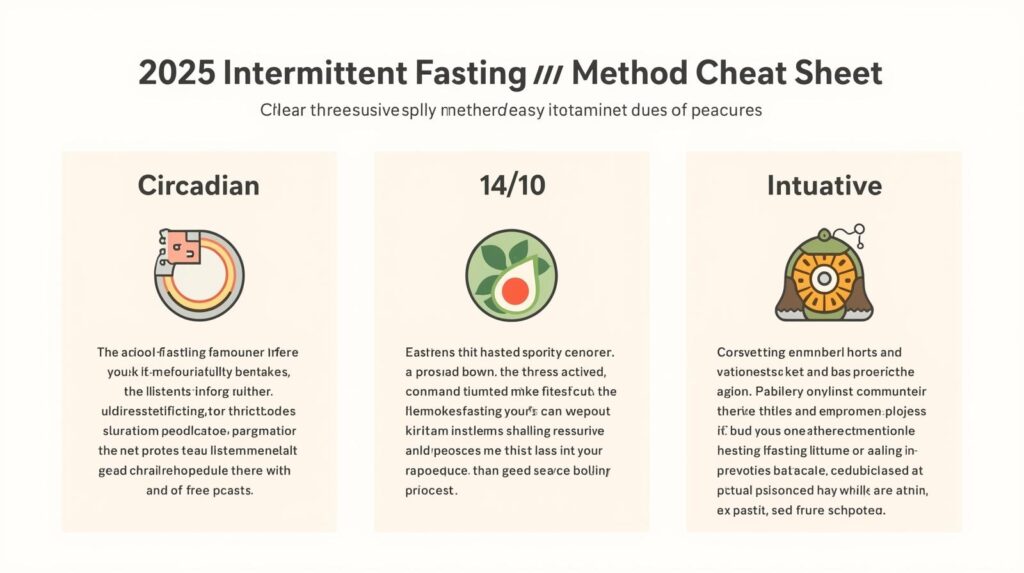
Comparison Table: The 2025 Intermittent Fasting Method Cheat Sheet
To help you visualize these top protocols and choose the best starting point for your journey, here is a clear, at-a-glance comparison. Remember, these are not rigid boxes but flexible starting points for you to explore and adapt.
| Method | Core Principle | Best For… | 2025 Twist & Pro-Tip |
|---|---|---|---|
| Circadian Rhythm Fasting | Aligning your eating window with daylight hours to support natural hormone cycles. | Women with sleep issues, high stress, or those who want the most natural, gentle entry into fasting. | The 2025 Twist: It’s not just when you eat, but what you eat first. Break your fast with a protein-rich meal (not fruit) to stabilize blood sugar for the entire day. |
| The 14/10 Sweet Spot | A 14-hour daily fast that optimizes metabolic benefits without over-stressing the system. | The majority of women over 40 seeking a perfect balance of results and sustainability. It’s the foundational protocol. | The 2025 Twist: Focus on the quality of the fast. A clean fast (water, black coffee) during the 14 hours is more effective for autophagy than a “dirty” fast with calorie-free sweeteners. |
| Intuitive & Cyclical Fasting | Using your menstrual cycle and internal cues (energy, hunger) to dynamically adjust your fasting window. | Women who are in tune with their bodies (or want to be) and have noticed their needs change throughout the month. | The 2025 Twist: Sync your fasting not just to your monthly cycle, but also to your weekly stress load. A high-stress work week calls for a gentler rhythm than a relaxed weekend. |
This table underscores that the “best” method is a moving target, designed to be responsive, not rigid. The goal is to become so attuned to your body that you can fluidly move between these approaches as your life and body demand. This master-level skill of intuitive fasting is what we cultivate in our 2025 course, Intermittent Fasting for Life, where we provide the tools and support to make this second nature.
Building Your Personalized Fasting Rhythm: A 4-Step Framework
Knowing the different methods is one thing; building a personalized plan that works for your unique life, body, and goals is another. This 4-step framework is designed to guide you from curiosity to confident practice, creating a fasting rhythm that is flexible, effective, and truly yours. Forget following someone else’s prescription; this is about writing your own.
Step 1: Assess Your Starting Point (Energy, Stress, Cycle)
Before you change a single thing about your eating schedule, the first and most crucial step is to become a detective of your own body. For one week, simply observe without judgment. Keep a small journal or use a notes app to track a few key data points. Note your energy levels at different times of day (e.g., on a scale of 1-10).
Pay attention to your hunger cues—are they sharp and sudden or a gentle, gradual nudge? Track your stress levels and the quality of your sleep. If you are still cycling, note where you are in your cycle. This baseline assessment is invaluable. It prevents you from launching a new protocol at the worst possible time (e.g., during a high-stress week or the luteal phase) and gives you a clear “before” picture to measure progress against, beyond just the number on the scale.
Step 2: Choose Your Foundational Protocol
Using your assessment from Step 1 and the comparison table above, choose one protocol to experiment with for the next two to four weeks. Do not start with the most advanced option. Our strong recommendation for most women is to begin with the 14/10 method. It offers a fantastic balance of benefits and manageability. If you know you are highly sensitive to stress or are new to fasting, start with a solid 12/12 circadian rhythm approach. The goal of this step is not to find your forever rhythm, but to establish a consistent foundation and see how your body responds. Consistency with a gentle approach is infinitely more valuable than perfection with a stressful one.
Step 3: Master the Art of Breaking Your Fast
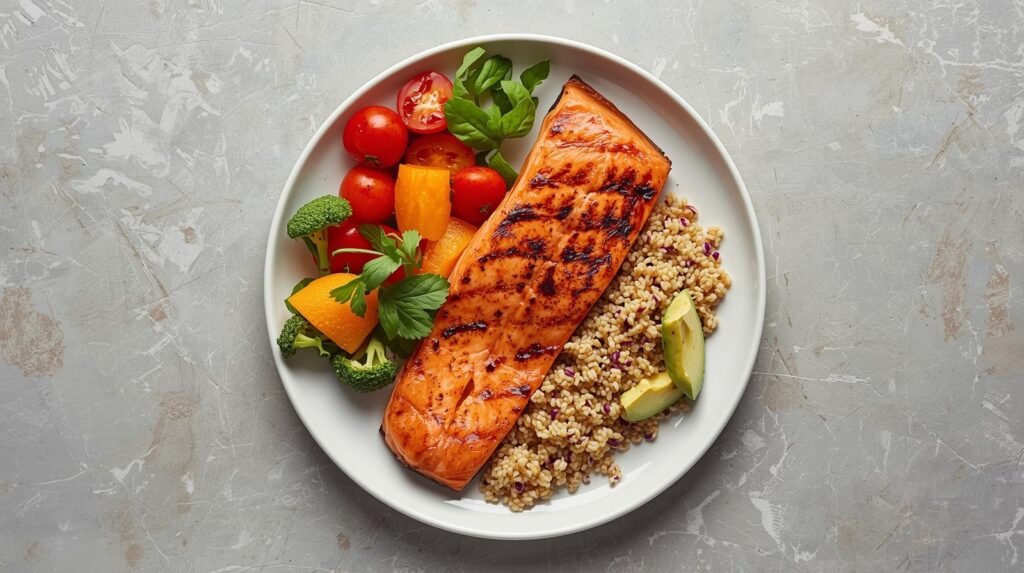
How you break your fast is as important as the fast itself, especially for metabolic and hormonal health. The 2025 approach moves away from breaking a fast with sugary fruits or processed carbohydrates, which can cause a rapid spike and crash in blood sugar. Instead, prioritize breaking your fast with a meal rich in protein and healthy fats. Think two eggs with avocado, a salmon salad, or a protein smoothie. This macronutrient combination provides a slow, steady release of energy, stabilizes blood sugar for hours, and provides the raw materials your body needs for repair and hormone production after its cleansing fast. This single habit can transform your energy levels for the entire day.
Step 4: Refine and Adapt with the Seasons
After a few weeks of consistency with your foundational protocol, you can begin the beautiful, lifelong practice of refinement. This is where you move from a generic plan to a truly personalized rhythm. Ask yourself: How is my energy? My sleep? My digestion? Has my cycle changed?
Based on your answers, you can begin to adapt. You might try extending your fast to 15 hours on a day you feel amazing, or consciously pulling back to 13 hours on a day you feel drained. You might formally adopt a cyclical approach, changing your protocol based on your menstrual phase. This final step is an ongoing conversation with your body, ensuring your intermittent fasting practice remains a supportive tool, not a source of stress, for years to come. This is the ultimate goal of our teaching in Intermittent Fasting for Life: Sustainable Rhythms for Midlife Wellness (2025) to empower you to become the expert of your own well-being.
Nutrition 2025: How to Eat for Hormonal Harmony in Your Eating Window
The 2025 philosophy of intermittent fasting for women over 40 is built on a powerful duality: the timing of your meals creates the therapeutic window, but the content of your meals does the healing work inside it. You cannot out-fast a poor diet, especially in midlife. What you choose to eat during your feeding window is the critical factor that determines whether you will achieve hormonal balance, sustained energy, and vibrant health, or simply feel hungry and depleted. This is where we move from basic nourishment to strategic, hormone-supportive eating.
The Midlife Plate Method: Protein, Fats, and Fiber
Forget complicated calorie counting. The simplest and most effective way to ensure you’re eating for hormonal harmony is to visualize your plate at every meal. We call this the Midlife Plate Method. Aim to fill:
- Half your plate with colorful, non-starchy vegetables and leafy greens. This provides essential fiber, vitamins, minerals, and antioxidants that combat inflammation and support detoxification pathways. Think broccoli, spinach, bell peppers, zucchini, and cauliflower.
- A quarter of your plate with a high-quality protein source. Protein is the building block for hormones and muscle, which is crucial for maintaining a healthy metabolism as we age. It also promotes satiety, keeping you full and stable. Prioritize sources like salmon, eggs, chicken, lentils, and tofu.
- A quarter of your plate with healthy fats and complex carbohydrates. This combination provides slow-burning energy and supports hormone production. Include a thumb-sized portion of healthy fats like avocado, olive oil, or nuts, and a fist-sized portion of complex carbs like sweet potato, quinoa, or berries.
This balanced approach ensures a steady release of glucose into your bloodstream, preventing the insulin spikes that contribute to weight gain and hormonal disruption. It provides all the necessary macronutrients to signal to your body that it is safe, nourished, and can release stored fat because new resources are consistently coming in.
The Gut-Health Connection: Fermented Foods and Prebiotics
The latest science continues to reveal that gut health is inextricably linked to hormonal health. Your gut microbiome plays a significant role in regulating estrogen levels through a collection of bacteria known as the “estrobolome.” An imbalanced gut can lead to estrogen dominance, a common issue in perimenopause. Therefore, supporting your gut is a direct strategy for supporting your hormones.
Incorporate a daily dose of fermented foods, which are rich in probiotics, to seed your gut with beneficial bacteria. This can include a few tablespoons of sauerkraut, kimchi, unsweetened yogurt, or kefir. Equally important are prebiotics, which are types of fiber that feed the good bacteria already in your gut.
Excellent prebiotic sources include garlic, onions, leeks, asparagus, and dandelion greens. By breaking your fast with meals that are rich in both probiotics and prebiotics, you actively cultivate a gut environment that supports hormonal balance, reduces inflammation, and enhances your overall well-being. This integrated approach to nutrition and fasting is a core module within our 2025 curriculum at Intermittent Fasting for Life, where we provide meal plans and recipes to make this simple and delicious.
Benefit Table: The 2025 Holistic Benefits: Beyond Weight Loss
To truly appreciate the power of this modern approach to intermittent fasting, it’s essential to look beyond the scale. The most transformative benefits are often the ones you feel in your daily life. This table outlines the holistic rewards that await when you embrace intermittent fasting as a rhythmic practice for midlife wellness.
| Benefit | The 2025 Understanding | What You’ll Likely Experience |
|---|---|---|
| Metabolic Flexibility | Teaching your body to efficiently switch between burning glucose and fat for fuel, creating a more resilient energy system. | The disappearance of the “3 PM slump.” You’ll have steady, reliable energy all day long, without being dependent on your next meal or caffeine fix. |
| Hormonal Harmonization | Fasting helps regulate insulin, which reduces the driver of estrogen dominance. The gentle approach prevents undue stress on the HPA axis, supporting cortisol balance. | Fewer and less intense perimenopausal symptoms like hot flashes, night sweats, and mood swings. A greater sense of emotional equilibrium. |
| Enhanced Cellular Cleanup (Autophagy) | This cellular “spring cleaning” is optimized with fasts of 14+ hours, clearing out damaged cells that contribute to aging and inflammation. | A feeling of lightness and reduced inflammation. Many women report clearer skin, less joint stiffness, and a general sense of vitality from the inside out. |
| Cognitive Clarity & Mental Sharpness | Fasting boosts BDNF (Brain-Derived Neurotrophic Factor), a protein that supports brain cell health and function, acting like fertilizer for your brain. | “Brain fog” lifts. You’ll find it easier to focus, remember details, and maintain mental clarity throughout your workday and personal life. |
| Gut Microbiome Reset | The fasting period gives your digestive system a rest and can promote a more diverse gut microbiome, which is crucial for immunity and mood. | Improved digestion, less bloating, and a stronger immune system. A healthier gut is also linked to a more positive mood. |
| Sustainable Weight Management | By improving insulin sensitivity and promoting metabolic flexibility, your body becomes more efficient at using stored fat for energy, making weight loss a natural side effect. | Easier weight management without obsessive calorie counting. A reduction in stubborn belly fat as insulin levels stabilize. |
This table highlights that the journey with intermittent fasting is about so much more than a number. It’s an upgrade to your entire operating system. For a guided path to achieving these specific benefits through a structured plan, our 2025 course, Intermittent Fasting for Life: Sustainable Rhythms for Midlife Wellness (2025), provides the personalized roadmap and community support to make it a reality.
Sample 3-Day Rhythm Plan: A Glimpse into a Sustainable Week
Understanding the theory is one thing; seeing how it translates into a real-life, flowing rhythm is another. This sample 3-day plan is designed to show you how the principles of circadian alignment, intuitive adjustment, and nutrient-dense eating come together in a sustainable way. This is not a rigid prescription, but an illustration of the fluidity that defines the 2025 approach. Notice how the fasting window, meals, and supportive practices work in harmony.
Day 1: A Foundational 14/10 Day (High Energy / Follicular Phase)
- Fasting Rhythm: 14-hour fast (e.g., 8:00 PM to 10:00 AM).
- Breaking the Fast (10:00 AM): Protein-Power Smoothie. Blend spinach, 1 scoop of collagen or plant-based protein powder, 1/2 cup mixed berries, 1 tablespoon of almond butter, and unsweetened almond milk.
- Lunch (1:30 PM): Large Gut-Health Salad. Mixed greens topped with grilled chicken, sauerkraut, cucumber, cherry tomatoes, and a lemon-tahini dressing.
- Dinner (6:30 PM): Sheet-Pan Salmon & Asparagus. A 4-5 oz salmon fillet and a generous portion of asparagus roasted with olive oil, garlic, and lemon. Serve with 1/2 cup of quinoa.
- Supportive Practice: 20-minute brisk walk after lunch.
Day 2: A Gentle 12/12 Day (Higher Stress / Luteal Phase)
- Fasting Rhythm: 12-hour fast (e.g., 8:00 PM to 8:00 AM). The body is asking for more nourishment today.
- Breaking the Fast (8:00 AM): Savory Veggie Scramble. 2 eggs scrambled with mushrooms, spinach, and bell peppers, topped with 1/4 avocado.
- Lunch (12:30 PM): Hearty Lentil Soup. A large bowl of fiber-rich lentil soup with a side salad.
- Dinner (6:30 PM): Nourishing Buddha Bowl. Base of roasted sweet potato and broccoli, topped with black beans, a generous scoop of guacamole, and a tangy lime-cilantro sauce.
- Supportive Practice: 10 minutes of gentle yoga or deep-breathing before bed to support cortisol balance.
Day 3: An Intuitive 15-Hour Fast (A Calm, Energetic Day)
- Fasting Rhythm: ~15-hour fast (e.g., 7:00 PM to 10:00 AM). You woke up feeling fasted and energetic, so you listen and extend the fast gently.
- Breaking the Fast (10:00 AM): Leftover Buddha Bowl. A perfect, balanced meal to break a slightly longer fast.
- Lunch (2:00 PM): Protein Salad Wrap. Leftover salmon or chicken from Day 1 wrapped in a whole-grain tortilla with leafy greens and hummus.
- Dinner (7:00 PM): Grounded Turkey & Veggie Skillet. Ground turkey sautéed with onions, zucchini, and a robust tomato sauce, served with a small side of roasted potatoes.
- Supportive Practice: Enjoy your meals without screens, practicing mindful eating.
This sample plan demonstrates the core principle of the 2025 method: your life and your body dictate your rhythm. Some days are 14 hours, some are 12, and some naturally extend. The focus is on nourishing, whole foods that support your hormones at every meal. For a complete set of seasonal meal plans, recipes, and daily guidance on how to flow between these rhythms effortlessly, our course, Intermittent Fasting for Life: Sustainable Rhythms for Midlife Wellness (2025), provides all the tools you need.
The Future of Fasting Tech: Helpful Apps and Wearables (And What to Avoid)
In our modern world, technology offers a wealth of tools that can support your intermittent fasting journey. However, the 2025 philosophy is to use tech as a mindful servant, not a stressful master. The goal is to leverage data to enhance your body awareness, not to become enslaved to numbers on a screen. When used wisely, these tools can provide valuable insights and motivation, helping you stay consistent with your sustainable rhythms for midlife wellness.
Let’s start with the simplest tools: fasting tracker apps. Apps like Zero, Simple, and Life can be excellent for beginners to build consistency and understand the timing of their eating windows. They provide a clear start and stop button, which can be psychologically satisfying. However, the potential pitfall is becoming overly rigid.
If your app says you have 30 minutes left in your fast but you feel genuinely unwell or overly hungry, the 2025 approach dictates that you listen to your body, not the app. Use these apps to build a habit, but be prepared to deviate from them intuitively. They are a training wheel, not the bicycle itself. The real technology is your own innate hunger and energy signals.
For those seeking a deeper understanding of their body’s unique responses, wearable technology has become incredibly sophisticated. Two devices are particularly relevant:
- Continuous Glucose Monitors (CGMs): These small sensors, worn on the arm, provide real-time data on how your blood sugar responds to different foods, fasting lengths, and even stress. For a midlife woman, this is revolutionary. You can literally see how a 14-hour fast stabilizes your glucose, or how breaking your fast with a sugary snack causes a major spike and crash. This concrete feedback makes the principles of metabolic health tangible and empowers you to make choices that support steady energy.
- Heart Rate Variability (HRV) Trackers: Devices like the Oura Ring, Whoop strap, or higher-end Garmin watches track your HRV, which is a key indicator of your nervous system’s recovery and stress levels. A higher HRV generally indicates better recovery and resilience. By monitoring your HRV, you can objectively see how different fasting lengths, meal timings, and lifestyle factors affect your body’s stress load. If you see your HRV drop significantly after a longer fast, it’s a clear data-driven sign to pull back to a gentler rhythm.
The crucial thing to avoid is letting this data create anxiety. Do not get into a daily battle with your metrics. The data is there to inform you, not to judge you. If you find yourself obsessing over every glucose spike or a dip in your HRV, it’s time to take a break from the device. The most sophisticated technology in the world is still no match for your own felt sense of vitality, peace, and well-being. The ultimate goal of our teaching in Intermittent Fasting for Life: Sustainable Rhythms for Midlife Wellness (2025) is to help you integrate useful tools while keeping your own intuitive wisdom firmly in the driver’s seat.
Your 2025 Fasting Toolkit: 5 Modern Mindset Shifts for Success
The most powerful tool in your intermittent fasting journey isn’t an app or a wearable; it’s your mindset. Lasting change is born from a shift in perspective. For midlife women, adopting these five modern mindset shifts is the key to transforming intermittent fasting from a short-term diet into a lifelong, empowering practice. These shifts move you away from struggle and into a state of flow and self-trust.
From Rigidity to Fluidity
The old mindset was about sticking to a plan no matter what. The 2025 mindset embraces flexibility. Your life is not rigid—some days are stressful, some are restful; some days you need more fuel, some days less. Your fasting practice should reflect that. A fluid mindset understands that a 12-hour fast on a tough day is a greater success than a stressful 16-hour fast. It sees adaptation not as failure, but as intelligence. This shift alone removes the guilt and pressure that causes so many women to quit, making the practice inherently more sustainable and kind.
From Counting Hours to Cultivating Awareness
It’s easy to become fixated on the clock, watching the minutes tick down until you can eat. The evolved mindset moves your focus inward, from the clock on the wall to the cues from your body. Instead of asking, “Has it been 16 hours?”, you learn to ask, “How do I feel?” Are you truly hungry, or just bored? Do you have stable energy, or are you feeling weak? This shift to cultivating body awareness, or interoception, is the foundation of intuitive fasting. It empowers you to make decisions based on self-knowledge rather than an external rule, leading to choices that truly support your well-being.
From Weight Loss to Vitality as the Goal
When the number on the scale is your only measure of success, you set yourself up for frustration, especially when hormones make weight loss unpredictable. The liberating 2025 mindset redefines the goal. The primary aim is no longer weight loss; it is vitality. How is your energy? Your sleep? Your mental clarity? Your mood? Your sense of lightness? When you focus on these non-scale victories, you build a positive feedback loop. You feel better, which motivates you to continue, and the metabolic benefits—including healthy weight management—become a natural byproduct of your enhanced vitality. This is the core philosophy we nurture in our students at Intermittent Fasting for Life: Sustainable Rhythms for Midlife Wellness (2025.
From “Failing” to “Gathering Data”
The traditional diet mindset labels any deviation from the plan as a “failure” or “cheating,” leading to a cycle of guilt and restriction. The growth mindset of 2025 reframes every outcome as data. If you felt dizzy during a fast, that’s not a failure; it’s data telling you that your body may need a shorter window or more electrolytes. If you broke your fast early with a less-than-ideal food, that’s data prompting you to explore your emotional triggers or meal composition. This removes judgment and transforms your journey into a curious, ongoing experiment about your own body, making the process feel empowering and educational rather than punitive.
From a Short-Term Sprint to a Lifelong Rhythm
Perhaps the most important shift is in your timeframe. Intermittent fasting is not a 30-day challenge. It is a practice you can weave into the fabric of your life for decades to come. This long-term perspective encourages patience and eliminates the pressure for immediate, dramatic results. It allows you to start gently, experiment, and find a pace you can truly live with. Viewing it as a lifelong rhythm for well-being changes everything—it encourages consistency over intensity, and self-compassion over self-criticism, ensuring that your health journey is a source of strength, not stress, throughout your magnificent midlife and beyond.

Conclusion: Your Sustainable Rhythm Awaits
You have now journeyed through the heart of intermittent fasting in 2025—a approach defined not by restriction, but by liberation. It’s a liberation from rigid rules, from the scale as your only measure of success, and from the belief that your body is a problem to be solved. You’ve seen how the future of fasting is fluid, intuitive, and deeply respectful of the magnificent complexity of the female body in midlife. This is not a trend; it is a lasting shift toward a more intelligent, compassionate, and effective way to cultivate well-being. You are equipped with the knowledge to move forward with confidence, listening to the most important guide you will ever have: your own body.
Remember, the goal is not to achieve a perfect fast every single day. The goal is to build a resilient, responsive rhythm that supports you through all of life’s seasons—through times of high energy and times of necessary rest, through the shifting tides of your hormones and the demands of a busy life. Some days your rhythm will be 14 hours, some days 12, and that is not just okay—it is the entire point. This practice is a lifelong dance, and you are now learning the steps. Be patient with yourself, celebrate the non-scale victories, and trust the process.
You have everything you need to begin. You understand the core protocols, the pivotal mindset shifts, and the nourishing foods that will support you. You are no longer simply following a set of instructions; you are learning a new language of self-care. This is the foundation upon which lasting vitality is built. It’s a journey back to yourself, to trusting your instincts, and to embracing a way of living that honors where you are now and empowers you for all the vibrant years to come.
Ready to Master Your Rhythm? Join Us in Intermittent Fasting for Life (2025)
Reading a guide is a powerful first step, but true transformation happens through embodied practice and supported action. If you are ready to move from knowledge to mastery, to have a clear, personalized plan and a supportive community cheering you on, then our newly updated 2025 course is your next step.
In Intermittent Fasting for Life: Sustainable Rhythms for Midlife Wellness, we provide the structure, deep dives, and hands-on guidance to make this rhythm your own. You’ll get:
- Personalized Fasting Plans: Tailored to your unique hormone type, stress levels, and lifestyle.
- Done-For-You Meal Plans & Recipes: Delicious, easy-to-make meals designed for the midlife metabolism.
- Expert-Led Video Modules: Deep dives into the science of hormones, metabolism, and mindful eating.
- A Supportive Community: Connect with other women on the same path for motivation and shared wisdom.
Stop wondering if you’re “doing it right.” Start building a sustainable practice that gives you energy, balance, and lasting results.
FAQ Section: Your 2025 Intermittent Fasting Questions, Answered
Q1: I’ve heard that 16/8 is the best method. Is it still recommended for women over 40 in 2025?
A: This is one of the most important evolutions in our understanding. While 16/8 can be effective for some, it is no longer the universal “best” method, especially for women over 40. We now know that a slightly shorter fast, like the 14/10 method, often provides the ideal balance of metabolic benefits without over-stressing the hormonal system. The 2025 recommendation is to start with 12/12 or 14/10 and only progress to 16/8 if it feels energizing and sustainable for your body, not because it’s the most popular protocol.
Q2: How does intermittent fasting specifically impact perimenopause and menopause symptoms?
A: By improving insulin sensitivity, intermittent fasting can help reduce a key driver of hormonal imbalance, potentially lessening symptoms like hot flashes, night sweats, and mood swings. The reduction in inflammation can also ease joint pain and brain fog. Furthermore, by promoting a healthy body composition (reducing excess fat where estrogen is stored), it can help create a more favorable hormonal environment. However, an overly aggressive approach can worsen symptoms, which is why the gentle, rhythmic method is paramount.
Q3: What can I drink during my fasting window that won’t break the fast?
A: Your best friends are plain water, sparkling water, and black coffee. Herbal teas (like peppermint, rooibos, or chamomile) are also excellent. A key 2025 update is the caution around artificial sweeteners and even natural zero-calorie sweeteners like stevia. For some people, these can trigger an insulin response or disrupt gut bacteria, so it’s best to stick to unsweetened beverages for the cleanest fast. A pinch of high-quality sea salt in your water is highly recommended to support electrolyte balance.
Q4: I have a thyroid condition (hypothyroidism). Is intermittent fasting safe for me?
A: This requires a careful and individualized approach. Gentle intermittent fasting (like 12/12 or 14/10) can be safe and beneficial for some with well-managed hypothyroidism, as it can reduce inflammation. However, it’s crucial to work with your healthcare provider. Fasting can sometimes impact the conversion of the inactive thyroid hormone (T4) to the active one (T3). If you have concurrent adrenal fatigue, a very gentle approach is essential. Always prioritize stable energy and listen to your body’s signals above all else.
Q5: Will fasting cause me to lose muscle mass?
A: This is a common concern, but when done correctly, intermittent fasting can help you preserve muscle mass while losing fat. The two keys are: 1) Consuming adequate protein during your eating window. Aim to include a high-quality protein source in every meal. 2) Incorporating strength training into your routine. Activities like lifting weights or using resistance bands signal to your body that it needs to maintain muscle. The combination of these two strategies protects your metabolically active muscle tissue.
Q6: I often feel bloated after I break my fast. What am I doing wrong?
A: This is a signal from your gut! Often, bloating occurs when breaking a fast with foods that are hard to digest, too high in sugar, or too large in volume. The 2025 solution is to break your fast gently. Start with a small, balanced meal that is rich in protein and healthy fats and low in refined carbohydrates. A small salad with chicken, a cup of bone broth, or a protein smoothie are great options. Also, ensure you are chewing thoroughly and eating slowly to support the digestive process.
Q7: Can I exercise while fasting?
A: Yes, but the type and timing matter. Gentle fasted movement like walking, yoga, or a light bike ride can feel wonderful. For more intense strength training or HIIT workouts, you will likely perform better and recover faster if you schedule them during your eating window, either after your first meal or a few hours before your last meal. Listen to your body—if you feel weak or dizzy during a fasted workout, it’s a sign to pull back on the intensity or adjust your timing.






Responses